
Best Aluminum Parts for Durable and Lightweight Designs
2026-10-28
When every gram counts but strength cannot be compromised, aluminum becomes more than a material—it becomes a strategy. In this guide, we explore the best aluminum parts engineered for durable and lightweight designs, from aerospace-grade brackets to heat-dissipating enclosures. You’ll discover how smart alloy selection and precision machining unlock performance without adding bulk. And for those who refuse to settle, DDR delivers machined aluminum solutions that keep your projects ahead of the curve—strong, light, and built to last.
Aluminum’s Quiet Edge in High-Stress, Lightweight Builds
When engineers chase strength without the weight penalty, aluminum rarely shouts for attention. It simply shows up where steel would buckle under its own mass, or where titanium's price would gut a project before the first prototype rolls off the line. The metal's real trick lies in a specific strength that keeps surprising teams who assume carbon fiber or advanced alloys own the high-stress niche. A forged 7075-T6 suspension arm, for instance, can shrug off cyclic loads that would fatigue a thinner steel stamping, all while trimming unsprung mass enough to change how a chassis communicates with the road.
What gets overlooked is how aluminum handles stress distribution in ways that look almost counterintuitive on a spec sheet. It doesn't need to be exotic—extruded 6061 profiles with carefully placed internal ribs can replace multi-piece welded steel assemblies, cutting part count and assembly time while boosting torsional rigidity. The metal's lower modulus means it flexes more elastically under peak loads, but that compliance can be tuned to act as a passive damper in brackets, mounts, and frames that see shock spikes. In off-road racing and UAV airframes, that quiet give-and-take prevents brittle fractures that would sideline a stiffer, more brittle composite counterpart.
There's also a manufacturing pragmatism that keeps aluminum relevant when the stress numbers climb. Heat treatment doesn't require the autoclave budgets of carbon layup, and repairs can happen with a TIG torch in a field workshop rather than a cleanroom. For prototypes and limited production runs, CNC-machined aluminum parts can be in a test rig within days, not months. That agility—combined with a recycling stream that recovers over ninety percent of the metal's original properties—means the quiet edge isn't just about a single component's strength-to-weight ratio. It's about a whole build process that stays light, responsive, and financially sane under pressure.
How to Match Aluminum Alloys to Your Load and Lifespan Needs
Aluminum alloys are not a one-size-fits-all material. The first step in matching an alloy to your application is to quantify the actual load it will face, both in magnitude and in cycle count. A bracket that holds a static 50-kilogram sign has very different demands than a suspension component enduring thousands of variable stress reversals per day. Check the peak stress and the stress ratio—if the load alternates between tension and compression, you’ll need an alloy with strong fatigue resistance, like 7075-T6, rather than a softer 6061-T6. For static or low-cycle loads, 6061 or 6063 often provide enough strength with easier machining and lower cost.
Lifespan requirements force you to think beyond simple yield strength. A part that must survive ten million cycles without cracking needs a different design philosophy than one replaced every year. Look at the S-N curve data for the specific temper, not just the alloy family. Heat treatment matters more than the base composition—6061 in the T6 condition can handle roughly twice the fatigue stress of the same alloy in the O or annealed state. If your design already has sharp corners or weld zones, derate the fatigue limit accordingly, since aluminum has no true endurance limit and will eventually fail under any cyclic stress above a certain threshold.
Finally, match the alloy to the environment over the lifespan. Corrosion can eat away at fatigue strength long before visible pitting appears. For outdoor or marine exposure, 5052 or 6061 with proper coating often outperforms high-strength 7075, which is more prone to stress corrosion cracking. When weight is critical and lifespan is moderate, consider 2024 for its high fatigue strength, but protect it from moisture. By balancing the real load spectrum, the required cycle count, and the operating environment, you can pick an alloy that survives its intended service without overengineering the part.
Machined vs. Cast Aluminum: Picking the Right Process for Your Part
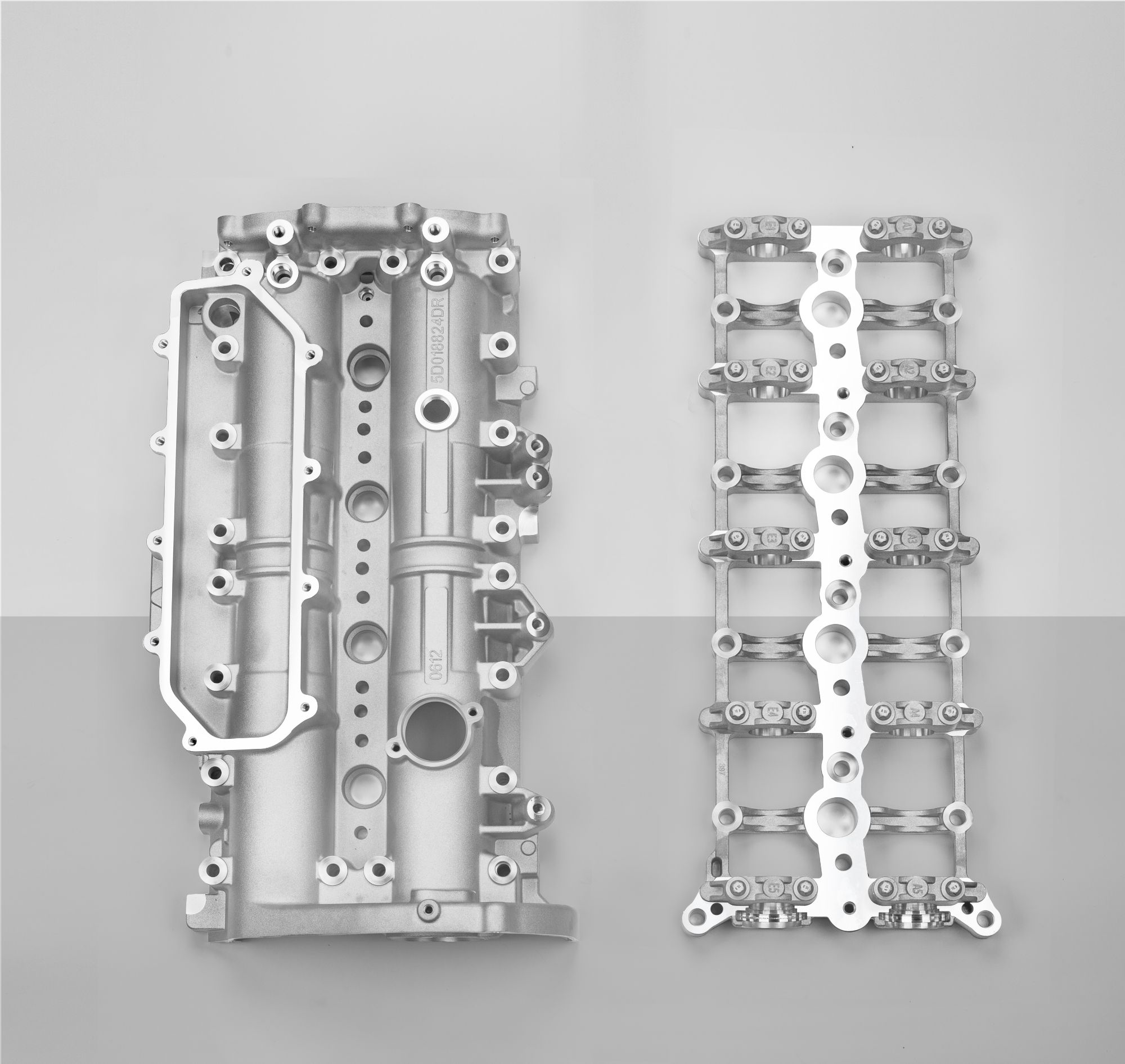
Aluminum parts rarely start as a simple either-or choice, but the decision between machining and casting shapes everything from lead time to grain structure. Machined components are cut from solid billet or extruded stock, which means you get tight tolerances, excellent surface finish, and consistent mechanical properties without needing a mold. The trade-off is material waste and higher per-piece cost when volumes climb. Cast aluminum, on the other hand, pours molten metal into a reusable die or expendable mold, letting complex internal geometries and near-net shapes emerge with less secondary work.
Volume usually drives the conversation. For prototypes or runs under a few hundred parts, machining wins because there is no tooling investment to amortize and design changes are cheap. Once you cross into thousands of units, casting becomes far more economical—especially with high-pressure die casting, where cycle times are measured in seconds. That said, cast parts can hide porosity or inconsistent wall thickness, so if your application sees high cyclic loads or needs a flawless cosmetic surface, machining or post-casting machining may still be necessary.
A practical way to decide is to map your part's critical features. Ask whether the geometry can be achieved by subtractive methods without absurd setups, or whether a cast form would require extensive machining to hit tolerance anyway. Also weigh alloy behavior: wrought grades like 6061-T6 machine beautifully and offer predictable strength, while cast alloys like A380 deliver good fluidity but lower toughness. The right process often ends up being a hybrid—cast near-net, then machine only the surfaces that matter.
Surface Treatments That Make Aluminum Resist Wear, Corrosion, and Fatigue
Aluminum's lightweight nature comes with trade-offs: pure aluminum is soft and prone to galling, while its natural oxide layer is thin and easily damaged. Hard anodizing builds a thick, ceramic-hard alumina coating that dramatically improves wear resistance on sliding components like pistons or linear rails. For even tougher demands, plasma electrolytic oxidation (PEO) creates a denser, more ductile oxide layer with embedded particles that reduce friction and resist abrasive wear.
Corrosion protection often starts with conventional anodizing followed by sealing in hot nickel acetate or boiling water, which closes the porous oxide structure. Chromate conversion coatings offer excellent self-healing corrosion resistance, especially for aerospace alloys, though environmental concerns have pushed many shops toward trivalent chromium or zirconium-based alternatives. These thin films act as a barrier and provide a good base for paint adhesion.
Fatigue life is trickier because many surface treatments introduce micro-cracks or tensile stress. Shot peening or laser shock peening bombards the surface to induce compressive residual stress, which delays crack initiation under cyclic loading. Combining peening with a thin, well-sealed anodic layer can yield components that survive both corrosive environments and repeated mechanical stress, making aluminum a viable choice for structural parts that were once reserved for steel.
Where Aluminum Beats Steel and Titanium on the Scale and in the Field
Ask any bike builder or backpacker who has lugged gear up a long climb, and they will tell you that ounces matter more than most spec sheets admit. Aluminum sits in that sweet spot where dropping a pound doesn't mean sacrificing the ability to take a hit. A steel frame might shrug off dents, but it weighs nearly three times as much for the same stiffness. Titanium closes the weight gap, yet its price and the specialized welding it demands push it out of reach for nearly every practical application. Aluminum, by contrast, gives you a structure that is light enough to carry all day but stiff enough to translate every pedal stroke or suspension input into forward motion, not flex.
Out in the field, where gear gets scraped against rock, splashed with salt water, or left in the back of a truck through a rainstorm, aluminum's natural oxide layer does the quiet work of preventing rust. Steel needs paint, powder coat, or constant oiling to survive the same conditions, and once the coating chips, the clock starts ticking. Titanium resists corrosion beautifully, but try repairing a cracked titanium bike frame in a small town or finding a machine shop willing to touch it after a mishap. Aluminum can be welded, bent back within reason, or simply replaced without requiring a second mortgage. That real-world repairability, combined with low raw material cost, means a damaged aluminum part is an inconvenience, not a disaster.
The numbers tell one story: aluminum's density is about one-third that of steel and roughly 60% that of titanium. But the more interesting story unfolds when you look at specific stiffness and fatigue behavior in typical use. For a given beam shape, an aluminum component can be made thicker in the right places to match steel's stiffness while still coming in lighter. Titanium may boast a higher strength-to-weight ratio on paper, but its low modulus means it flexes more than most designers expect, requiring larger tube diameters and thicker walls that eat into the weight advantage. Aluminum lets engineers fine-tune wall thickness and cross-section without exotic tooling, which is why you see it in everything from aircraft wing spars to ultralight tent poles to the engine block of a daily commuter car. It doesn't win every contest, but when the goal is to carry less and still get the job done, aluminum has a habit of quietly outperforming its more glamorous rivals.
Five Design Tweaks to Shave Grams Without Sacrificing Strength
Cutting grams without compromising strength starts with questioning material that never carries meaningful load. Swapping steel bolts for titanium or hollow pins is a quick win, and tapering non-structural walls by as little as half a millimeter can remove surprising weight. Another trick is replacing traditional ribbing with minimal internal lattices that maintain stiffness only where stress maps show it's actually needed.
Consolidating several small parts into one also eliminates overlapping flanges, fasteners, and alignment bosses that contribute little beyond assembly convenience. In high-stress zones, using forged or cold-worked alloys instead of billet can allow thinner sections with the same durability. These moves rarely change the outward design, but together they can drop double-digit grams from a component without pushing it closer to failure.
FAQ
Aluminum offers an excellent strength-to-weight ratio, so you get durability without the mass penalty of steel. Alloys like 7075 can rival mild steel in tensile strength while weighing roughly a third as much. Plus it resists corrosion naturally and takes finishes like anodizing well.
7075-T6 is the go-to for high stress and wear situations because of its zinc-based composition and heat treatment. If you need better corrosion resistance with decent strength, 6061-T6 is a more balanced option. For parts that see a lot of impact, 5052 offers good formability and fatigue resistance.
Anodizing builds a controlled oxide layer on the surface, which hardens the exterior and boosts scratch resistance. It also lets you add color while keeping the part electrically non-conductive on the outside. The porous layer can even hold lubricants for moving parts.
Yes, with the right alloy and treatment. Marine environments often rely on 5083 or 5052 because they resist saltwater corrosion well. Aerospace uses 2024 and 7075 for structural parts where high fatigue strength and low weight are critical. Proper sealing after anodizing further extends lifespan.
Think about webbing, ribs, and hollow sections to add stiffness where it matters while removing material where it doesn't. Use fillets instead of sharp corners to reduce stress concentrations. Topology optimization and generative design tools can reveal organic shapes that are both lighter and stronger.
Usually yes, especially for mid-volume production. Aluminum costs far less per pound than titanium or carbon fiber, and it machines much faster. Tooling wear is lower than with composites, and scrap aluminum can be recycled. You trade a little ultimate strength for a much friendlier budget.
Deburring and polishing reduce crack initiation points. Stress-relieving heat treatment after heavy machining prevents warping. Anodizing or powder coating adds a protective shell. For tight-tolerance bores or threads, consider hard coat anodizing or installing stainless steel inserts to prevent galling.
Conclusion
Aluminum's real advantage in high-stress, lightweight builds often hides in the details that separate a reliable part from a marginal one. Matching the alloy to the expected load and service life matters more than many designers assume. A general-purpose 6061-T6 works fine for moderate stress and good corrosion resistance, while 7075-T6 offers roughly double the tensile strength at the cost of reduced anodizing quality and lower fatigue life in some environments. Process choice is equally critical: machined parts from billet retain a uniform grain flow and tight tolerances, making them ideal for brackets, housings, and structural mounts, whereas cast aluminum allows complex internal geometries at lower piece cost but can introduce porosity that weakens thin sections. Surface treatments then act as the final gatekeeper. Hard anodizing adds a wear-resistant ceramic layer, conversion coating improves paint adhesion and corrosion resistance, and shot peening can restore fatigue strength after machining. These steps together turn a basic aluminum shape into a component that survives repeated loading without excess mass.
When you compare aluminum side by side with steel and titanium, the choice becomes clearer for weight-critical parts. Steel often wins on absolute stiffness and cost, but its density forces thicker-walled designs that add unnecessary heft. Titanium offers better specific strength but is far more expensive and harder to machine. Aluminum sits in the sweet spot where stiffness, fatigue life, and manufacturability balance. To maximize that balance, small geometry changes deliver outsized weight savings. Delete material from low-stress zones with pocketing, add internal ribs instead of thick solid sections, use topology optimization to guide wall thickness, and standardize on a few screw sizes to avoid redundant bosses. A 5% reduction in a bracket's cross-section in a non-load-bearing web can cut grams without any loss in failure load. These tweaks, combined with the right alloy, process, and surface finish, produce durable parts that stay light, resist wear, and remain cost-effective across production runs.
Contact Us
Contact Person: Shelly
Email: [email protected]
Tel/WhatsApp: 8613967667688
Website: https://www.yongyu.com/