

Best Gel Seat Cushion for All-Day Comfort and Support
2026-11-16
Ever notice how your chair feels fine at 9 a.m. but turns into a brick by 3 p.m.? Long hours of sitting don't just leave you stiff—they quietly drain your focus and energy. That's where the right gel seat cushion makes a real difference, especially if you need all-day comfort and support without constant shifting. Kunbao has built its cushion around that simple idea: smart gel distribution and supportive contours that work with your body, not against it. In this guide, we'll break down what actually matters when choosing a cushion, and why this one keeps showing up on desks, wheelchairs, and driver's seats. Ready to give your sit bones a break? Let's dive in.
Why Your Cushion Goes Flat Before the Day Ends
A cushion that starts the morning plump and ends the day as a sad, flat pancake usually isn't worn out—it's just running out of air and rebound. Most foam cushions are made from open-cell polyurethane, which depends on thousands of tiny air pockets to maintain loft. When you sit, body weight forces air out of those cells. If the foam is low density or has lost its resilience, the cells buckle and don't spring back quickly, leaving you sitting on compressed material rather than a supportive layer.
Heat makes the problem worse. Your body warms the cushion throughout the day, and as foam heats up, it becomes softer and more pliable. That extra flexibility lets the cell walls collapse further under the same load, so the cushion thins out progressively from morning to afternoon. Cushions wrapped in polyester fiber also tend to go flat faster because the fiber mats down under pressure and doesn't recover until the cushion is removed and shaken.
If your cushion consistently goes flat before the day ends, check the foam density and type. High-resilience foam or latex recovers far better than standard low-density polyurethane, especially with repeated daily use. A quick flip or rotate at lunch can buy you some time, but a cushion that can't hold its shape for a full workday is usually telling you it's built more for softness than for lasting support.
Gel vs Foam and the Cooling Difference You Can Feel
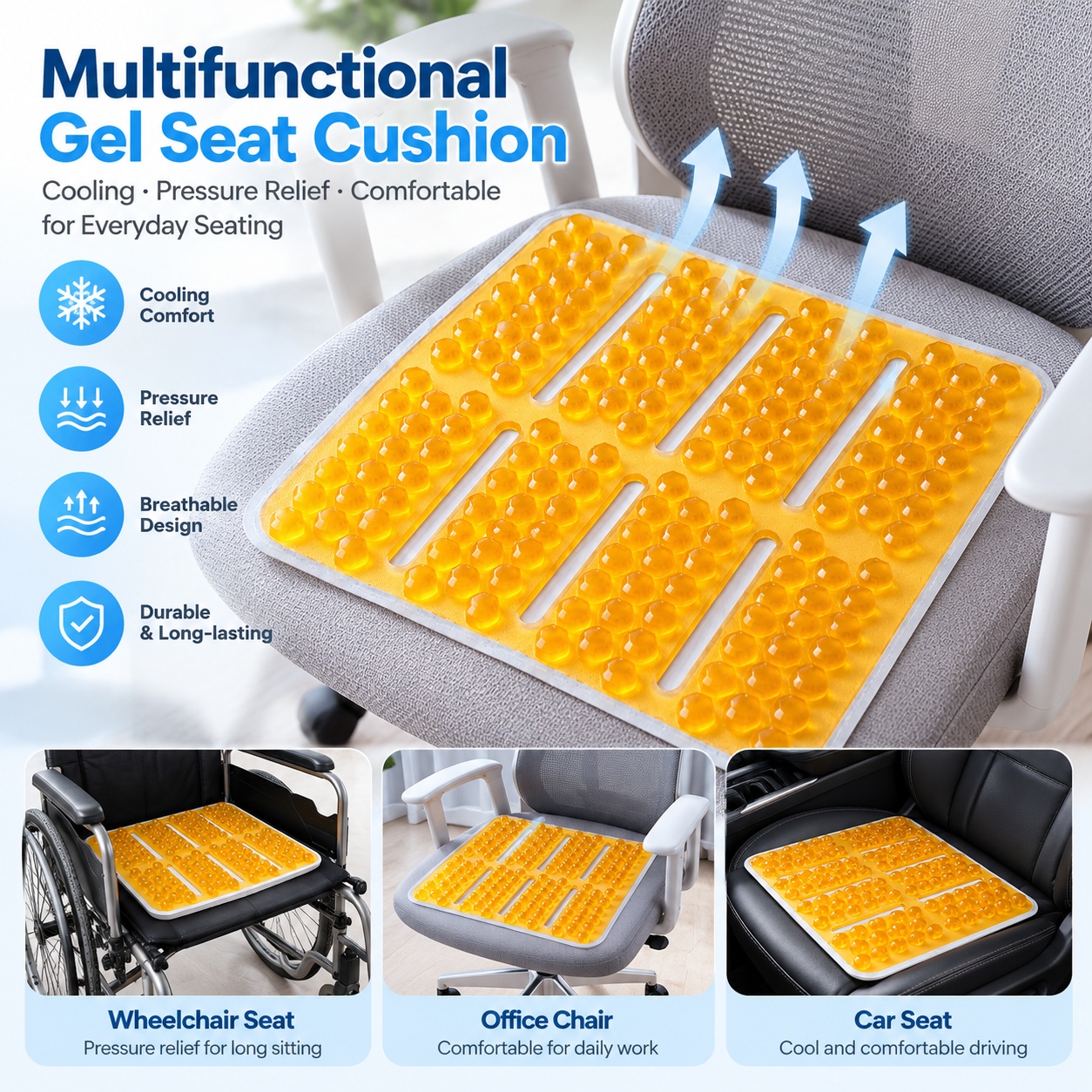
Memory foam cradles pressure points but tends to trap body heat like a slow oven. Gel-infused layers break that cycle by pulling warmth away from the surface, creating a noticeably cooler contact point.
The difference isn't just marketing. Traditional foam absorbs and holds heat because of its dense cell structure. Gel, whether swirled into the foam or added as a top layer, accelerates thermal transfer. You feel it within minutes—not as a cold shock, but as a steady, breathable neutrality that lets you stop flipping the pillow.
If you sleep hot or live in a warm climate, that shift changes how deep you rest. Gel doesn't make a mattress icy; it simply stops the slow heat build-up that wakes you at 3 a.m. It's the kind of difference you don't fully believe until you've spent a week on one.
Stop Sliding Around with the Right Underside Grip
Most slips happen because the bottom of your socks simply has nothing to bite into the floor. A proper underside grip changes that instantly. Instead of relying on friction from cotton or polyester, you get rows of small silicone or rubber dots that press into hard surfaces. The trick is making sure those grippy sections cover the ball of the foot and heel, not just a tiny logo patch. When they're placed correctly, even quick pivots and sudden stops feel controlled.
There's also a difference between the cheap printed grips and ones that are actually molded into the fabric. Printed versions tend to wear smooth after a few washes, leaving you right back where you started. Molded grips stay raised longer and keep their tackiness. If you're on tile, laminate, or polished wood, look for a full-foot pattern rather than scattered spots. The wider coverage spreads pressure more evenly and keeps your foot from sliding inside the sock as well.
Once you switch to socks with a reliable underside grip, you'll notice it in small ways: no more bracing yourself when walking across the kitchen, less tension in your legs during workouts, and fewer near-misses on stairs. It's a simple fix, but the right grip pattern turns ordinary socks into something you actually trust.
Getting the Size Right for Your Chair Without Guesswork
Finding a chair that actually fits your body doesn't have to be a gamble. Start by measuring the width of your hips at their widest point, then add about two inches on each side for comfortable clearance. This simple calculation tells you the minimum seat width you'll need, so you can skip chairs that look good in photos but feel cramped after ten minutes.
Seat depth matters just as much as width, and the rule of thumb is straightforward: sit all the way back, then check if you can fit two or three fingers between the front edge of the seat and the back of your knees. If there's more space than that, the seat is too deep and will cut into your circulation. If your knees are pressed against the edge, it's too shallow and won't support your thighs properly.
Don't forget about the relationship between seat height and your desk or table. Your feet should rest flat on the floor with your knees bent at roughly a ninety-degree angle. Measure the distance from the floor to the top of your desk surface, then subtract about ten to twelve inches to find the ideal seat height range. This way, you're choosing based on your own measurements instead of hoping a standard chair happens to work out.
What Real Tailbone Support Feels Like After Eight Hours
By hour six, most chairs have already quit on you. The cushion that felt plump at 9 a.m. has compressed into a hard ridge under your sit bones, and your lower spine starts doing that subtle forward slump you keep correcting. Real tailbone support doesn't announce itself with extra foam or a cutout gimmick. It feels like a firm, narrow shelf that follows the natural tilt of your pelvis, keeping the very bottom of your sacrum from flattening against the seat pan. When it's working, you stop noticing the chair entirely—your tailbone floats in a neutral gap, and the pressure shifts to the backs of your thighs where it belongs.
The difference shows up in small, almost boring ways. You stand up after a long stretch and don't need that first cautious step to test if your coccyx is angry. You stop perching on one hip or tucking a leg under yourself just to escape the hot spot. By the end of the day, the area around your tailbone doesn't feel bruised or numb, and you haven't caught yourself leaning forward with your chest on the desk. That's what proper support feels like after eight hours: not a dramatic cushion that cradles you, but a quiet alignment that lets you forget you're sitting at all.
Cheap chairs fake this with a soft donut or a thick memory foam wedge, but those collapse after a few weeks and push the pressure somewhere else—usually into your lower back or the backs of your knees. Genuine support keeps its shape because it's designed around the bone structure, not just the soft tissue. After eight hours, your tailbone should feel the same as it did when you sat down: unremarkable, cool, and completely free of that sharp reminder that you've been in one spot too long.
Desk, Car, or Wheelchair - Where the Cushion Earns Its Keep
A cushion at a desk rarely gets much credit until the lower back starts complaining. The right one tilts the pelvis just enough to keep the spine from slumping, and it takes the sharp edge off the tailbone during long stretches of typing or video calls. It is not about softness alone; a dense, shaped surface works better than a plush pillow that bottoms out by mid-afternoon.
In a car, the cushion becomes a shock absorber for road buzz and potholes. Hours behind the wheel can leave hips tight and the backs of the thighs numb if the seat pan is too flat or too firm. A well-placed wedge or contoured pad shifts pressure away from the sit bones and keeps blood moving, which matters more than cup holders on a cross-country drive.
Wheelchair users ask the most from a cushion because it is not just about comfort. Pressure that stays in one spot for too long can damage skin and deeper tissue, so the cushion has to spread load, reduce friction, and manage moisture. Foam, gel, or air cells each handle that job differently, but the goal is the same: make a seated life sustainable hour after hour.
FAQ
Gel distributes pressure more evenly and doesn't pack down the way foam often does after a few weeks. It also stays cooler, which matters when you're stuck at a desk all day.
It works on any flat seat surface—wooden dining chairs, wheelchairs, car seats, even bleachers. The key is that the bottom has enough grip to keep it from sliding around.
Around 1.5 to 2 inches is usually the sweet spot. Thinner than that and you lose support; thicker and you might feel unstable or push your thighs up at an awkward angle.
Not usually. Most quality gel cushions use a breathable cover or a honeycomb gel structure that allows airflow, so heat doesn't get trapped the way it can with memory foam.
Most come with a zippered, machine-washable cover. The gel core itself can be wiped down with a damp cloth. Just don't soak the whole cushion.
Many people find relief because the gel reduces direct pressure on the coccyx. Look for one with a cutout or U-shaped design if tailbone pain is your main issue.
With daily use, expect about 1 to 2 years. The gel can start to soften or lose some resilience over time, especially if you're heavier or sit for 8+ hours a day.
A good one has a non-slip bottom or a strap that anchors it. On fabric office chairs it usually stays put, but on slick leather you might need to adjust it occasionally.
Conclusion
Most cushions feel fine at first, then slowly give way until you're sitting directly on the hard seat by mid-afternoon. The best gel seat cushion avoids this because the gel core is designed to hold its shape under continuous pressure, spreading your weight instead of compacting. There's also a clear difference in temperature: foam traps body heat and gets sticky, while gel pulls heat away from your skin, so you stay cooler without needing a fan or air conditioning. And if the cushion keeps sliding out from under you, it hardly matters how soft it is. A well-designed underside grips the chair firmly, letting you shift positions without constantly dragging the cushion back into place.
Choosing the right size isn't just about matching the seat width—it's about making sure the cushion doesn't overhang or leave gaps that break your posture. When the fit is right, you can sit all the way back and keep your hips level. After eight hours, real tailbone support means the area beneath your coccyx stays slightly lifted rather than bearing every pound. That relief is what separates a decent cushion from one you forget you're sitting on. Whether it's a desk chair, car seat, or wheelchair, the cushion proves itself through daily use by staying firm, cool, and exactly where you put it.
Contact Us
Contact Person: Catherine Peng
Email: [email protected]
Tel/WhatsApp: +86-13434169510
Website: https://www.kbcoolgel.com/