

Best Pad-Mounted Transformer Supplier: Ensuring Quality and Reliability for Your Projects
2026-07-24
When it comes to power distribution, the choice of a pad-mounted transformer can make or break your project’s success. From commercial developments to utility-scale infrastructure, the need for quality and reliability isn't just a preference—it's a non-negotiable requirement. That’s where CNKEEYA comes in, redefining what it means to deliver durable, high-performance solutions that engineers and project managers can trust. In a market crowded with options, finding a supplier that genuinely understands your needs—beyond just specs and price tags—sets the stage for long-term operational confidence. Let's explore what truly sets a supplier apart and why more professionals are turning to a partner built on precision and integrity.
What Makes a Pad-Mounted Transformer Truly Reliable?
Reliability in pad-mounted transformers doesn't come from a single feature but rather an exhaustive combination of material integrity and thermal design. For instance, using grain-oriented silicon steel cores with step-lap joints reduces no-load losses and magnetic hotspots, while also improving longevity by minimizing internal stress points. The insulation system—typically a blend of high-temperature rated paper and premium dielectric fluid—must be capable of withstanding repeated thermal cycling without degradation, a factor often overlooked in lower-tier units.
Beyond the core and coil assembly, the enclosure and sealing mechanisms play a massive role. Laser-cut, powder-coated steel with a continuous welding process prevents moisture ingress even in flood-prone areas. The gasket materials are selected for chemical resistance and long-term elasticity, so they don't become brittle after a few seasons of temperature swings. Coupled with a pressure relief device that operates smoothly without fatigue, these external protections ensure the internals remain pristine.
Finally, true reliability is proven through testing that simulates decades of abuse. Look for evidence of short-circuit testing per IEC 60076-5, lightning impulse testing, and partial discharge measurement—not just factory routine tests. Manufacturers that invest in thermal imaging during load runs and do vacuum drying before oil filling are the ones who deliver units that rarely fail in the field. This attention to detail separates a transformer that merely meets the specs from one that actually keeps the lights on year after year.
How Custom Configurations Solve Real-World Space Constraints
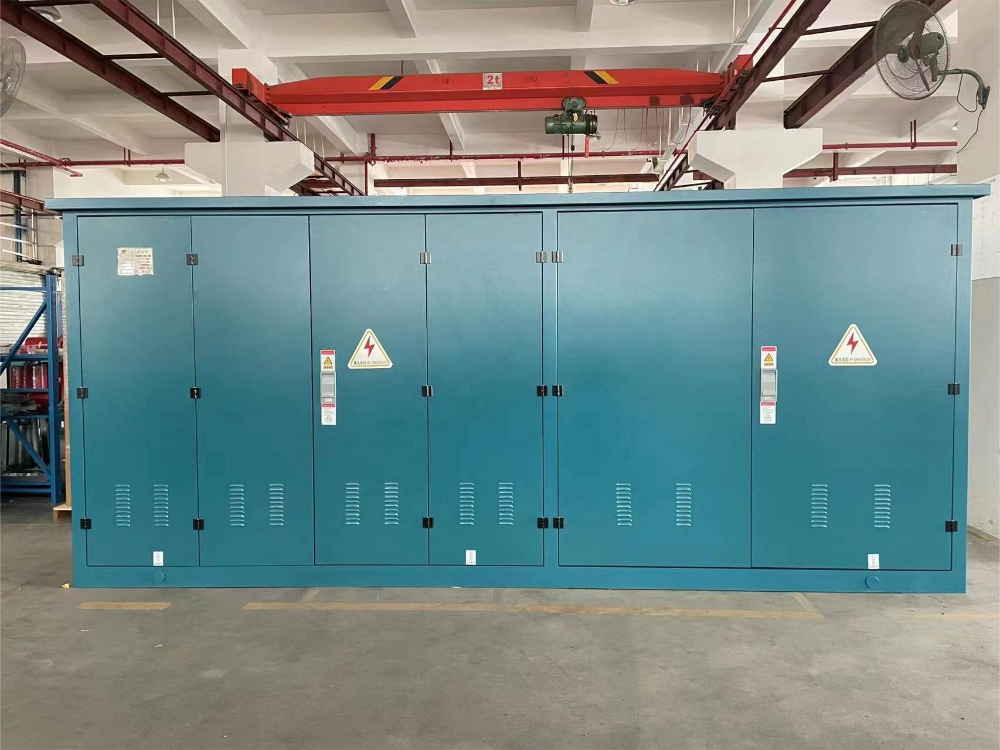
Standard rack enclosures come in fixed dimensions: 42U, 48U, and so on. But actual deployment areas rarely match those neat numbers. A low ceiling might shave off needed height, a narrow hallway could block standard-depth cabinets from even reaching the server room, or an oddly shaped corner leaves usable floor space that a traditional rack can't occupy. These aren't hypotheticals—they're daily puzzles for IT teams in repurposed offices, historic buildings, or edge locations where every inch costs money. Without customization, you’re forced into expensive building modifications, awkward workarounds, or leaving potential capacity unused.
That’s where tailored dimensions shift the equation. A cabinet shortened by just a few inches can slide under ductwork without sacrificing crucial U-space if the internal layout is reengineered—relocating PDUs, moving cable pathways, or using right-angle power cords. Depth adjustments let a rack fit through a 28-inch doorway yet still house full-length servers through creative internal mounting. For irregular floor plans, widened frames or angled doors can reclaim those forgotten pockets, turning dead zones into live infrastructure. These modifications aren't just about squeezing in gear; they're about preserving airflow, maintaining service access, and avoiding the thermal penalties that ad-hoc fixes often introduce.
Beyond the physical footprint, custom configurations solve the knock-on problems that space constraints create. A shorter rack might need side-mounted cooling to compensate for reduced chimney effect; a narrow one might route cables differently to avoid blocking exhaust. Integrated vertical managers, recessed rail positions, or top-mounted fan trays become non-negotiable design elements rather than afterthoughts. When done right, a bespoke enclosure isn’t a compromise—it’s a precise answer to a specific challenge, often outperforming generic solutions by keeping the equipment running cooler and more reliably simply because the layout respects the room’s actual boundaries.
The Overlooked Factor in Transformer Longevity
While insulation degradation and thermal cycling dominate discussions on transformer aging, the subtle yet relentless impact of partial discharges in oil-impregnated paper often escapes scrutiny. These low-energy events, triggered by microscopic voids or contamination, gradually erode dielectric integrity long before a catastrophic failure announces itself. Engineers fixated on load profiles and cooling efficiency may miss the silent accumulation of carbonized traces that set the stage for abrupt breakdowns.
Operators tend to monitor dissolved gas analysis results as the gospel of asset health, but the interpretation frequently neglects the transient nature of certain gas ratios. Acetylene might spike intermittently without crossing conventional alarm thresholds, lulling teams into complacency while hot spots smolder beneath the oil's surface. The disconnect between sporadic sensor snapshots and the continuum of deterioration creates a dangerous blind spot that routine maintenance checklists rarely address.
What truly amplifies the risk is the coupling between mechanical wear and electrical stress in aging units. Dried-out spacer blocks lose their clamping pressure, allowing windings to vibrate microscopically under load fluctuations. This fretting generates copper particles that circulate and settle in unexpected locations, initiating discharge pathways that mimic textbook failure patterns but originate from a root cause easily dismissed during standard inspections.
Why Field Testing Matters Before Delivery
Lab conditions can't replicate the chaos of a real worksite. Dust, vibration, and unpredictable user behavior surface issues that never appear in controlled tests. A device that performs flawlessly on the bench might fail the moment it's deployed in the field—and that's exactly the kind of failure you can't afford after delivery.
Your customers don't use products in sterile environments. They use them in rain, heat, and with gloves on. Field testing validates not just functionality, but usability under stress. It's the difference between a product that works on paper and one that works when it matters.
Skipping field tests is a gamble with your reputation. Returns, emergency patches, and angry calls are far more expensive than a few extra days of real-world validation. Smart teams treat field testing as insurance—it's the step that turns a good design into a reliable product.
Partnering With Engineers Who Understand Your Industry
In specialized fields, technical capability alone isn’t enough. What truly sets a project in motion is working with engineers who have deep, hands-on experience in your sector—people who speak your language and anticipate challenges specific to your domain. Whether it’s navigating regulatory requirements in healthcare, optimizing thermal dynamics for industrial equipment, or designing compliant, high-reliability systems for aerospace, industry-aware engineers turn abstract requirements into practical, compliant solutions without a steep learning curve.
This insider perspective means they can spot potential pitfalls early—from material compatibility issues in chemical processing to signal integrity challenges in high-speed communication infrastructure. Instead of spending weeks educating an engineering team on the fundamentals, you’re collaborating from day one on fine-tuning implementations that fit both the technical specs and the real-world operating environment. The result is a faster path from concept to deployment, with less rework and more confidence that the final product will perform as intended under actual field conditions.
Beyond technical execution, these engineers often bring valuable relationships with vendors, test labs, and certification bodies that can streamline the entire development cycle. They’re invested in outcomes that go beyond a single project, frequently offering insights that future-proof your designs against evolving standards and market demands. It’s a partnership rooted in understanding not just how things work, but why they matter to your business and end users.
From First Sketch to Final Connection: A Seamless Process
Every project starts with a rough idea, a scribble on a napkin or a quick wireframe that barely hints at what’s to come. That initial sketch isn’t about perfection—it’s about capturing the essence of a solution before overthinking sets in. From there, the vision slowly sharpens through collaboration, feedback loops, and a willingness to leave what doesn’t work behind.
What makes the journey truly seamless is how each step feeds into the next without friction. Prototypes evolve into high-fidelity designs, which then hand off naturally to development, all while the original intent stays intact. The final connection—whether it’s a live interface, an integrated API, or a product in a user’s hands—feels inevitable, as if every earlier stage was building toward it without missing a beat.
FAQ
Look for a supplier with a proven track record of using high-grade materials and rigorous testing protocols. Their transformers should meet or exceed industry standards like ANSI/IEEE, and they should offer robust warranties and responsive technical support.
Request detailed documentation on their manufacturing processes, including insulation systems, core materials, and factory test reports. Visiting their facility or checking customer testimonials and case studies can also give you confidence.
The best supplier combines technical expertise, customization options, and on-time delivery. They work closely with you to understand voltage requirements, environmental conditions, and space constraints, then tailor solutions accordingly.
Yes, by providing transformers with high-efficiency cores and durable coatings, a dependable supplier ensures lower energy losses and less susceptibility to corrosion, which translates to fewer repairs and longer service life.
Essential safety features include tamper-resistant enclosures, dead-front construction, overcurrent protection, and proper grounding provisions. A responsible supplier designs units to minimize arc flash hazards and ensures compliance with NFPA 70E.
After-sales support is critical. The best suppliers provide installation guidance, on-site commissioning, emergency replacement parts, and ongoing maintenance advice, ensuring your transformer operates reliably for decades.
Certifications like ISO 9001 for quality management, UL listing, and compliance with DOE efficiency standards are strong indicators. Also, check if their transformers are tested per IEEE C57.12.00 and C57.12.34.
Customization is key for unique projects. A top supplier offers options like specialized insulation, voltage taps, bushing configurations, and compact designs to fit site-specific constraints without compromising performance.
Conclusion
Finding a pad-mounted transformer that truly stands the test of time goes beyond basic specs. True reliability stems from rigorous material selection, protective coatings that combat corrosion, and thermal designs that prevent premature aging. But off-the-shelf solutions often fall short when space is tight or site conditions are unusual. That’s where custom configurations shine—altering dimensions, bushing placements, or cooling methods to fit cramped urban vaults or awkward substation layouts without sacrificing performance. Over time, even the best designs face stress from load fluctuations and environmental wear, making proactive maintenance features like accessible monitoring ports and durable finishes a surprisingly critical factor for decades-long service.
Before a unit ever leaves the factory, realistic field testing under full load and fault conditions reveals weaknesses that simulations miss. Partnering with engineers who speak your industry’s language—whether it’s renewable integration, data center uptime, or heavy industry—means the transformer arrives tuned to your operational rhythms, not just a generic datasheet. The most seamless projects flow from collaborative early-stage design through final connection, where installation support and clear documentation eliminate surprises at commissioning. That cohesion turns a commodity purchase into a strategic asset, ensuring your project hums with quiet, uninterrupted power.
Contact Us
Contact Person: Queenie
Email: [email protected]
Tel/WhatsApp: +86 15558806611
Website: https://www.cnkeeya.com