
Best Surge Arresters for Reliable Overvoltage Protection
2026-10-12
Overvoltage events don't announce themselves—they strike in milliseconds, yet the damage can last for years. If you're responsible for keeping electrical systems online, choosing the right surge arrester isn't just a spec-sheet decision; it's your first line of defense against costly downtime and equipment failure. In this guide, we break down what separates a dependable surge arrester from the rest, drawing on real-world performance insights and the engineering behind Lugao's trusted protection solutions. Whether you're upgrading substation hardware or hardening industrial infrastructure, here's what to look for before the next surge hits.
What a Surge Arrester Actually Does When Lightning Strikes Nearby
A nearby lightning strike doesn’t have to hit your equipment directly to cause damage. The electromagnetic pulse from the bolt induces a steep voltage wave on overhead lines and even underground cables. A surge arrester sits at the point where those conductors meet a transformer, switchgear, or motor. Inside, a stack of metal-oxide varistor discs behaves like a voltage-dependent switch: under normal operating voltage each disc offers millions of ohms, but when the incoming surge pushes the voltage past a set threshold, the resistance collapses to a few ohms almost instantly.
That sudden drop in resistance creates a temporary path to ground. The arrester shunts the excess current away from the protected equipment, clamping the voltage at its terminals to a level the insulation can handle. The whole process takes only nanoseconds—far faster than a circuit breaker could ever move. Once the surge energy dissipates, the varistor discs return to their high-resistance state and the system continues operating as if nothing happened. The arrester never “absorbs” the lightning in the way a sponge absorbs water; it simply reroutes the dangerous energy around the equipment.
The practical result is that a nearby strike becomes a non-event for the equipment. Instead of a flashover across bushing surfaces or punctured winding insulation, you get a brief flicker on monitoring instruments at most. However, this protection only works if the arrester is properly rated for the system voltage and its ground lead is short and low-impedance. A poorly grounded arrester can actually make things worse by lifting the equipment potential during a surge. So the real job of a surge arrester is not to stop lightning, but to give the surge current a controlled path so it never has to force its way through your equipment.
Why Most Overvoltage Damage Happens Without a Direct Hit
Most people picture a lightning bolt slamming into a power line or antenna when they think about overvoltage damage. But the reality is far less cinematic. The majority of failures happen when transient voltages sneak in through indirect paths—inductive coupling from a nearby strike, switching operations on the grid, or even static buildup on a long cable run. These events never touch the equipment directly, yet they can push sensitive electronics well past their rated limits.
Inductive and capacitive coupling are the usual culprits. A lightning discharge a kilometer away radiates a fast-changing electromagnetic field. Any loop formed by signal wires, ground connections, or even PCB traces acts like a secondary winding of a transformer, picking up a spike that can reach hundreds of volts. The same principle applies to motors, solenoids, or relay contacts switching off—the sudden collapse of a magnetic field injects a surge back into the line. None of this requires a direct connection to the source of the disturbance.
What makes indirect overvoltage so insidious is that it often arrives as a low-energy, high-speed pulse. Traditional fuses and circuit breakers are far too slow to react, and the damage accumulates quietly—oxide layers in ICs degrade, junction temperatures spike for microseconds, and one day the device simply stops working. Protecting against it means thinking about every conductor as an antenna, not just the obvious power input.
Choosing the Right Arrester Rating Without Overcomplicating It
Most confusion around arrester ratings starts with trying to match the nameplate voltage directly to the system voltage. That approach only holds up in straightforward solidly grounded systems. A better first filter is the maximum continuous operating voltage, or MCOV. If the arrester's MCOV sits comfortably above the highest line-to-neutral voltage your equipment will see during normal conditions, you have already avoided the most common misstep.
The next thing worth checking is how the system behaves during a ground fault. On a solidly grounded system, healthy phases see only a modest temporary overvoltage, so a lower duty rating is often fine. On ungrounded or impedance-grounded systems, that temporary rise can be much larger, and it will push you toward a higher rating. You do not need a detailed fault study; just knowing the grounding arrangement is usually enough to point you in the right direction.
After that, leave a small margin for aging and future system changes, but resist the temptation to oversize. A rating one step above the calculated minimum typically gets the job done without weakening protection. Compare MCOV and temporary overvoltage capability across a few products in the same family, since those values can vary even when the nominal rating looks identical. That simple sequence—steady-state voltage, temporary overvoltage, and a small margin—avoids the complexity without skipping the checks that actually matter.
The Difference Between Distribution-Class and Station-Class Arresters in Practice
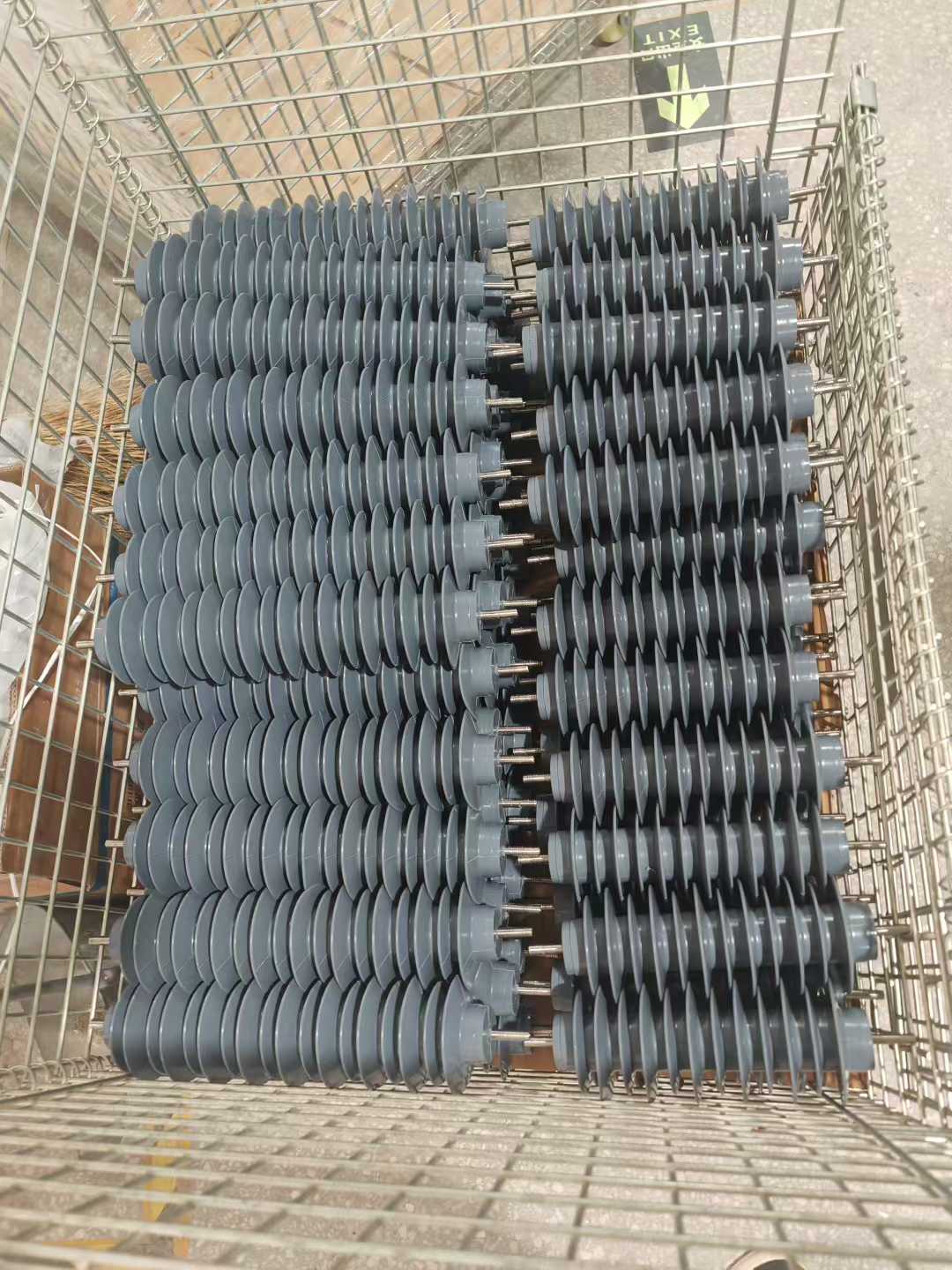
In the field, the choice between distribution-class and station-class arresters often comes down to what you're protecting and how much punishment the device is expected to take. Distribution-class arresters are the workhorses of residential and light commercial feeders—they handle moderate surge duty, fit easily on crossarms or riser poles, and are priced to be installed by the dozen. Station-class units, by contrast, are built for substations, generation tie-ins, and critical equipment where a failure isn't just an outage but a major event. The physical differences are obvious once you see them side by side: station-class arresters are larger, heavier, and use higher-energy metal-oxide varistor blocks that can absorb repeated, high-amplitude surges without degrading.
What matters in practice is the energy rating and pressure relief capability. Distribution-class arresters typically carry a lower kJ/kV rating and rely on basic venting or disconnectors to clear a fault. They are fine for typical lightning strikes on a 15 kV or 25 kV line, but put one next to a capacitor bank switching transient or a nearby substation bus fault, and you might see premature failure. Station-class arresters are designed with much higher thermal energy absorption, reinforced housings, and directional pressure relief that prevents porcelain fragmentation. In many utilities, the unwritten rule is simple: if the arrester is inside the fence of a substation or protecting a power transformer over 10 MVA, you don't use distribution-class—you use station-class. It's not about voltage rating; both can be rated for the same system voltage. It's about fault current withstand and the cost of getting it wrong.
Another practical distinction is mounting and lead length. Distribution arresters often mount directly on the equipment or pole with short leads, which helps reduce inductive voltage drop during fast-rising surges. Station-class arresters, because of their size, are usually mounted on dedicated stands or brackets inside the substation, and the lead length becomes a design parameter—too long and you lose protection margin. Field crews also notice the difference in handling: a distribution arrester can be swapped by one lineman with a hot stick, while a station-class unit might need a small crane or a two-person lift. That operational reality often drives the initial specification, even before the engineering calculations are pulled out.
Signs Your Existing Surge Arrester Is Quietly Failing
Most surge arresters don't fail with a bang—they degrade in ways that are easy to overlook. A hairline crack along the polymer housing or a faint track of carbonized material near the ground end can be the first hint. If you notice discoloration that doesn't wash off after rain, or if the silicone skirt feels unusually brittle to the touch, the internal metal-oxide blocks may already be under stress. These visual clues often appear months before a complete failure, yet they get dismissed as cosmetic wear.
Another quiet sign shows up in routine electrical measurements. A gradual rise in leakage current, even if it stays within the nameplate limits, suggests that the zinc oxide discs are losing their non-linear properties. Infrared scans can also reveal a hot spot near the upper or middle section of the arrester, while the rest of the unit stays cool. Left unchecked, this thermal imbalance accelerates aging and can lead to a sudden short circuit during the next voltage swell.
Sometimes the warning comes from the system around the arrester. Unexplained relay operations, frequent operation of the discharge counter after minor storms, or slight but persistent voltage fluctuations in one phase can all point to an arrester that's no longer clamping transients cleanly. A quick way to confirm is to compare the temperature and leakage current with a sister unit on an adjacent phase—divergence of more than a few percent usually means the quiet failure is already underway.
How to Compare Metal Oxide Varistor Designs Beyond the Datasheet
Typical MOV datasheets list max continuous voltage, clamping voltage at a specified impulse current, energy rating, and maybe capacitance. But these numbers don't capture how the varistor behaves under real stress profiles. For example, two parts can share a 14mm disk diameter and a 275VAC rating yet differ substantially in grain boundary uniformity, electrode edge termination quality, and the thickness of the passivation layer—all of which affect long-term leakage current drift and failure mode. So first step: ask for pulse derating curves across temperature, not just the single 8/20µs clamp point. Also examine the specified clamping voltage at multiple current levels (1A, 10A, 100A, 1kA) to see if the V-I slope stays predictable or shows signs of early saturation.
Another overlooked factor is the varistor's standby power draw after it has absorbed a few hundred surges. Datasheets rarely show how leakage current evolves after repetitive stress. You can request or measure post-surge leakage at 75-80% of the maximum continuous voltage after applying a defined surge sequence (e.g., 10 pulses of 8/20µs at half the rated energy). A design that shows a sudden rise in leakage or a drop in the nonlinear exponent after this sequence will likely fail prematurely in a field application. Also compare the failure mode: does the part fail short or open under overload? For line-to-ground protection, an open failure can be preferable in some safety standards, while a short failure may be required for series with a thermal fuse.
Finally, look beyond the single component to how the manufacturer controls the coating and lead attachment. Cracks in the epoxy coating or poor solderability at the lead-to-ceramic interface can create localized hot spots that degrade the varistor even when the bulk ceramic is fine. Ask for cross-section photos or reliability test reports covering temperature cycling, humidity bias, and salt mist. A varistor that passes a 1000-hour damp heat test with minimal visual change and stable clamping voltage is often the better choice, even if its datasheet headline numbers are identical to a cheaper alternative.
FAQ
It diverts excess voltage from lightning strikes or switching transients away from your wiring and appliances, sending that energy into the ground instead of letting it fry your electronics. Think of it as a pressure relief valve for your electrical panel that only opens when the pressure gets dangerously high.
Start with the maximum continuous operating voltage (MCOV) — it needs to sit above your normal line voltage but below the point where your equipment would get damaged. Then check the clamping voltage and surge current rating. For most homes, a Type 2 arrester installed at the main panel with a 20kA to 40kA rating is a solid choice. Also match it to your system's grounding quality, because a poor ground makes even the best arrester nearly useless.
They overlap but aren't identical. Surge arresters are typically installed at the service entrance or on distribution lines and handle very high energy transients — lightning strikes, for example. Surge protectors, especially those power strips you plug into a wall outlet, are point-of-use devices for smaller, more frequent spikes. In practice, many electricians use the terms loosely, but if you're protecting an entire house, you want a surge arrester; if you're protecting a computer, a surge protector might be enough.
The main breaker panel is the sweet spot for a whole-home unit — it catches overvoltages before they spread through branch circuits. If you have a detached garage, workshop, or solar array with its own subpanel, install a smaller arrester there too. For critical electronics, add point-of-use protectors at the outlet. The key is layering: one at the service entrance, one at each subpanel, and one at sensitive equipment.
Most quality arresters have an indicator light or window that turns from green to red when the metal oxide varistors wear out. Check that indicator at least twice a year — spring and fall are easy reminders. Depending on your local lightning activity and the number of surges they absorb, arresters can last anywhere from five to fifteen years. If you've had a particularly violent storm or a nearby lightning strike, check the indicator the next day, even if it was recent.
A single Type 2 arrester at the main panel will handle most external surges, but it won't stop surges generated inside your home — like when a big motor kicks off or a faulty appliance sends a spike back through your wiring. For complete coverage, use a layered approach: one at the main panel, point-of-use surge protectors at major electronics, and possibly a Type 1 arrester at the meter if you live in a lightning-prone area.
The biggest one is a weak ground. An arrester can only dump surge energy if the ground path is low-impedance, so if your ground rod is corroded or the wire is too long and coiled up, the arrester won't work. Another mistake is mounting the arrester too far from the panel — the lead length adds inductance and reduces protection. People also forget to install a dedicated breaker for the arrester, so they piggyback it onto an existing circuit, which can cause nuisance tripping. And many don't realize that surge arresters sacrifice themselves; once the indicator shows red, it's dead and needs replacement.
Yes. Look for a visible red flag or 'replace' indicator on the unit — that's the clearest sign. Some models show a yellow or flashing LED. If you notice your electronics behaving oddly after a storm, like random resets or flickering screens, that could mean the arrester failed silently and surges are now passing through. Also check for physical damage: burnt marks, melted casing, or a tripped breaker dedicated to the arrester. When in doubt, have an electrician test it with a megohmmeter.
Conclusion
A surge arrester positioned near a transformer or switchgear does more than sit idle waiting for a direct strike. When lightning hits the ground or a nearby line, the travelling wave finds the arrester first and turns it into a controlled path to earth, clamping the voltage before it can wind its way into insulation. Most of the damage blamed on lightning never comes from a direct hit; induced surges from nearby strikes and switching events account for the bulk of failures because they arrive at lower amplitudes but occur far more often. Picking a rating is not about chasing the highest number, it is about matching the system’s continuous operating voltage and temporary overvoltage conditions so the arrester stays cool under normal stress and reacts instantly when a real surge appears.
In practice, distribution-class and station-class arresters differ less in basic function and more in energy handling and fault tolerance, with station-class units built to absorb the heavy discharge currents found in substations. A failing arrester rarely announces itself; look for discoloured porcelain or polymer housings, an elevated leakage current, or thermal imaging hot spots that creep upward over time. Beyond datasheet claims, comparing metal oxide varistor designs means checking the grain structure consistency, the quality of the sealing system against moisture ingress, and the actual aging curve under repetitive low-energy transients. The most reliable protection comes from an arrester that holds its reference voltage stable after thousands of small events, not just one that survives a single laboratory impulse.
Contact Us
Contact Person: Doreen
Email: [email protected]
Tel/WhatsApp: 8618057712366
Website: https://www.liugaopower.com/