

Bulk 2 Ply Engraving Plastic Factory Direct for Durable Custom Signage
2026-09-01
When it comes to durable custom signage, the material you choose can make or break the final result—especially for high-traffic or outdoor environments. Bulk 2 ply engraving plastic, sourced factory direct, offers a compelling balance of strength, crisp engraving detail, and cost efficiency that many sign makers overlook. At LYSHIRE, we’ve seen firsthand how the right plastic stock turns ordinary signs into long-lasting brand assets. But what exactly sets premium 2 ply sheets apart, and how can buying in bulk streamline your production without sacrificing quality? Let’s unpack the practical benefits before you place your next order.
Why Two-Ply Engraving Plastic Outperforms Single-Layer Signs
Single-layer engraving signs look fine at first—until the scratches, UV fading, and cleaning chemicals start eating away at the surface. The text blurs, the contrast dies, and the sign becomes unreadable long before its expected lifespan. Two-ply engraving plastic flips that dynamic entirely. The core layer provides depth and rigidity, while the top cap layer carries the color and contrast. When you engrave through the cap, the exposed core becomes the lettering, so even if the surface gets scuffed, the message stays crisp because the contrast comes from the material itself, not a printed coating.
Durability isn’t just about resisting scratches. Two-ply sheets handle temperature swings and moisture without warping or delaminating, which single-layer vinyl or painted signs often fail at within a season. The cap layer is chemically bonded, not glued, so edge peeling and bubbling become non-issues. For outdoor signage, industrial labels, or any environment where the sign gets touched, wiped, or blasted by sun, the two-ply construction keeps the lettering legible years after a one-layer alternative would need replacing.
There’s also a practical workflow advantage: you can engrave, rout, or laser two-ply stock using standard equipment, and the resulting sign requires no painting, sealing, or lamination to protect the text. That removes an entire finishing step and the failure points that come with it. Single-layer signs often demand additional clear coats or overlays just to approach the same baseline durability—adding cost, time, and a layer of film that itself yellows or peels. With two-ply, the protective contrast is built in from the start.
Straight From the Factory: What Bulk Pricing Really Means
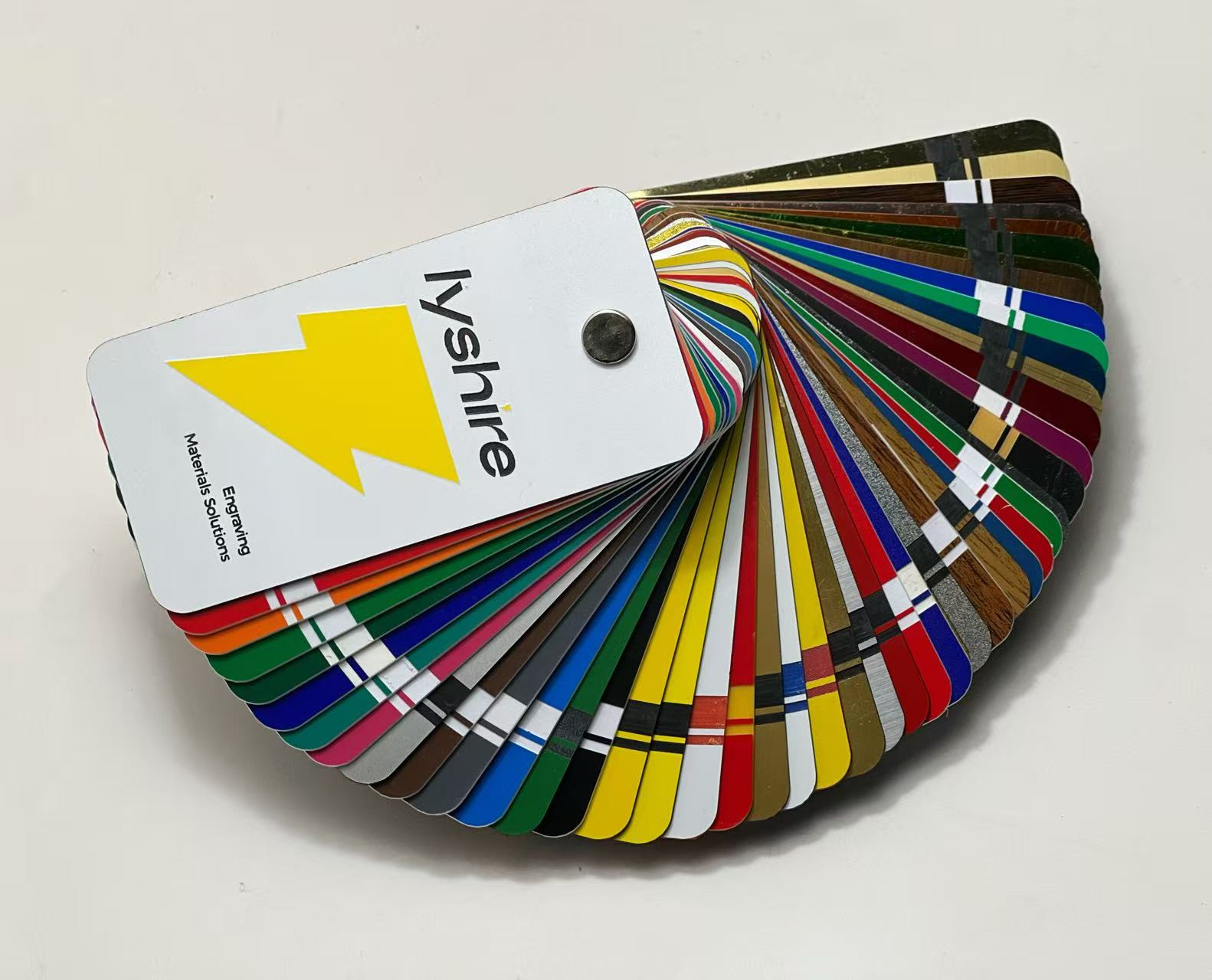
Bulk pricing often gets reduced to a simple equation: buy more, pay less per unit. But when a factory sets its own bulk rates, it's working from a different set of numbers than a typical retailer or middleman. The per-piece cost drops because raw materials are ordered in massive volumes, production lines run without changeover delays, and packaging shifts to consolidated, no-frills formats. Those savings don't come from lowering quality; they come from removing the stops and starts that small orders inevitably introduce.
What this means for a buyer is that you're not just unlocking a discount—you're paying closer to the actual cost of manufacturing. A factory that sells direct doesn't need to protect a wholesale margin, a distributor markup, or a retail shelf price. Your bulk order funds the production run itself, and in return, the factory passes along the efficiency gains. That's why two identical products from the same line can show wildly different unit prices depending on whether you're buying 50 pieces or 5,000.
There's a practical side most people overlook: at certain order volumes, you cross into territory where the factory treats you as a production partner rather than a customer. You gain the ability to request small customizations—a different label, a tweaked finish, a simplified carton—without triggering a new setup fee. Bulk pricing, in that sense, isn't a sale price. It's the standard rate for anyone willing to work at the scale the factory is designed for.
Designing Custom Signage That Survives Sun, Rain, and Scratches
Outdoor signage often fails in boring ways: colors bleach to pastel ghosts, edges curl after a single monsoon, or the face picks up fine scratches from windblown grit until the message turns fuzzy. The fix starts before design, with material selection that treats weather and abrasion as one problem. A high-density polyurethane blank will shrug off moisture, but it still needs a UV-stable ink system and a hard, clear laminate to keep the print from fading or flaking under repeated thermal cycling.
Lamination matters more than most people expect. Choose an optically clear overlaminate with embedded UV inhibitors and a matte or gloss finish that matches the viewing environment. For areas with abrasive dust or frequent cleaning, look for a coating rated for scratch resistance rather than just chemical resistance. Apply the laminate so it wraps just past the substrate edge, and seal any exposed corners with a flexible edge sealer. That prevents water from wicking into the core and causing delamination after a few seasons.
Even the best materials fail if the design ignores stress points. Avoid large solid color fields in dark hues, because they absorb more heat and accelerate expansion and contraction. Use a white base layer and build color in thinner layers, or opt for cut vinyl on a prefinished aluminum composite panel for high-traffic installations. Then test a sample outdoors for at least six weeks before committing to a full production run—real sunlight and rain will reveal things a lab test won’t.
Choosing the Right Core Color for Maximum Contrast
Core color isn't just a visual preference—it's the quiet engine that drives readability. When you test a palette, the first question should be whether text and background separate clearly under real lighting conditions. A deep navy can outperform pure black against off-white, because it reduces harsh glare while maintaining a strong luminance gap.
Instead of chasing the highest possible contrast ratio, look for balance. Colors that sit too far apart can vibrate at the edges, especially for small type or thin strokes. Warm off-whites paired with cool dark blues, for example, soften the transition and keep the eye from tiring during long reading sessions.
Practical tweaks matter more than theory. Test the core color on actual screens at different brightness levels, and check it against both white and black text. If one combination fails, shift the core color slightly toward blue or green rather than adding gray—gray often muddies contrast and makes the interface feel flat.
How to Order Large Quantities Without Sacrificing Quality
Ordering in bulk often makes people nervous about ending up with a warehouse full of subpar goods. The trick is to shift your focus from volume alone to vendor consistency. Start with a smaller pilot order, even if it costs a bit more per unit, and check every detail: stitching, material weight, print clarity, packaging sturdiness. Once you've confirmed the baseline, scale up gradually rather than jumping straight to ten thousand units. This staged approach lets you catch drift in production before it becomes a costly mistake.
Another often-overlooked lever is writing a clear spec sheet that leaves zero room for interpretation. Don't just say "cotton blend" — specify the exact yarn count, tolerance for shrinkage, acceptable color variance, and minimum grams per square meter. Include photos of both acceptable and unacceptable defects. When the factory knows you will actually measure against these benchmarks, they treat your order with far more care. This also gives you an objective basis to reject a batch without endless back-and-forth.
Finally, build in a buffer for rework or replacements instead of assuming perfection on the first run. Negotiate a small percentage of overage into your contract, so if 2% of units fail inspection, you can still fulfill your own commitments without scrambling. Pair that with periodic random sampling during the production run — not just at the end — and you'll keep quality from silently slipping while the volume goes up.
Real-World Uses for Durable Engraved Signs in Any Industry
From the back corridors of a busy hospital to the sun-scorched exterior of a manufacturing plant, durable engraved signs earn their keep in ways that cheaper printed labels never can. Hospitals rely on them for room identification, electrical panel markers, and equipment warnings where repeated cleaning with harsh disinfectants would fade ordinary graphics within months. These signs hold up because the text is physically cut into the material—no ink to wear away, no laminate to peel.
In warehousing and logistics, engraved signs serve as permanent aisle markers, dock door numbers, and forklift safety reminders. A plastic or metal plate with recessed lettering survives scrapes from pallets and constant exposure to dust and temperature swings. Facility managers often choose engravable phenolic or stainless steel for areas where a missing sign could create a serious safety risk, such as high-voltage rooms or chemical storage zones.
Outdoor settings present their own set of challenges. Parks, marinas, and public utilities use engraved signage for trail markers, valve tags, and equipment ID plates that face UV rays, rain, and salt air. Because the engraving isn’t dependent on surface print, it remains legible for a decade or more with minimal upkeep. That longevity reduces replacement costs and keeps critical information visible when it matters most.
FAQ
It's a sheet made of two thin layers – a colored top layer and a contrasting core. When you engrave away the top layer, the core shows through, giving crisp text and graphics without paint or ink. That makes it a clean, low-maintenance choice for signs that need to stay readable for years.
Yes, bulk orders are the standard here since we sell factory direct. Minimums can vary depending on thickness and color combinations, but if you reach out with your project specs, we'll let you know exactly what's available. Ordering larger quantities usually brings the per-sheet cost down quite a bit.
We stock a wide range of color pairs – black on white, white on black, red on white, blue on white, and many more. Thickness options typically run from 1/16 inch to 1/8 inch, with thicker sheets offering extra rigidity for outdoor or high-traffic areas. If you need an unusual combo, ask us; we can often source it.
It handles weather well. The engraved areas won't fade or peel like printed graphics because the contrast comes from the core material itself, not surface ink. The plastic resists moisture, UV exposure, and moderate impact. For long-term outdoor signs, we recommend the thicker gauge and proper mounting.
You can cut it to almost any shape and size, then engrave names, numbers, logos, or directions. Many shops use it for door signs, nameplates, wayfinding, safety tags, and equipment labels. The two-layer design keeps text sharp even at small sizes, so it's good for detailed work.
Since there's no reseller markup, you pay closer to the production cost. You also get direct access to the people who know the material best, which helps with technical questions or custom requests. Bulk orders especially benefit because freight and handling are consolidated.
A standard laser engraver or mechanical rotary engraver works fine. The top layer cuts away cleanly without melting if your settings are dialed in. Many first-time users test a small piece to find the right speed and power, but it's forgiving enough for most shop equipment.
In-stock colors and thicknesses often ship within a few days after payment clears. If you need a custom color match or a very large run, it may take two to three weeks. We'll give you a realistic timeline before you commit, so you can plan your production schedule.
Conclusion
Since switching to two-ply engraving plastic, many sign makers have found that the top layer takes the weather while the core stays vivid. Buying directly from the factory removes middleman markups, so bulk orders feel less like a gamble and more like a practical restock. You can cut letters, logos, or braille without worrying about delamination, and the surface resists scratches from daily handling. Unlike painted single-layer boards that fade and peel, this material keeps its contrast through sun, rain, and even pressure washing. The factory-direct angle also means you get consistent sheet thickness and color batches, which matters when you're running a busy shop.
Choosing the right core color isn't just about looks; it's about making text readable from a distance. A black core with a white cap, for instance, gives that classic high-contrast finish for room numbers and safety signs. Ordering in large quantities doesn't have to mean accepting warped sheets or uneven caps if you work with a supplier that checks each run. Real-world uses range from hotel wayfinding and hospital door signs to industrial label plates and outdoor park markers. The key is specifying your cap thickness and core material up front so every piece arrives ready to engrave and install without extra finishing steps.
Contact Us
Contact Person: Tina Hou
Email: [email protected]
Tel/WhatsApp: +86 17816238685
Website: https://www.lyshire.com