

China DC Circuit Breaker Innovations Driving Smart Grid Development
2026-07-26
In the race toward a smarter, more resilient grid, China's DC circuit breaker breakthroughs are rewriting the rules of energy distribution. At the heart of this transformation is Chang Song, pushing boundaries with innovations that promise faster fault isolation and near-zero downtime. But what makes these advances so critical for tomorrow's power networks—and how are they quietly shaping the grids we'll depend on?
Breaking Ground in DC Interruption
The landscape of direct current interruption is undergoing a quiet transformation. Over the past decade, advances in DC breaker technology have moved from theoretical prototypes to field-ready systems, challenging the long-held assumption that AC grids are inherently easier to protect. At the heart of this shift is the growing appetite for integrating renewable sources and energy storage, which demand fault-clearing solutions that can handle higher voltages and respond in microseconds — something mechanical AC breakers never had to address.
What’s particularly striking is the range of approaches now competing for dominance. Solid-state breakers using silicon carbide semiconductors promise near-instantaneous response with minimal arc formations, while hybrid designs blend the low conduction losses of traditional contacts with the speed of power electronics. Even superconducting fault current limiters are inching closer to commercial viability, nudging the entire field toward a future where DC interruption might not just match AC reliability but surpass it in select high-voltage transmission corridors.
Practical deployment, however, tells a more nuanced story. The first multi-terminal HVDC networks in Europe and China have already exposed the gap between laboratory performance and real-world toughness — from thermal runaway in densely packed enclosures to false trips triggered by electromagnetic interference. These lessons are driving a new wave of standards and test protocols that did not exist five years ago, forcing manufacturers to rethink everything from cooling architectures to embedded intelligence that can distinguish a transient surge from a genuine fault without human intervention.
Smart Grids Need Smarter Breakers
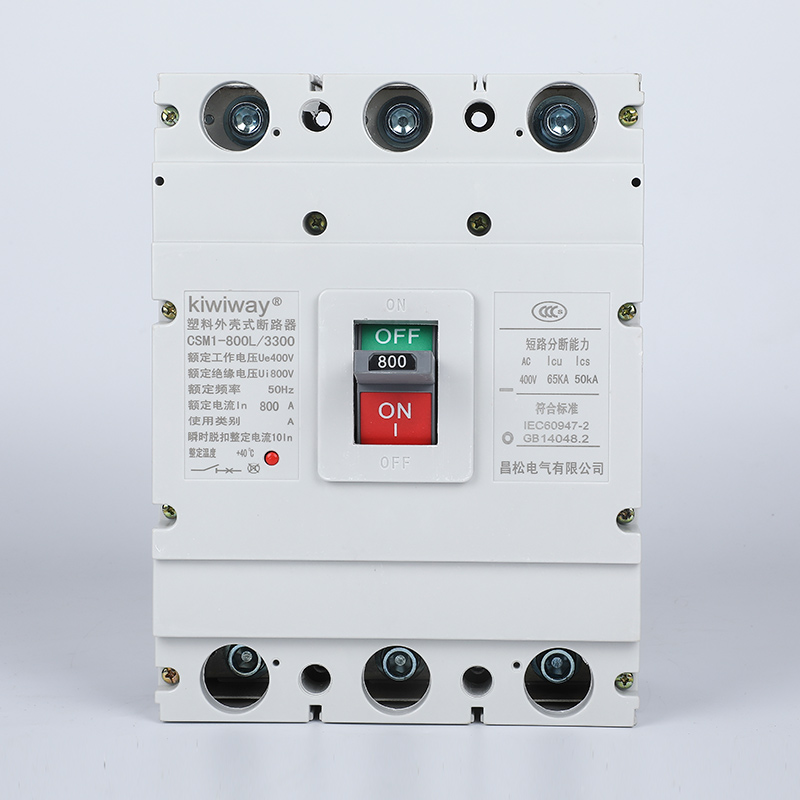
As electrical grids evolve into complex, decentralized networks, the humble circuit breaker is struggling to keep pace. Traditional breakers were built for a one-way flow of power from large plants to passive consumers, but today's smart grids juggle intermittent renewables, distributed generation, and bi-directional energy from prosumers. The old guard simply trips on overloads and shorts; a smarter breaker must do far more—monitoring power quality, communicating with grid management systems, and isolating faults with surgical precision to avoid cascading outages. Without this intelligence at the edge, the grid's vision of self-healing and real-time optimization remains a pipe dream.
Modern solid-state breakers are starting to fill that gap, blending ultrafast switching with embedded sensing and digital connectivity. They can suppress arc faults in microseconds, gather granular data on harmonics or voltage sags, and even perform condition-based maintenance alerts before components fail. In a networked system, these devices become nodes in a distributed intelligence layer, enabling dynamic reconfiguration of microgrids and seamless islanding during disturbances. This isn't just about tripping more precisely—it's about giving the grid a nervous system that anticipates and adapts rather than merely reacting.
Adoption isn't trivial though; cost, lifecycle reliability, and interoperability standards remain stubborn hurdles. Utility engineers are accustomed to electromechanical simplicity that lasts decades with minimal fuss—convincing them to embed silicon and firmware requires field-proven resilience and a clear path to integration with existing supervisory control and data acquisition (SCADA) architectures. The transition will likely be gradual, starting in critical substations and commercial microgrids where the value of advanced protection and data streams is immediately apparent. Ultimately, a grid that can learn, heal, and evolve depends on components that are as intelligent as the systems they serve—and that starts with smarter breakers.
China’s Leap in Arc-Free Switching
China is quietly revolutionizing the way we manage electrical power by pioneering arc-free switching technology. Unlike conventional circuit breakers that rely on physical contacts and inevitably generate arcs when interrupting current, these systems use solid-state electronics to seamlessly control power flow. The breakthrough lies in the ability to switch both AC and DC currents without any visible or harmful electric arc, drastically reducing wear and tear, eliminating fire hazards, and enabling much faster response times. This leap is not just about safety; it’s about laying the foundation for smarter grids and more reliable renewable energy integration, where quick, maintenance-free switching is critical.
At the heart of this innovation are advanced semiconductors like silicon carbide and gallium nitride, which can handle high voltages and currents with minimal losses. Chinese manufacturers and research institutes have been scaling up production and driving down costs, making arc-free switches viable for everything from residential solar setups to massive data centers. The benefits go beyond arc prevention—these devices can monitor their own health, predict failures, and communicate with the grid in real time. This self-awareness transforms passive circuit protection into an active, intelligent management layer, setting a new bar for what power distribution equipment can achieve.
What truly sets China’s efforts apart is the rapid deployment and scaling in real-world scenarios. Pilot projects in urban microgrids and offshore wind farms have demonstrated not just lower maintenance costs but also a dramatic reduction in outage durations. As the technology matures, it is poised to influence global standards and supply chains, pushing traditional electromechanical switchgear towards obsolescence. The shift represents a quiet yet profound change—an electrical architecture that’s inherently safer, smarter, and ready for the demands of a low-carbon future.
High-Voltage DC Unlocked
The shift toward high-voltage direct current transmission has quietly reshaped how we move electricity across continents. For decades, alternating current dominated grids, but its limits over long distances became impossible to ignore. Unlocking the true potential of HVDC meant rethinking not just cables and converters, but the entire philosophy of energy delivery—decoupling it from the constraints of reactive power and frequency synchronization.
What makes this technology stand out is its ability to act as a silent backbone for renewable integration. Offshore wind farms, desert solar arrays, and remote hydropower plants all rely on the fact that DC lines can carry massive amounts of power with minimal losses, even when buried underground or laid beneath the sea. The insulation and semiconductor advances that emerged in the last decade turned what was once a niche solution into a mainstream grid-building block, capable of reversing power flows in milliseconds to stabilize entire regions.
Behind the scenes, the real breakthrough wasn't just about voltage levels—it was about control. Modular multilevel converters and advanced digital protection systems gave operators a level of precision that AC networks simply can't offer. This unlocks new grid architectures, like meshed HVDC overlays that bypass congested corridors without adding fault current. As more interconnectors go live, the unlocked potential of high-voltage DC is proving to be the missing piece in the global push for a resilient, low-carbon energy future.
Reshaping Grid Flexibility
Grid flexibility is undergoing a fundamental redesign, shifting from a centralized, predictable model to a highly dynamic and distributed one. Traditional power systems relied on large, controllable generators to match supply with demand, but the rapid influx of renewable energy sources like solar and wind introduces variability that challenges this paradigm. The reshaping involves weaving together diverse resources—battery storage, demand response programs, and even electric vehicles—into a cohesive network that can absorb fluctuations and maintain stability. This evolution is less about adding capacity and more about orchestrating a smarter, more responsive ecosystem where every node can contribute to balance.
At the heart of this transformation lies the concept of turning constraints into capabilities. Rather than viewing the intermittency of renewables as a hurdle, grid operators now treat it as a design principle. Advanced forecasting tools, real-time data analytics, and machine learning algorithms allow the grid to anticipate shifts and react within milliseconds. Distributed energy resources, once seen as passive endpoints, are now active participants, injecting power back into the system or modulating their consumption based on market signals. This fluidity turns the grid from a rigid pipeline into a living, breathing organism that adapts to both predictable patterns and sudden disruptions.
The practical impact extends beyond technical metrics, reshaping markets and consumer relationships. New frameworks enable peer-to-peer energy trading and dynamic pricing, where households and businesses can monetize their flexible assets. This democratization of the grid fosters resilience, as communities can island themselves during outages or support the broader network during peak demand. The shift also accelerates decarbonization by maximizing the utilization of clean energy, reducing reliance on fossil-fuel peaker plants, and creating a more resilient infrastructure that can gracefully absorb future innovations without constant overhauls.
From Lab to Live Network Deployment
Taking a networking idea from a controlled lab setting to a fully operational live environment is rarely a straight line. The real world introduces unpredictable traffic patterns, quirky hardware behaviors, and legacy systems that don’t always play by the rules. Early in the transition, we learned to map out every dependency—often discovering that a protocol tweak meant for a pristine testbed could clash with an overlooked firewall rule or a decade-old load balancer config. It’s less about flawless design and more about methodical, sometimes tedious, integration work.
The actual switchover demands a choreography of incremental rollouts, canary testing, and constant monitoring. Instead of a big-bang cutover, we staged the deployment to minimize risk: starting with a shadow instance that mirrored live traffic without affecting users, then cautiously routing a trickle of real requests through the new path. Logs became our best friend—not just for debugging, but for spotting subtle shifts in latency or packet loss that wouldn’t show up in a lab simulation. Each step felt like walking a tightrope, balancing the excitement of innovation against the cold dread of an outage.
What surprised us most was how much the team’s instinct and on-the-ground experience mattered once the system went live. Automation helps, but human judgment during those first critical hours can catch anomalies that dashboards miss. After the dust settled, we had a stack of lessons: document the quirks, update the runbooks, and leave the system healthier than you found it. Moving from lab to live isn’t a finish line; it’s the beginning of the next iteration, where a network starts truly learning from its environment.
FAQ
China has pushed hybrid and solid-state DC breaker designs that slash fault interruption times to under 3 milliseconds, handle voltages above 500kV, and integrate with digital sensors for real-time grid monitoring—making them essential for meshed DC networks.
By combining mechanical switches for low on-state losses with power electronic interrupters, they achieve near-instantaneous interruption. Some prototypes use advanced semiconductor materials like silicon carbide to manage steep fault current rises without arcs.
They stabilize variable inputs from wind and solar by enabling modular multi-terminal DC grids. This allows seamless energy routing from remote generation sites to cities without AC conversion losses at every node.
DC transmission reduces line losses over long distances and simplifies asynchronous grid interconnections. China's vast geography and massive renewable bases in the west make DC the cheaper, more efficient backbone for east-west power corridors.
Creating ultra-fast actuators that can withstand millions of operations, thermal management of power electronics under continuous load, and ensuring fail-safe coordination with protection algorithms in complex DC meshes.
Faster fault isolation means fewer and shorter outages. DC grids also stabilize frequencies, enabling more rooftop solar and EV fast-charging without local transformer overloads, ultimately keeping retail prices steadier.
China's focus on super-higher voltages for bulk transmission led to unique hybrid topologies that prioritize extremely low maintenance and adaptability to harsh environments, while Western designs often target medium-voltage applications first.
Absolutely. They are pivotal for building a nationwide DC supergrid that ferries renewable power across provinces with minimal waste, displacing coal plants and enabling cross-regional balancing of clean energy sources.
Conclusion
China's recent strides in direct current circuit breaker technology mark a fundamental shift in how future grids will manage and protect power flows. Breaking through longstanding barriers in DC interruption, engineers have moved beyond conventional mechanical breakers prone to dangerous arc formation. By pioneering arc-free switching mechanisms that leverage advanced power electronics, they’ve created devices capable of interrupting fault currents in milliseconds without the destructive energy release that once made high-voltage DC systems impractical. This leap has unlocked the door to higher voltage DC transmission and distribution, overcoming one of the biggest obstacles to building resilient, efficient smart grids that can integrate renewables and handle bidirectional energy flows.
These innovations are reshaping grid flexibility in ways that conventional AC infrastructure cannot match. Smart grids need smarter breakers—ones that can react to dynamic load and generation patterns, isolate faults with surgical precision, and reconfigure networks on the fly. China’s development pipeline has moved beyond theory, with prototypes and pilot installations now transitioning from lab to live network deployment. Early field data shows that these DC breakers not only slash outage times but also enable new grid architectures that can seamlessly blend urban microgrids, data centers, and industrial parks into a single, adaptive power ecosystem. As more live sites come online, the evolution from laboratory curiosity to operational reality is accelerating, setting a global benchmark for intelligent DC grid infrastructure.
Contact Us
Contact Person: Tonglun Chen
Email: [email protected]
Tel/WhatsApp: 8618906642555
Website: https://www.cncsele.com