

China Motorized Regulating Valves: Key Benefits and Selection Tips for Industrial Applications
2026-11-16
Selecting the right motorized regulating valve can make or break an industrial fluid control system, especially when precision, durability, and energy efficiency are non-negotiable. As processes become more automated, the demand for valves that deliver accurate modulation with minimal maintenance continues to rise across sectors like chemical processing, water treatment, and HVAC. High-performance solutions, such as those from HONGSEN, are engineered to meet these exacting standards, offering streamlined flow control and extended service life. In this guide, we break down the critical benefits of motorized regulating valves and share practical selection tips, helping you avoid common pitfalls and optimize your system’s performance.
Why More Engineers Are Turning to Chinese Motorized Regulating Valves
Not long ago, the assumption in many engineering departments was that critical valve components had to come from a narrow set of legacy suppliers in Western Europe or North America. That calculus is shifting rapidly. Chinese motorized regulating valves have moved from being a cost-reduction experiment to a standard specification item for a growing number of projects, especially where lead times, customization, and local support carry real weight. Engineers are finding that the performance gap they once worried about has largely disappeared, replaced by transparent technical documentation, on-demand testing data, and a willingness to iterate quickly on design requests.
What often tips the balance is the speed and depth of post-sales engineering collaboration. Rather than navigating layers of distribution partners, engineers can work directly with factory technical teams that understand the operating logic behind their valve control algorithms, actuation torque profiles, and fail-safe sequencing. This tight feedback loop shortens commissioning time and reduces the guesswork during integration into building management systems, district heating networks, or industrial process lines. Combined with substantial improvements in materials traceability and certifications that now align with widely accepted international standards, the risk perception has softened considerably.
Another less obvious driver is inventory agility. In a supply environment where even basic components can face multi-month delays, the ability to receive a batch of tested, tagged, and properly documented motorized regulating valves within weeks rather than quarters changes project timelines in a fundamental way. This reliability in delivery, paired with competitive pricing that is no longer the primary selling point, makes the switch feel more like a calculated engineering choice than a simple procurement decision.
Beyond the Price Tag: Long-Term Value of Motorized Regulating Valves
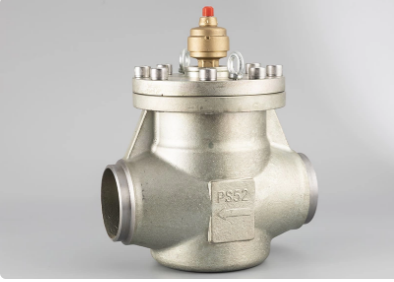
When evaluating motorized regulating valves, it's tempting to fixate on the initial purchase figure. But that number barely scratches the surface. The real story unfolds over years of operation, where precision flow control translates directly into slashed energy bills, fewer process upsets, and dramatically extended maintenance intervals. A valve that holds its accuracy under fluctuating loads doesn't just perform a task—it quietly reshapes the plant's whole cost structure.
Think about what happens when a cheap actuator starts to drift. Operators compensate by running pumps harder, burning fuel to overcome inefficiencies nobody measures. Before long, the savings from that lower bid evaporate into wasted steam, reruns, and unplanned shutdowns. High-quality motorized valves, by contrast, keep tuning themselves to match demand curves, often integrating with building or plant management systems in ways that turn a simple component into a proactive energy asset.
Then there's the matter of uptime. A robust regulating valve built with serviceability in mind will typically outlast two or three cheaper alternatives, sparing you the hidden costs of scaffolding, crane time, and production loss during changeouts. Over a ten- or fifteen-year span, that reliability compounds—fewer spare parts on the shelf, fewer midnight callouts, and a process that simply hums along. The price tag is just the cover charge; the lasting value is the performance you live with every day.
Matching Valve Specifications to Harsh Industrial Environments
Valves that survive in harsh industrial settings aren't simply upgraded versions of standard designs—they're engineered from the ground up to confront a specific set of destructive forces. Whether it's the relentless chemical attack in a chlor-alkali plant, the abrasive slurry chewing through mining pipelines, or the thermal cycling that turns ordinary alloys brittle at cryogenic temperatures, each environment demands a tailored material and dimensional response. The selection process begins by mapping every stressor the valve will face: not just the primary media but trace contaminants, cleaning procedures, and transient conditions like steam purges or pressure spikes. A Hastelloy C-276 trim might shrug off hot sulfuric acid where 316 stainless steel would dissolve in weeks, but it offers no advantage against erosive fly ash particles that call for a ceramic-lined body and hardened seating surfaces. The key is refusing to over-specify—adding exotic alloys where they're not needed can drive up cost without improving safety, while under-specifying a single gasket material can trigger a failure cascade.
Smart Integration: How Motorized Valves Fit into Modern Automation
Think of a modern production line where every movement happens without someone standing next to a handwheel. Motorized valves are the quiet enablers behind that shift. Instead of relying on manual adjustments or crude on/off pneumatics, these valves accept precise electronic signals from a central controller, adjusting flow rates, pressure, and direction in real time. Their real value isn't just in opening or closing—it's in their capacity to modulate, self-diagnose, and feed position data back into the system without adding a layer of complexity that operators have to babysit.
When engineers talk about integration, they're often thinking about protocols and wiring, but the practical side is far more interesting. A motorized valve can sit on an Ethernet/IP or Modbus network and behave like a native node on that architecture. That means a temperature spike detected by a sensor upstream can trigger a valve to throttle down almost instantly, or a batch process can switch fluid paths without a hard stop. What keeps it clean is the onboard intelligence—many units now incorporate torque sensing and cycle counting, so maintenance becomes predictive rather than reactive. The physical hardware disappears into the software layer, and that's exactly where it should be.
The move toward digital twins and edge computing makes motorized valves far more than simple actuators. They gather operational fingerprints over time, letting the system learn what normal behavior looks like and flag tiny deviations before they become faults. In sectors like water treatment or pharmaceutical manufacturing, this shifts the conversation from “which valve do I need?” to “how does this valve make the entire loop smarter?” The result is a network of devices that self-coordinate, reduce energy waste, and let operators focus on exceptions rather than routine checks.
Common Pitfalls When Selecting Regulating Valves (and How to Avoid Them)
One of the more stubborn mistakes happens right at the sizing stage. A valve that’s too large for the actual flow range can end up operating almost constantly near its seat, leading to wire drawing, erosion, and instability long before the expected service life runs out. The fix isn’t complicated but demands honesty about the real process data—shoot for a valve that controls well between 20% and 80% of its stroke under normal conditions, not the occasional upset that forces it wide open.
Material selection trips people up in quieter ways. It’s easy to think that if the body holds up to the pressure, everything else will follow. What really causes grief is the trim. Small differences in flow erosion, chloride content, or even trace oxygen can eat through the plug or the seat ring while the body sits there looking fine. Skipping the material compatibility review—especially when process conditions can shift with temperature or startup—is what turns a two-year valve into a six-month headache.
Actuator sizing gets overlooked more often than it should. A valve might be sized perfectly for the flow, but if the actuator can’t reliably seat it against full differential pressure or break it loose after a shutdown, you’re going to be chasing control problems that mimic bad tuning. The habit of pairing a valve with whatever actuator happens to be on the shelf or picking the cheapest option without verifying torque and stiffness margins almost always costs more in downtime later.
Real-World Gains: Lessons from Industrial Valve Upgrades
Swapping out aging valves in a chemical processing plant rarely makes headlines, but the ripple effects often rewrite maintenance schedules entirely. One facility running a 24/7 caustic soda line saw its seat leakage drop from nearly two gallons per minute to undetectable levels after upgrading to live-loaded, double-offset butterfly valves. The real surprise wasn't the spec sheet performance—it was the unplanned downtime that vanished. Operators who once budgeted for six emergency call-outs a year suddenly found themselves running preventive checks twice annually with zero surprises in between.
Beyond the obvious reduction in fugitive emissions, the upgrade shifted how the plant approached instrumentation. With legacy metal-seated ball valves, positioner feedback was consistently noisy because minor sticking sent the actuator hunting. The newer high-performance butterfly design, paired with a digital positioner and an anti-cavitation trim, gave control room engineers a clean signal for the first time in years. This let them tighten the deadband on cascade loops without risking oscillation, which in turn stabilized reactor temperatures enough to reduce catalyst consumption by four percent—a saving that didn’t even appear in the original payback calculation.
Perhaps the least discussed lesson was how the upgrade changed training and spares management. Since the new valve platform shared trim kits and actuator mounts across a broad size range, the storeroom footprint shrank and technicians stopped confusing similar-looking models. More importantly, the straightforward assembly meant junior staff could rebuild a valve during a shift without escalating to a factory-trained specialist. Over eighteen months, the plant logged not just better valve performance, but a measurable drop in mean time to repair—proving that real-world gains often materialize far from where you expect them.
FAQ
A motorized regulating valve uses an electric actuator to adjust the position of the valve plug, controlling flow rate, pressure, or temperature precisely. In factories, it receives signals from a control system—like a 4-20 mA loop or digital bus—and moves accordingly, allowing real-time modulation instead of simple on/off operation. This makes it ideal for processes that demand steady, repeatable performance without constant manual tweaking.
China has matured into a serious manufacturing hub for these components, offering a blend of solid engineering and competitive pricing. Local suppliers have invested heavily in CNC machining, automated actuator assembly, and quality testing, often matching international standards like ISO 9001. You can get a valve with comparable performance to Western brands but at a cost that frees up budget for other upgrades, plus shorter lead times if you're sourcing within Asia or arranging consolidated shipments.
The biggest win is precise control under tough conditions. They handle aggressive fluids, high temperatures, and slurries while maintaining accuracy. Unlike pneumatic valves, they don't need a compressed air infrastructure, which simplifies installation and cuts energy use. The electric actuator can also provide diagnostic data—like torque profiles and cycle counts—helping maintenance teams spot issues before they cause downtime. For continuous operations, this reliability translates directly into higher yields and fewer unplanned shutdowns.
Start by nailing down the actual process data: flow medium, pressure drop, required Cv, temperature range, and pipe size. Too many people guess and oversize, which kills control at low openings. Match the valve characteristic—equal percentage, linear, or quick opening—to the system's behavior. For example, equal percentage works well when most pressure drop is in the piping, not the valve itself. Also, the actuator must have enough thrust to overcome differential pressure at shutoff. It's often worth working directly with a manufacturer's application engineer to avoid costly mismatches.
While electric actuators have fewer moving parts than pneumatics, they still need occasional checks. Keep the stem clean and lubricated, verify that the heater or breather in the actuator housing is functional to prevent condensation, and periodically stroke the valve to full range—especially if it sits in one position for weeks. Many corrosion issues in harsh environments start at the packing gland, so monitor for minor leaks early. A quick insulation resistance test on the motor annually can catch moisture ingress before the winding fails.
Yes, but it requires careful selection. Trims designed for micro-flow—like needle profiles or small-capacity Cv ratings—let the valve modulate within a tiny range without hunting. Look for actuators with high resolution positioning, often using stepper motors or servo feedback, so the stem can move in fractions of a millimeter. Cavity design matters too: a reduced port and anti-cavitation trim prevent instability when the valve is barely cracked open. China's specialist manufacturers are increasingly offering custom trims for these niche applications without the long lead times that used to be common.
Conclusion
The shift toward Chinese motorized regulating valves is no longer just about cutting costs—it reflects a deeper appreciation for engineering flexibility and dependable long-term performance. These valves now routinely handle aggressive chemicals, high-pressure steam, and dusty mining slurries thanks to carefully matched materials and robust actuator designs that avoid common oversizing mistakes. Rather than settling for off-the-shelf units, seasoned engineers are specifying hardened trims, live-loaded packing, and IP68-rated enclosures to maintain tight shutoff and smooth modulation despite extreme temperatures or corrosive atmospheres. This practical, field-driven customization is why more teams see Chinese suppliers as genuine process partners instead of low-bid shortcuts.
Beyond hardware, the quiet integration of these valves into modern automation stacks is changing what users expect from budget-conscious solutions. Digital positioners with open communication protocols like Modbus RTU or PROFIBUS DP slip easily into existing PLC and DCS architectures, delivering real-time diagnostics and predictive maintenance alerts that sidestep sudden downtime. Plants that previously danced around retrofit complexity now report streamlined loops and fewer surprise failures after swapping aging pneumatics for intelligent electric or electro-hydraulic actuators. The takeaway from recent upgrades is clear: true value lies not in the initial invoice but in selecting a valve built squarely for the process conditions, integrating it thoughtfully with control systems, and leaning on local engineering support that can iterate quickly when production requirements shift. Those who focus solely on price keep tripping over overlooked precision, cyclic life, or after-sales gaps, while teams that weigh the full operational picture discover a reliable, scalable asset that quietly outperforms old assumptions.
Contact Us
Contact Person: KOPASS HO
Email: [email protected]
Tel/WhatsApp: 8613606566112
Website: https://www.hongsenref.com/