

China Ring Main Unit Factory Drives Innovation in Power Distribution
2026-08-27
Most power distribution equipment never gets a second glance—until it fails. That's where the quiet work of China's ring main unit manufacturers becomes critical. At the center of this shift is CNKEEYA, a factory turning conventional switchgear design on its head. Instead of chasing incremental gains, their team is rethinking insulation, arc management, and modularity for grids that have to do more with less. The result is a new generation of RMUs that promise fewer outages, simpler maintenance, and smarter integration. Here's a closer look at how innovation is moving from the factory floor to the front line of power distribution.
Tight Spaces, Smarter Switchgear
Cramped electrical rooms and retrofit projects rarely leave room for bulky cabinets and wide service clearances. That's where compact switchgear design earns its keep—not by stripping features, but by folding them into a smaller footprint. Front-accessible terminations, removable cable compartments, and reduced depth requirements let installers work against a wall instead of clearing three feet of dead space. The result is a lineup that fits into areas older gear simply couldn't, without demanding that operators sacrifice safety or accessibility.
Smaller dimensions alone don't make switchgear smart, but they force smarter choices. Busbar arrangements get rethought to handle the same thermal load in less volume. Ventilation paths become active rather than passive, using directed airflow or sealed compartments to keep heat away from sensitive electronics. Digital sensors slip into place where mechanical meters used to live, delivering real-time load data, contact wear tracking, and temperature rise alerts to a local display or remote dashboard. Maintenance shifts from calendar-based guesswork to condition-based action—useful when every outage hour costs more than the panel itself.
The real payoff shows up in brownfield sites, where floor space is already spoken for and downtime is measured in lost production minutes. A shorter, narrower switchgear line can slide into an existing vault without knocking down walls, while its built-in monitoring flags a degrading breaker before it trips under load. That kind of silent cooperation between compact hardware and embedded intelligence turns a tight corner into a strategic advantage: less room to work with, but far more control over what happens inside.
Local Factories, Global Reliability Standards
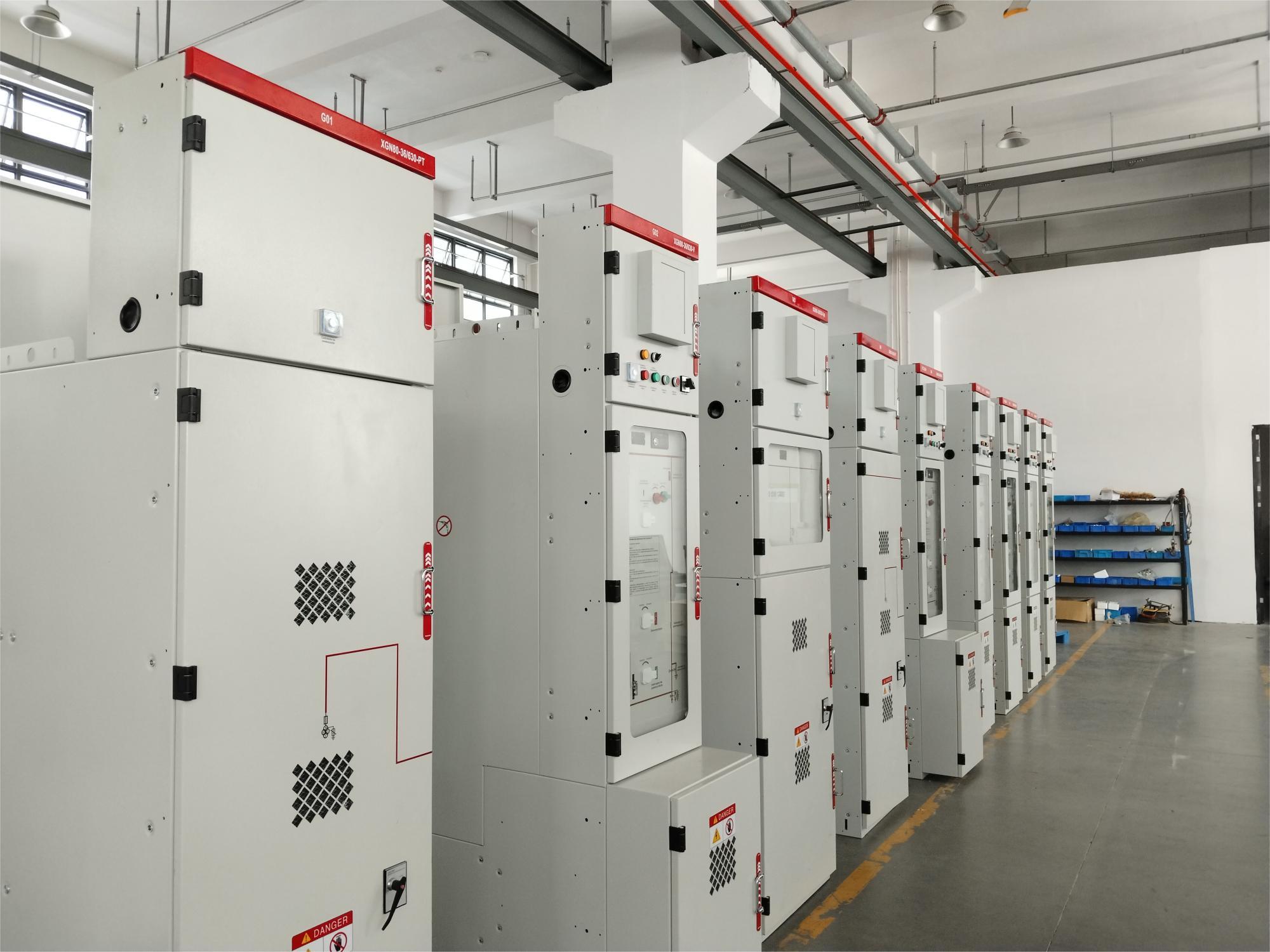
Local factories often carry a reputation for flexibility, but ours pair that with uncompromising adherence to internationally recognized quality benchmarks. Every production line follows documented procedures that mirror the same checks used by leading manufacturers in Europe and North America, so what ships from a nearby facility doesn't sacrifice an ounce of consistency.
Instead of treating compliance as a paperwork exercise, we build reliability into daily routines. Calibration logs, material traceability, and spot inspections are reviewed by a dedicated quality team that reports directly to plant leadership. This keeps short decision chains from turning into shortcuts, and it means a part made on a Tuesday meets the same tolerances as one made on a Friday.
The payoff for customers is tangible: local delivery schedules without the variability that sometimes comes with regional production. Because the factory operates under a single, externally audited quality system, buyers can rely on repeat orders matching the first sample—no surprises, no rework, just dependable output from a nearby source.
The Shift to Solid Insulation
For decades, mineral oil and paper dominated insulation systems in medium- and high-voltage equipment. That dominance is fading as utilities and industrial operators move toward solid dielectric designs based on epoxy resins and other castable polymers. The main drivers are practical: no oil to sample, filter, or replace; no risk of leaks contaminating soil or groundwater; and a significant reduction in fire load. Solid insulation also allows sealed, maintenance-free construction that suits indoor substations, underground vaults, and locations where access is limited.
The shift is not just about convenience. Modern solid insulation systems perform impressively under electrical, thermal, and mechanical stress. Epoxy resin, for instance, can be cast around windings and cores to eliminate air voids, which are common initiation points for partial discharge. The resulting components have excellent short-circuit strength, improved moisture resistance, and stable dielectric properties over a wide temperature range. Because the insulation is an integral structural element, manufacturers can produce compact bushings, instrument transformers, and switchgear parts that combine several functions in one molded piece.
Adoption has been particularly strong in distribution transformers, where cast-resin dry-type designs now serve hospitals, data centers, wind turbines, and urban networks. Solid insulation also enables submersible and pad-mounted equipment to operate safely in flood-prone areas without oil containment systems. The trade-offs include higher initial cost for some ratings and challenges in recycling complex epoxy composites. However, as resin formulations become tougher and more thermally conductive, the shift toward solid insulation is likely to extend into higher voltage classes and more demanding outdoor applications.
Digital Twins Enter the Ring Main Unit
The shift from static CAD drawings to live digital replicas has quietly reached the distribution grid. For ring main units, this means every breaker operation, cable termination temperature, and partial discharge signal now feeds a continuously updated virtual model. Maintenance teams no longer guess based on nameplate ratings—they watch a real-time shadow of the unit breathe alongside its physical counterpart.
Building such a twin starts with parameterizing the RMU's geometry and electrical topology, then binding sensor streams to those virtual nodes. The model learns normal operating envelopes over weeks, flagging subtle drift in contact resistance or gas pressure before a fault matures. What once required scheduled outages and manual thermography now happens continuously, with the twin zooming into suspect compartments and replaying the last hundred switching cycles.
The payoff appears in planning and emergency response alike. Utilities simulate load transfers or fault scenarios on the twin before touching the physical switchgear, cutting outage minutes and preventing misoperations. Older RMUs retrofitted with lightweight IoT sensors still gain a functional twin, even without factory-built digital interfaces. As more of these twins connect across feeder networks, the ring main unit stops being a dumb iron box and starts acting like a node with memory, foresight, and a constant readiness to explain itself.
Cutting Outages With Self-Healing Grids
Modern distribution networks are moving away from passive infrastructure that waits for a fault to be reported. A self-healing grid uses sensors, automated switches, and local decision-making to detect problems in real time and reroute power before customers even notice a flicker. Instead of dispatching a crew to patrol miles of line, the system isolates the affected segment within seconds and restores service to surrounding areas through alternate feeders.
The real advantage shows up during storms or equipment failures that would normally knock out thousands of homes. By coordinating reclosers and sectionalizers through distributed logic, the grid can split into smaller islands, keep critical loads energized, and reduce the number of people left in the dark. Utilities that have rolled out these schemes report outage minutes dropping by half or more, which translates directly into fewer truck rolls and lower operational costs.
What makes this approach stand out is how it handles the messy reality of aging infrastructure. Rather than replacing every mile of cable, operators retrofit existing lines with smart devices that communicate over wireless or fiber. The system learns normal load patterns and can tell the difference between a tree branch brushing a conductor and a permanent fault, avoiding unnecessary lockouts while still protecting equipment. Over time, that adaptive behavior cuts both the frequency and duration of interruptions without demanding a complete rebuild.
Redesigning for Harsh Climates
Redesigning for harsh climates starts with questioning the assumption that a single building model can work everywhere. In cold regions, architects are moving away from thin curtain-wall facades toward thicker, super-insulated envelopes that keep heat where it belongs. In hot, arid zones, the focus shifts to shading, cross-ventilation, and materials with high thermal inertia, like rammed earth or stone, which slow the transfer of outdoor heat into interior spaces. These choices aren't just technical; they change how a building feels and how much energy it consumes over decades.
Extreme weather events add another layer. Coastal structures now often sit on raised plinths or breakaway ground floors to handle storm surges, while roofs are designed to resist uplift from hurricane-force winds. Rather than treating these as add-ons, designers integrate them into the building's form. A sloped roof might double as a wind deflector, and a shaded courtyard can become a cool refuge during heat waves. This kind of redesign demands close attention to local climate data—prevailing wind directions, rainfall intensity, temperature swings—so each decision responds to a specific set of stressors.
Ultimately, redesigning for harsh climates is less about high-tech gadgets and more about reconsidering basics: orientation, massing, material selection, and occupant behavior. A well-designed home in a subarctic town might use a compact footprint and south-facing glazing to capture low winter sun, while the same floor plan would fail in a humid tropical city. By treating climate as a design constraint rather than an afterthought, buildings become more resilient, cheaper to operate, and more comfortable without relying heavily on mechanical systems.
FAQ
It sits between the primary substation and end users, letting operators isolate a cable fault and switch supply to an alternate path. That keeps lights on for most customers instead of triggering a wider outage.
They have moved from hand-assembled components to heavily automated lines with laser cutting, robotic welding, and automated pressure testing. The result is tighter tolerances, fewer leaks, and faster delivery times.
Many now offer SF6-free designs using dry air or vacuum interruption, along with built-in sensors for partial discharge and temperature. These changes reduce environmental impact and give utilities better condition data.
SF6 is a potent greenhouse gas with strict handling and reporting requirements. Dry air and solid insulation alternatives lower the carbon footprint while still meeting dielectric and switching performance.
They can include motorized actuators, voltage and current sensors, and communication modules. A control center can then switch feeders remotely, locate faults faster, and restore service without sending a crew first.
Compact outdoor or underground distribution points in cities, industrial parks, mining sites, and renewable energy collection stations. Their sealed enclosures handle harsh weather and limited space.
Most follow IEC 62271 for high-voltage switchgear and also meet GB or DL standards for the domestic market. Type tests cover internal arc resistance, mechanical endurance, and temperature rise.
Yes, utilities in Southeast Asia, the Middle East, Africa, and Latin America increasingly buy them for cost-effective, reliable switchgear. Local service teams and faster spare parts supply help build trust.
Conclusion
Across China's manufacturing hubs, ring main unit builders are squeezing more protection into less space. Urban substations and industrial parks rarely have spare room, so the latest switchgear uses modular, slim enclosures while keeping full isolation and breaking capability. These same factories are also aligning their testing with the IEC and GB standards expected in mature markets, which means buyers no longer have to choose between local pricing and global reliability. Perhaps the biggest change in recent years is the gradual replacement of SF6 gas insulation with solid dielectric materials. That eliminates gas leaks, cuts maintenance visits, and makes units more forgiving during transport and installation—an advantage when equipment travels to remote mining or renewable sites.
The integration of sensors and edge controllers is turning the ring main unit into an active grid node rather than a passive switching point. Real-time measurements feed digital twin models that operators use to rehearse load transfers or spot abnormal heating before it becomes a fault. If a fault does occur, self-healing schemes automatically open and close motorized switches to isolate the problem and bring unaffected feeders back online in seconds. Meanwhile, enclosure design has evolved for harsh environments: better gaskets against humidity, powder-coated finishes for coastal corrosion, and internal heaters or cooling for temperature extremes. These aren't just incremental tweaks—they represent a deliberate push by Chinese factories to compete on engineering depth, not just production volume.
Contact Us
Contact Person: Queenie
Email: [email protected]
Tel/WhatsApp: +86 15558806611
Website: https://www.cnkeeya.com