

Chinese Storage Tank Options: A Practical Guide for Industrial Buyers
2026-08-30
Every industrial buyer wants a storage tank that won’t leak, corrode, or drain the budget—but the Chinese market offers wildly different paths to that goal. Whether you’re comparing epoxy-lined carbon steel for aggressive chemicals or mirror-polished stainless for food-grade use, the real story is in the welds, plate thickness, and certification paperwork. That’s where many importers stumble. At DYE, we’ve distilled the key options into a practical framework, so you can skip the guesswork and focus on tanks that actually fit your process. Here’s what industrial buyers need to know before placing an order.
Matching Tank Types to What You Actually Store
People often grab a generic storage tank without thinking about what will actually sit inside it. But a tank built for water won't hold up if you dump in something acidic, and a thin-walled container can buckle under liquids that expand with temperature swings. Start by listing the exact substances you plan to store, including any impurities or cleaning agents that might end up in the mix. A stainless steel tank with a proper internal coating handles mild corrosives fine, while plain carbon steel is cheaper but will rust fast if the contents have even a hint of salt or chlorine.
Beyond the material, consider how the stored product behaves over time. Some fuels and solvents give off vapors that build pressure, so a fixed-roof tank needs a venting system or a floating roof to prevent deformation. Thick oils and syrups might require heating coils to stay pumpable, or you'll spend half a day trying to drain a sluggish mess. If you rotate stock often, a simple vertical cylinder with a bottom outlet may suffice, but frequent mixing or sampling calls for access ports and baffles that keep flow steady.
The worst mistakes come from forcing one tank style to do too many jobs. A double-wall tank with leak detection is overkill for storing rainwater, yet a single-wall plastic tote becomes a safety hazard when used for diesel near a heat source. Match the tank's fittings, wall thickness, and interior finish to the harshest condition it will ever face—not just the everyday average. A little extra thought upfront saves you from corrosion leaks, vapor losses, and the headache of replacing a tank that was never right for the job.
Why Steel Origin Matters More Than the Grade on Paper
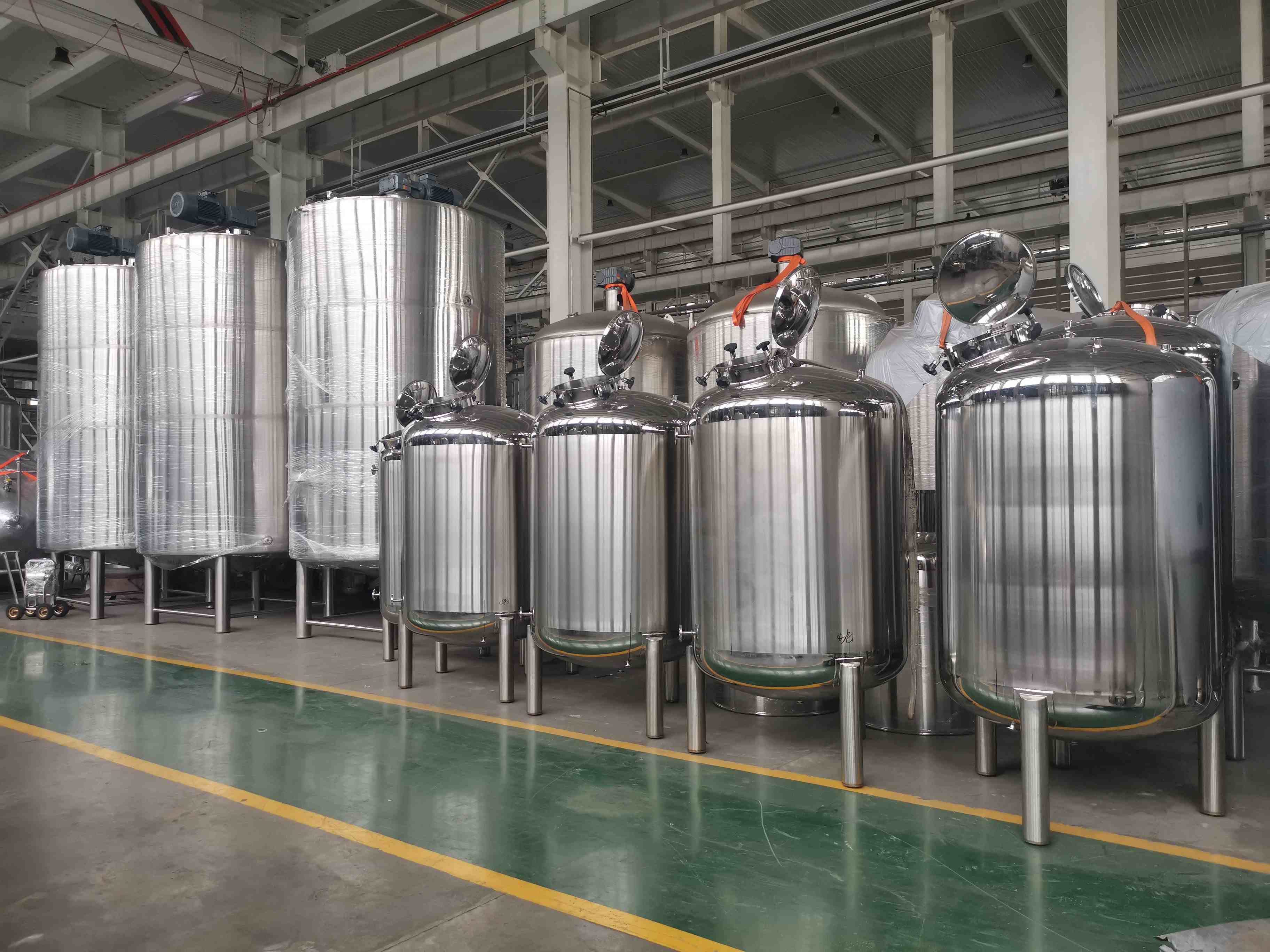
Walk into any supplier's warehouse and you'll see stacks of steel with identical grade stamps—4140, A36, S355. The paperwork says they're interchangeable. But put two bars from different mills under a microscope or into a CNC machine, and the truth comes out fast. The grade on paper only tells you the chemical recipe and a rough heat treatment target. It says nothing about how the mill controlled non-metallic inclusions, how slowly the ingot cooled, or whether the rolling schedule left residual stress locked inside. That's why two bars with the same certificate can behave like distant cousins once you start cutting, welding, or bending them.
Steel origin shapes everything downstream because steelmaking is not a single process but a chain of decisions. A mill that uses electric arc furnaces with high scrap ratios will produce steel with different tramp element levels than one relying on blast furnaces and virgin iron ore. Even within the same mill, the shift, the ladle metallurgy practice, and the caster speed leave fingerprints in the grain structure. When you buy by origin, you're not buying a commodity—you're buying the consistency of a specific production culture. A Japanese mill known for tight sulfur control will give you predictable machinability every single order. A low-cost mill that fluctuates its scrap feed will give you a surprise with every heat number.
The real cost of ignoring origin shows up in reject rates, tool wear, and warranty claims. A gear shop that switches from Swedish bearing steel to a local equivalent with the same DIN grade might save 15% on the invoice and lose 30% in extra grinding time and cracked teeth after heat treatment. Welders know it better than anyone: two plates of S355 from different continents can have drastically different weldability because micro-alloying and deoxidation practice vary so much. So before you trust the grade on paper, ask where the steel was born, who poured it, and what their rejection history looks like. The origin is the real specification—the grade is just the cover page.
How Provincial Codes Change Wall Thickness and Nozzle Placement
Local amendments often take the generic wall thickness tables from national standards and tweak them based on regional corrosion data or seismic history. A coastal province, for example, might require an extra 1.5 mm on carbon steel piping because salt-laden air accelerates pitting, while an inland code with hard water focuses more on scaling allowances than external attack.
Nozzle placement rules shift just as dramatically once you cross provincial lines. Some jurisdictions mandate minimum distances from vessel seams or support lugs to reduce stress concentration, while others care more about accessibility for ultrasonic testing. In one province, a 50 mm offset from the longitudinal weld is non-negotiable; a neighboring code might allow 25 mm but force you to add a reinforcing pad around every small-bore connection.
Fabricators who work across multiple regions quickly learn that the national code is only a baseline. Provincial inspectors often carry their own interpretation documents, and those interpretations can push wall thickness up by a full schedule or relocate a nozzle by several pipe diameters. Smart shops keep a matrix of local requirements next to the welding procedure specs, updating it after every shop audit or field rejection.
Reading a Factory Quote for Hidden Costs
A factory quote rarely tells the whole story. The unit price you see on paper often leaves out logistics surcharges, packaging upgrades, tooling amortization, or minimum order quantity penalties that surface later in the process. If you treat that initial number as final, you're setting yourself up for an awkward conversation when the invoice arrives.
Look beyond the headline figure and ask for a line-item breakdown. Freight terms, payment fees, inspection charges, and even the cost of revising spec sheets can quietly inflate the total. One useful habit is to request a “landed cost” estimate early, so every incidental expense gets accounted for before you commit.
Finally, compare quotes not by total price, but by what each supplier actually includes. A slightly higher quote that bundles in quality checks, proper export packing, and clear delivery terms often beats a cheaper one that treats those as add-ons. Hidden costs usually aren't malicious—they're just unspoken until someone asks the right questions.
A No-Nonsense Approach to Third-Party Inspection
A no-nonsense approach to third-party inspection cuts through the fluff and focuses on what actually matters: verifying that the product in front of you matches the specifications you agreed upon. Too many inspection routines get bogged down in paperwork, endless checklists, and vague terminology that leaves both buyer and supplier guessing. Instead, start with a clear, measurable acceptance criteria—dimensions, tolerances, material grades, functional tests—and let the inspection be a straightforward pass-or-fail against those numbers. If a measurement is out of spec, don't soften the language; call it a defect, record it with photos, and move on. The goal is not to punish the factory but to give you an unvarnished snapshot of what's shipping, so you can make a quick, informed decision without weeks of back-and-forth.
Practicality is the backbone of this method. That means sending an inspector who knows the product well enough to spot real issues—not just someone ticking boxes on a generic form. Before the inspection, agree with the supplier on the sampling plan (AQL or a custom lot size) and the exact defect classification: critical, major, or minor. Then let the inspector do the job without interference. A no-nonsense report will have a clear summary up front: total quantity checked, number of defects found, and the final verdict—ship, rework, or reject. There's no need for ten pages of boilerplate; a concise, evidence-based report is faster to read and harder to argue with.
Finally, remember that third-party inspection is a tool, not a guarantee. A clean report means the sampled units met the criteria at that moment; it doesn't mean every unit in the container is perfect. That's why you should pair inspections with a solid purchase contract and a clear corrective action process. If a major defect shows up repeatedly, address the root cause with the factory instead of just re-inspecting the next lot. A no-nonsense approach keeps the focus on risk reduction and real-world outcomes—fewer surprises at your warehouse, fewer chargebacks, and a supplier relationship built on measured facts rather than wishful thinking.
Clearing Customs and Handling Damage Claims Without Losing Sleep
The moment a shipment arrives with a crushed corner or a missing pallet, your mind starts racing through paperwork, phone calls, and the sinking feeling of a dispute that could drag on for weeks. Yet the most effective approach is rarely the frantic one. Start by treating customs clearance and damage claims as two sides of the same coin: both demand precise documentation, a calm sequence of actions, and an understanding that the first person you reach is rarely the decision-maker. Photograph everything before touching the goods, note the condition on the delivery receipt without signing away your rights, and then separate the two tracks—customs will ask for commercial invoices and packing lists, while the carrier will want a formal claim with evidence of value and loss.
What keeps most people up at night is not the paperwork itself but the fear of making an irreversible mistake. A useful trick is to treat the process like a conversation with a very literal-minded auditor: every statement you make should be supported by a document, a timestamp, or a photo. If customs asks for a harmonized code, don't guess—pull the product specification and match it line by line. If the freight forwarder says the damage is "concealed," ask them to define that term in writing and explain how it applies to your case. Often, the difference between a claim that gets paid in three weeks and one that lingers for three months is simply whether you submitted a complete set of photos showing the exterior packaging, the interior cushioning, and the damaged item from multiple angles before you moved anything.
Finally, remember that neither customs nor the carrier benefits from your sleepless nights. Their systems are built for routine resolution, but they only work when you feed them the right information at the right time. Set a single folder—physical or digital—where every email, label, invoice, and photo lives from the moment you learn of the problem. Then schedule two follow-ups: one at the midpoint of the expected timeline and one at the deadline. Most delays come from missing data, not malicious intent. By detaching your emotions from the process and treating it like a simple inventory audit, you can clear customs and settle damage claims with the same energy you'd use to reconcile a monthly bank statement—and still sleep through the night.
FAQ
You’ll mostly see carbon steel, stainless steel (304 and 316L), and occasionally duplex or aluminum. Carbon steel is the budget pick for non-corrosive fluids, but it needs a proper internal coating if you’re storing anything aggressive. Stainless 316L costs more up front and wins for chemical resistance. Ask for mill certificates and check the actual grade—not just the sales pitch.
Don’t rely on a spec sheet alone. Request design calculations stamped by a registered engineer, and compare them against your operating pressure plus a safety margin. For pressurized tanks, ask if they follow GB 150 or ASME Section VIII if you need international compliance. A cheap tank that only handles atmospheric pressure will buckle under vacuum or slight overpressure.
Standard vertical tanks often ship in 4 to 6 weeks. Custom sizes, special alloys, or internal linings push that to 8 to 12 weeks. Add another 2 to 4 weeks for ocean freight and customs clearance. If a supplier promises half that time, ask what they’re skipping—usually it’s testing or proper surface prep.
Most larger factories will do full custom fabrication—nozzle locations, manways, heating coils, bracket supports, you name it. The catch is that changes add engineering time and cost. Send a marked-up drawing early. Smaller trading companies often say yes but then push you toward a stock design, so confirm whether you’re dealing with a factory or a middleman.
For domestic Chinese standards, look for GB certification and a pressure vessel manufacturing license if applicable. For export, ask for ISO 9001 at minimum, plus material test reports, weld procedure qualifications, and hydrostatic test results. If you need it for food or pharma, request surface finish documentation and passivation records. Never accept a generic 'certificate of quality' as a substitute.
Welded tanks are stronger and better for pressure or vacuum, but they’re harder to repair and can’t be knocked down for relocation. Bolted tanks are faster to install and easier to ship in pieces, but they’re usually limited to atmospheric storage and need regular gasket checks. If your site has tight access or you might move the tank later, bolted makes sense. Otherwise, welded gives you more design flexibility.
Freight is the obvious one, but also check for crating fees, port charges, and customs duties. Internal coatings or linings are often quoted separately. Then there’s inspection: if you want third-party testing before shipment, that costs extra. Finally, leave room for site modifications—nozzle flanges that don’t match your piping or anchor bolt holes slightly off. Cheap tanks become expensive when you have to rework them on site.
Conclusion
Choosing a storage tank from China isn't just about picking the biggest or cheapest option—it's about matching the vessel to what you'll actually put inside. A tank rated for water might fail catastrophically with certain chemicals, so the first step is knowing your product's compatibility, temperature swings, and pressure requirements. Beyond that, steel origin matters more than the grade stamped on the paperwork. Mills in different regions have varying reputations for impurity control and traceability; a certificate saying "Q345R" doesn't guarantee the plate came from a mill that consistently meets sulfur and phosphorus limits. Then there's the patchwork of provincial codes. What passes in Jiangsu might not fly in Shandong when it comes to minimum wall thickness after forming or where nozzles can be placed relative to weld seams. Buyers who ignore these local rules often end up paying for rework or getting stuck with tanks that can't be certified for their intended use.
Reading a factory quote requires looking past the bottom line. The base price often excludes nozzle flanges, internal coatings, or even the cost of the manway gasket. Some factories quote the shell only, then add for every opening, support saddle, and lifting lug—turning a "cheap" tank into an expensive surprise. A no-nonsense approach to third-party inspection means agreeing on hold points before production starts: verify raw material certificates, witness plate rolling, check weld procedures, and demand hydrotest results with actual pressure gauges shown. Finally, clearing customs and handling damage claims doesn't have to be a nightmare if you document everything at origin. Use a freight forwarder who understands HS codes for pressure vessels, insist on marine insurance that covers dented shells, and photograph the tank from all angles before it leaves the factory. If damage occurs, file a claim immediately with the carrier and keep the original packing—don't let a small dent become a six-month dispute over who pays.
Contact Us
Contact Person: Ada Xu
Email: [email protected]
Tel/WhatsApp: 0577-86806088
Website: https://www.dayuwz.com/