
Diesel Forklift Original Manufacturer: The Secret to Reliable Material Handling Equipment
2026-07-09
When it comes to powering through the toughest jobs, the backbone of your operation often comes down to one thing: the equipment you trust. Diesel forklifts are the workhorses of warehouses, construction sites, and logistics hubs, but not all are created equal. The secret to truly reliable material handling lies in the hands of the original manufacturer—the source that designs, engineers, and stands behind every component. At HANGCHA, that level of dedication isn't just a promise; it's built into every machine they produce. Discover why choosing an OEM partner like HANGCHA can make the difference between just moving loads and moving your business forward.
What Sets Original Diesel Forklift Makers Apart
Original diesel forklift manufacturers build their reputation on decades of engineering refinement that simply can't be replicated overnight. The difference starts in the engine bay, where proprietary combustion designs optimize fuel burn and torque delivery for the stop-and-go demands of warehouse work. It's not just about raw power—it's about how seamlessly that power meets the transmission and hydraulic systems to minimize operator fatigue and maximize load stability on uneven surfaces.
Beyond the drivetrain, the real edge comes from manufacturing tolerances and material choices that only come from iterating through thousands of real-world failure cycles. The steel grades in the mast channels, the seal compounds in the tilt cylinders, even the welding patterns on the overhead guard—these aren't generic parts-bin selections. They're custom-formulated solutions born from seeing exactly where a cheaper forklift cracks under pressure after 5,000 hours. That institutional knowledge manifests in machines that hold their value longer and stay out of the repair bay.
Finally, there's an attention to the operator experience that counterfeiters and newcomers consistently overlook. The cabin layout, vibration damping, and control feedback are tuned through biomechanical studies, not just copied from a photograph. When you sit in an original diesel forklift, the pedal placement, the steering resistance, and the visibility over the carriage have all been optimized to reduce micro-decisions that lead to accidents and chronic strain. That's the kind of compounding advantage that separates a tool from an asset.
The Engineering Behind Unmatched Durability
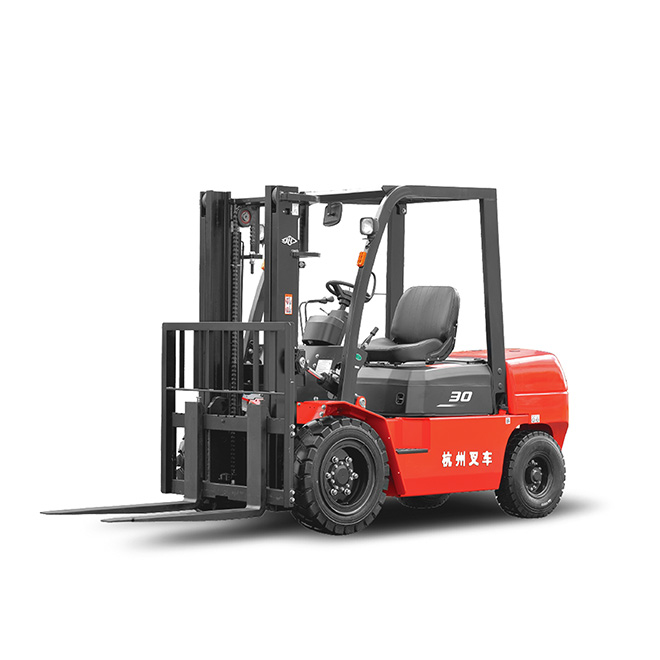
At the core of our engineering philosophy is a relentless focus on material integrity. We start with high-grade alloys that are rigorously tested for fatigue resistance, corrosion resistance, and tensile strength. Every component undergoes micro-level analysis to ensure grain structure uniformity, which prevents the microscopic cracks that typically lead to catastrophic failure. This obsession with the fundamentals means that our products don't just meet industry standards—they redefine them, standing up to stresses that would compromise ordinary designs.
Beyond materials, our structural design incorporates redundant load paths and smart energy dissipation. Think of it as a safety net within the framework itself: if one element encounters an unexpected force, the stress is distributed across multiple pathways, avoiding single points of failure. Finite element analysis and real-world crash simulations repeatedly refine these geometries until they achieve an almost organic balance between rigidity and flexibility. The result is a structure that absorbs and redirects impact energy rather than simply resisting it.
Finally, we integrate protective technologies at the molecular level. From advanced coatings that create a self-healing barrier against abrasion to sealed joints that exclude moisture and debris, every surface and connection is engineered for longevity. Accelerated life testing subjects our designs to decades' worth of wear in mere weeks, revealing potential weaknesses long before production. This proactive approach has yielded a failure rate so low that it's measured in fractions of a percent, even under conditions that would be considered extreme.
Why Source Authentic Designs for Your Fleet
Every fleet vehicle tells a story about your brand long before the driver steps out. When you choose authentic designs, you're not just picking a paint job or decal — you're weaving a narrative of trust, quality, and attention to detail. Knockoff patterns or generic templates might save a bit upfront, but they chip away at the consistency that customers notice, even if they can't quite name why something feels off. It's the subtle alignment of curves, the genuine finish that holds up under highway grit, and the feeling that your fleet was built with purpose, not pieced together from a catalog of compromises.
There's also a practical edge that authenticity brings, one that goes beyond aesthetics. Original designs are typically crafted with real-world wear in mind: paint that resists fading under relentless sun, decals that don't peel at the edges after a few thousand miles, and materials that endure frequent washes without losing their sharpness. When you source from creators who understand vehicle dynamics, the result is a fleet that looks as good on day 500 as it did on day one, without the constant touch-ups that drain your maintenance budget. It's a quiet kind of reliability that keeps your operations smooth and your image polished.
Perhaps most importantly, authentic designs give your drivers a sense of pride they can't get from something mass-produced. They spend hours behind the wheel, and that rolling workspace becomes a second home. When the design reflects a unique identity — not a diluted version of someone else's idea — it fosters a genuine connection. That pride translates into better care on the road and a more engaging presence when interacting with clients. It's an investment that pays dividends in team morale and public perception, long after the initial rollout.
Unveiling the True Cost of Reliability
Reliability often wears a halo of virtue—a promise that things will simply work when you need them most. But beneath this comforting surface lies a complex ledger of trade-offs that few are willing to examine. The true cost isn't just in the redundant servers or the meticulous testing protocols; it's in the innovations delayed by cautious culture, the agility sacrificed on the altar of stability, and the silent tax on morale when every failure is treated as a catastrophe. Organizations frequently chase the five-nines dream without asking what they're truly giving up in return.
Peel back the layers and you'll find that the price extends beyond line items in a budget. It lives in the talent you divert to maintenance instead of creation, and in the competitive edge dulled by over-engineered safeguards. For many, the pursuit of flawless uptime becomes an expensive security blanket, not a strategic advantage. The real cost of reliability, then, is the opportunity you forfeit—the daring projects shelved, the fast iterations abandoned, the bold bets never placed. And once you see it clearly, the question becomes not 'How can we be more reliable?' but 'What are we willing to sacrifice for the reliability we think we need?'
That shift in perspective is where honest strategy begins. It means acknowledging that outages, while painful, are often less damaging than the stagnation that prevents their causes from being addressed creatively. True resilience isn't about building a fortress—it's about cultivating an environment where recovery is rapid and learning is continuous. When you start measuring reliability not by hours of uninterrupted service but by the speed of your response and the depth of your insights, you realize that the highest cost may have been holding onto an outdated ideal.
Custom Solutions Beyond Assembly Lines
Our approach goes far beyond traditional assembly lines. We dive deep into your unique challenges, co-creating bespoke solutions that integrate seamlessly with your existing workflows. From initial concept to final deployment, every step is tailored to your specific operational needs—no off-the-shelf thinking, no compromises.
Instead of forcing your processes to fit a rigid system, we engineer flexibility into every framework. Our cross-disciplinary teams combine expertise in automation, data analytics, and human-centric design to deliver tools that actually make sense for your people. The result? Solutions that evolve with your business, rather than becoming obsolete relics.
What truly sets us apart is our relentless focus on the human element. Technology should amplify your team’s strengths, not replace them. We build intuitive interfaces and smart workflows that reduce friction and unlock creativity. This isn't just about efficiency—it's about empowering your workforce to achieve more with less strain, turning everyday operations into a competitive advantage.
Sustaining Performance Through Manufacturer Support
Genuine manufacturer support goes far beyond a warranty card or a helpline number. It’s an active partnership that keeps equipment running at its designed peak, long after installation. Regular firmware updates fine-tune algorithms, remote diagnostics preempt failures before they cause downtime, and access to original spare parts ensures every component fits and functions exactly as engineered. This kind of backing transforms maintenance from a reactive chore into a strategic advantage, directly preserving throughput and precision.
Training and knowledge transfer often mark the line between average and exceptional asset performance. When manufacturers invest in on-site coaching for operators and technicians, they embed deep system understanding that simply isn’t captured in manuals. Teams learn to spot subtle inefficiencies, interpret data trends intuitively, and adjust settings before automated alerts ever trigger. The result is a facility that not only avoids breakdowns but continuously refines its output—achieving levels of stability that generic third-party support rarely matches.
A responsive feedback loop with the engineering teams who designed the machine creates a unique path for sustained improvement. Instead of working around limitations, operators can suggest real-world refinements that flow directly into future upgrades. This co-evolution means the equipment adapts to your specific production environment over time, rather than forcing your processes to rigidly adapt to the machine. It’s a quieter form of optimization, one that pays out in years of consistent, high-quality output without the gradual drift in performance that plagues isolated systems.
FAQ
Original manufacturers control every aspect of design and production, using rigorously tested components that fit together seamlessly. This avoids the mismatched parts and corner-cutting often found in generic models, resulting in equipment that simply breaks down less often.
They put prototypes through accelerated life testing that mimics years of heavy use—extreme temperatures, continuous heavy lifting, rough terrain. Only designs that pass these grueling trials make it to production, so the forklift you buy is already proven under stress.
Yes, things like easily accessible engine bays, modular components that swap out fast, and intelligent diagnostics that flag issues early. These design choices mean routine servicing takes half the time and unexpected repairs drop significantly.
Resellers might offer 'refurbished' units with mystery histories or mix-and-match parts. Buying direct guarantees genuine build quality, full warranty coverage, and access to manufacturer-trained support—crucial for keeping your fleet running without expensive downtime.
A well-designed diesel engine isn't just about horsepower. The cooling system layout, oil filtration efficiency, and block integrity determine whether it thrives in dusty, high-load environments. Original manufacturers invest heavily in these details, extending engine life well beyond standard expectations.
Check for a unique serial number registerable with the manufacturer, examine build plates for consistent engraving, and insist on documentation directly from the factory. Most original makers also offer verification services through their official support channels to combat counterfeits.
Conclusion
Original diesel forklift manufacturers don’t simply assemble machines; they embed decades of expertise into every weld, bolt, and hydraulic line. What truly sets them apart is an uncompromising engineering ethos—one that prioritizes unmatched durability through rigorous stress testing, precision component matching, and relentless quality control. Unlike generic alternatives, these makers understand that real-world material handling punishes weak points mercilessly, so they design entire powertrains, masts, and chassis as seamlessly integrated systems rather than cobbled-together modules. This holistic approach yields forklifts that maintain performance under punishing loads and shifts, season after season, without succumbing to premature wear.
Beyond the factory floor, sourcing authentic designs transforms fleet economics. While upfront costs may appear steeper, the true cost of reliability reveals itself in drastically reduced downtime, fewer emergency repairs, and extended service intervals. Original manufacturers also offer customization that transcends off-the-shelf limitations—tailoring cooling systems for desert climates, explosion-proofing for hazardous environments, or optimizing ergonomics for round-the-clock operations. Crucially, this partnership extends through manufacturer-backed support networks that deliver genuine parts, instant technical know-how, and proactive maintenance guidance long after the sale. For businesses serious about throughput, the secret lies not in a spec sheet, but in a manufacturer’s unwavering commitment to engineering integrity and lifecycle accountability.
Contact Us
Contact Person: Liuxue
Email: [email protected]
Tel/WhatsApp: +86-19084200370
Website: https://www.hf-ec.com/