

Direct Expansion Air Handling Unit Maker Evaluation Guide for Modern HVAC Projects
2026-10-20
Choosing the right direct expansion air handling unit can make or break a modern HVAC project, yet most evaluation guides read like dry spec sheets. This one is different—it cuts through the noise to focus on what actually matters: real-world performance, build quality, and support after the sale. We've spent months digging into data and talking to engineers, and one name kept coming up in conversations about reliable DX AHU makers: shairko. In the following sections, we'll walk you through the key criteria—from coil design to controls integration—so you can evaluate manufacturers with confidence, whether you're spec'ing for a commercial tower or a critical process facility. Let's get past the marketing fluff and into what separates a decent unit from a decades-long workhorse.
Verifying Real-World Cooling Output Beyond the Datasheet
Datasheets promise a tidy world of controlled temperatures and steady loads, but real servers rarely behave that way. When verifying cooling output, we skip the lab benchmarks and instead instrument a live rack with thermal probes placed at intake, exhaust, and between hot-swap drive bays. The goal isn't to match a spec sheet number—it's to catch the moments when a fan curve lags behind a sudden CPU spike or when recirculation sneaks warm air back into a cold aisle. One test run under a mixed workload told us more about actual heat rejection than a dozen synthetic full-load passes.
A common mistake is trusting a single average temperature readout. We log short-interval data across at least 48 hours and look for outliers: a 2 a.m. batch job that pushes a storage node to 92 percent fan duty, a failed power supply that forces the remaining fans to compensate, or a dust filter that clogs faster in a refurbished colocation hall. Those real-world edges expose weaknesses no datasheet graph will show. For one compact 2U chassis, we discovered that while the rated airflow was technically present, the exhaust plume was hot enough to trip thermal protection on a neighboring switch—something only a physical walkthrough with an infrared camera made obvious.
Verification also means testing the failure paths. We deliberately disable one fan in a redundant pair, block a fraction of the intake vents, and run the system at high ambient temperatures that mirror a poorly maintained server room. Then we compare the actual cooling output—measured as the delta between inlet and outlet air under sustained load—against the vendor's published thermal design power envelope. Often the gap is acceptable under ideal airflow but shrinks dangerously once cable management goes sideways or blanking panels go missing. These findings feed back into rack layout and fan tuning, turning a spec-sheet claim into something you can trust at 3 a.m. when the building chiller is struggling.
Refrigerant Roadmaps That Avoid Stranded Assets as Rules Shift
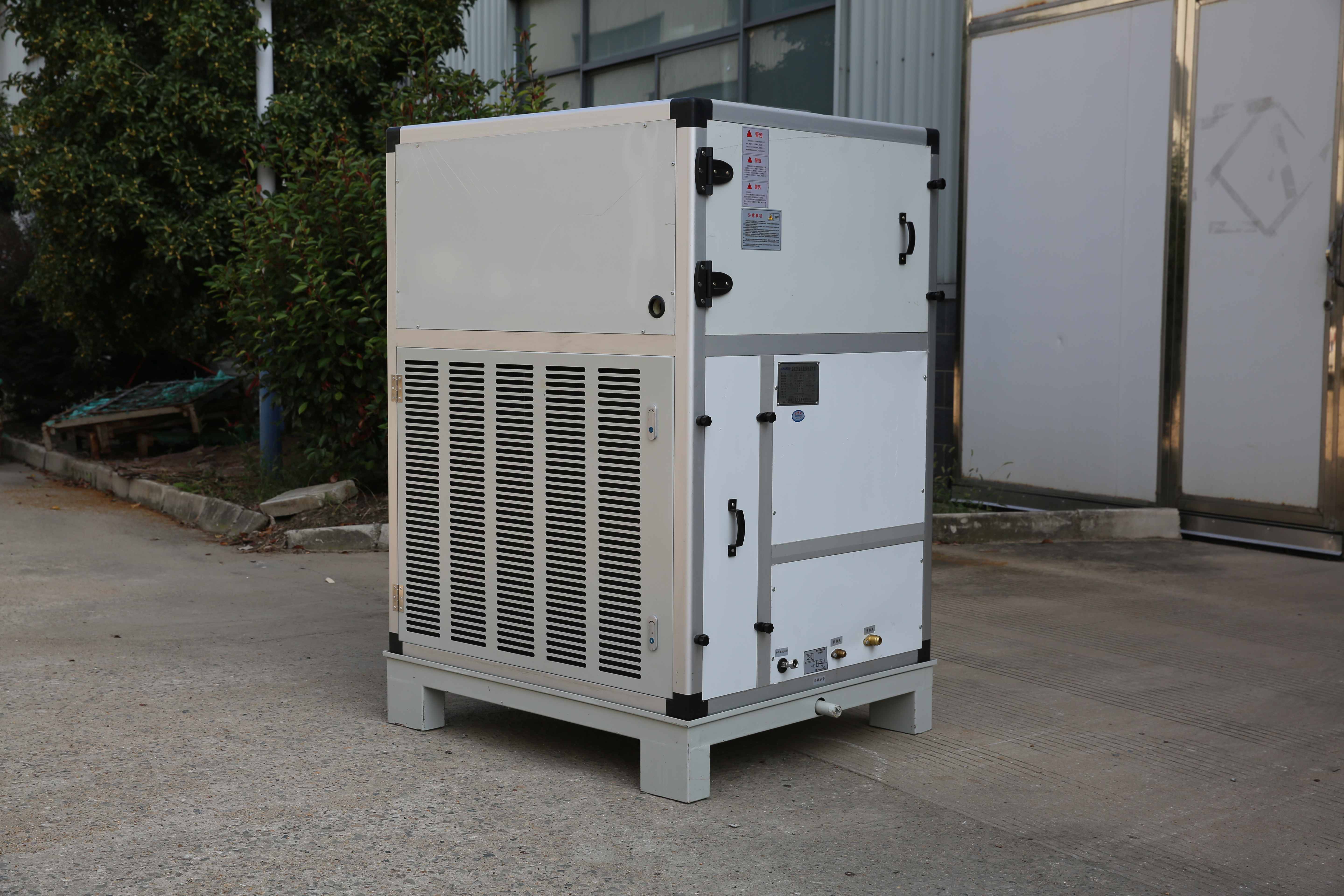
The shift in refrigerant rules does not arrive as a single deadline; it lands in overlapping waves of GWP limits, service bans, and reclaimed refrigerant quotas. Equipment that seemed compliant five years ago, such as R-410A rooftop units, now sits on the edge of obsolescence in markets where virgin HFC supplies are being cut faster than expected. A practical roadmap starts by auditing each system against the phase-down schedule that matters for its location and use, not just the headline bans. That means identifying units with refrigerant charges large enough to become service liabilities when high-GWP supplies dry up, and scheduling retrofits or replacements before the secondary market for reclaimed gas becomes too tight or too expensive.
Future-proofing is not simply a race to the lowest GWP number. Carbon dioxide and ammonia deliver near-zero GWP in industrial systems but demand very different compressor technologies, leak management, and safety protocols. Propane works well in small self-contained cases, yet charge limits restrict how it can be scaled. A roadmap that protects asset value treats refrigerant selection as one part of a broader design decision: heat exchanger surface area, expansion valve behavior, oil return, and technician training all determine whether a new refrigerant becomes a durable solution or a recurring failure point. Leaving room for modular upgrades, such as controls rated for multiple refrigerants or piping that can handle a later switch to a natural refrigerant, often costs little upfront but saves significant retrofit expense later.
The final risk is jurisdictional drift. A cold storage facility serving export markets may face tighter rules in the countries where its products land than in the country where it operates, and those rules can change within a single capital planning cycle. Treating refrigerant transition as a compliance checkbox, rather than a rolling asset strategy, leads to the costly pattern of double replacement: installing an HFO blend that meets today's standard but loses serviceability when the next GWP step-down hits. Building regulatory monitoring into annual maintenance reviews and writing refrigerant roadmaps into multi-year capital budgets keeps equipment from becoming stranded before its mechanical life is over.
Airflow Design for Partial Loads Without Sacrificing Comfort
Operating an HVAC system at partial load rarely means simply dialing back airflow across the board. The goal is to preserve occupant comfort while trimming energy use, and that requires rethinking how air moves through each zone. Instead of a uniform reduction, designers often stage fan speeds or adjust terminal dampers so that occupied areas keep their design air changes, while lightly used spaces receive only enough circulation to prevent stagnation. This balanced approach avoids the common pitfall of creating hot or cold spots when a single central fan ramps down too aggressively.
One effective tactic is to decouple ventilation requirements from thermal loads. During off-peak hours, the outdoor air fraction can be held near its minimum while chilled or heated water valves modulate to match the actual sensible load. Variable air volume boxes then trim supply air locally, but always within a range that maintains air movement at the breathing zone. For spaces with high occupant density but low heat gain, demand-controlled ventilation using CO2 sensors allows the system to cut airflow without under-ventilating. The result is that comfort parameters—temperature, humidity, and fresh air delivery—stay within tight tolerances even when the building is only half occupied.
Fine-tuning at partial load also involves the supply air temperature reset. Rather than delivering a fixed 55°F (13°C) air stream all day, the setpoint can float upward when cooling demand is modest. This reduces compressor work and fan energy because warmer air can be supplied at a slightly higher volume without overcooling the space. Combined with proper diffuser selection—such as linear slots or adjustable swirl units that maintain throw at reduced flows—the system keeps air from dumping short and creating drafts. Ultimately, partial load comfort is less about doing less, and more about doing the right amount in the right place at the right time.
Can the Unit's Controls Actually Speak Your Building's Language?
A control panel that cannot interpret the signals your building management system already uses will quickly become an expensive paperweight. Many manufacturers ship units with default logic tuned to their own sensors and sequences, leaving integrators to bridge the gap with gateways, custom drivers, or old-fashioned re-wiring. Before signing off on a spec, ask for a point list and a protocol implementation statement—not just a logo on a datasheet.
The real test happens during commissioning, not in a sales demo. Some controls advertise open protocol support but only expose a limited set of read-only points, or they require a proprietary software tool to unlock the variables your building actually cares about. That forces facilities teams to maintain multiple front ends and undermines the whole point of central monitoring.
If your building runs on a specific revision of a protocol or expects custom naming conventions, verify the unit can mirror those details without extra hardware. The difference between a smooth integration and a lingering service call often comes down to whether the controls speak the same dialect—not just the same language.
Making Footprint and Noise Work Without Forcing Compromises
Balancing physical size and acoustic or electromagnetic noise often feels like a zero-sum game, but the most effective designs treat them as intertwined variables rather than competing constraints. By rethinking component placement, grounding paths, and thermal management early in the layout phase, engineers can avoid the usual late-stage patchwork of shielding and filtering that adds bulk and complexity.
One practical approach is to use quieter switching topologies and low-noise components that fit within a smaller footprint, then pair them with tightly coupled bypass networks placed directly beneath active devices. This keeps return current loops short and reduces radiated emissions without requiring extra board area. In many cases, a few strategically placed vias or a minor change in layer stack-up yields more noise reduction than adding a dedicated filter stage that would enlarge the design.
The key is to measure and model noise paths before committing to a final footprint. Iterative simulation of current density, thermal gradients, and near-field coupling reveals where noise originates and how it propagates, allowing designers to make targeted adjustments—such as rotating a component or shifting a power trace—that preserve the intended size while meeting noise targets. This kind of integrated thinking removes the false choice between compactness and quiet operation.
What Maintenance Access and Parts Availability Will Cost After Handover
Once the keys are in your hand, the real cost of ownership starts to surface. Maintenance access isn't just about finding a mechanic—it's about whether that mechanic can source parts without holding your equipment hostage for weeks. Many facilities discover too late that their imported machinery relies on a single distributor with erratic inventory. You'll pay for that uncertainty in downtime, not just in parts markup.
Parts availability often becomes a quiet budget line that grows each quarter. Common wear items—filters, belts, sensors—might be reasonably priced, but anything beyond routine service can trigger expedited shipping charges, customs delays, or even forced upgrades to newer component versions. A smart buyer asks for a two-year parts pricing list and checks whether local third-party suppliers carry compatible alternatives.
Finally, factor in the cost of access itself. Some manufacturers restrict diagnostic software or require authorized technicians for even minor adjustments, turning a simple fix into a service call with travel fees. Others offer open access but charge subscription fees for firmware updates. After handover, every maintenance action has a price tag attached—and the ones you don't anticipate are usually the most expensive.
FAQ
The best ones don't just rate capacity at a single design point. They provide part-load performance curves, show how the DX coil behaves with low ambient or high latent loads, and give you enough coil circuiting detail to avoid liquid slugging under turndown.
Look beyond the paint. Check for thermal-break frame profiles, double-sloped drain pans that actually empty, gasketed access doors with lift-off hinges, and coil coatings matched to the site's specific atmospheric corrosion class.
Prefer manufacturers who expose Modbus or BACnet points without proprietary gateways. If they can provide the exact sequence of operations for hot gas reheat, digital scroll unloading, and supply air reset, that's a sign the unit won't fight the building automation system.
Face area helps with air velocity, but circuiting decides refrigerant distribution and oil return. Poor circuiting starves some tubes and floods others, which shows up as unreliable superheat control and premature compressor failure.
Hinged access on both sides of the cooling coil, slide-out fan assemblies, and externally mounted filter gauges make routine work fast. If you need special tools or remove duct connections just to inspect the DX coil, the savings disappear quickly.
Ask for integrated part-load efficiency data with the supply fan, outdoor air damper, and humidity control in play. Units with factory-tested sequences for demand-controlled ventilation and variable speed fans give a more realistic path to code compliance than a single EER number.
Insist on a full charged refrigeration circuit test, not just a fan spin check. The maker should run the unit through at least a few steady-state points, verify superheat and subcooling, and share the test report with the startup team.
Hot gas reheat with modulating control, a draw-through coil layout, and a low-leakage outside air damper make the difference. These allow the unit to strip moisture at low sensible load while holding supply air temperature stable.
Conclusion
Selecting a direct expansion air handling unit manufacturer for a modern project means looking past nominal datasheet claims and understanding how the equipment behaves when conditions drift from design day. The first honest test is cooling output: request witnessed performance curves or field verification data at high ambient and part-load, not just a single ISO rating point. This runs parallel to a refrigerant strategy that won't leave the building owner trapped by tightening GWP limits; ask how the manufacturer plans to support lower-GWP alternatives without completely re-engineering the coil and compressor package. Airflow also deserves more than a fan curve at full speed. A unit that cannot hold comfortable humidity and throw patterns at 40% load will waste the savings promised by variable-speed components, so request part-load airflow mapping and turndown data from actual installations.
Integration rarely fails because protocols are missing on paper—it fails because the unit's controller doesn't expose the right points or behaves oddly with third-party BAS sequences. Demand a controls narrative, point list, and a test bench demo before spec sign-off. Footprint and noise tend to collide in urban retrofits; look for manufacturers who treat acoustic performance and service clearances as design requirements rather than afterthoughts. Finally, pull maintenance cost beyond the warranty period: compressor access, coil cleaning clearances, filter replacement time, and the true availability of proprietary sensors or boards. A maker that shares parts lead times and common-failure data upfront is more valuable than one that hides behind a parts portal.
Contact Us
Contact Person: Crystal
Email: [email protected]
Tel/WhatsApp: 8613524235353
Website: https://www.airkohvac.com