

Flap Gate Valve Company: Pioneering Reliable Flow Control Solutions
2026-07-15
In the world of industrial flow control, precision and durability are non-negotiable. Yet, finding a valve that consistently performs under pressure remains a challenge for many engineers. That’s where THT’s Flap Gate Valves come in—a lineup engineered to redefine reliability. This post explores how these valves solve real-world flow issues, from preventing backflow to withstanding harsh media, without the usual maintenance headaches. Get ready to discover why more industries are switching to THT.
Rethinking Check Valve Design from First Principles
Conventional check valve design has long relied on incremental tweaks to century-old configurations—a slightly lighter disc, a marginally softer seat, a tweaked spring rate. These are not redesigns; they are patches applied to a template that itself is rarely questioned. Starting from first principles means stripping away every inherited assumption and rebuilding the component to fulfill exactly one purpose: admit flow in one direction and seal tightly against reverse flow, with the smallest possible pressure penalty and no failure-prone complexity. It forces the question: does the check valve even need a pivoting disc, a spring, or a single defined seal line?
When fluid momentum, pressure transients, and material hysteresis are treated as the fundamental physics rather than afterthoughts, the design space opens up. For example, a check valve’s closing time is not simply a function of spring stiffness; it is determined by the interplay of fluid deceleration, added mass, and the closing body’s geometry. Re-examining these interactions reveals that a carefully shaped poppet with a tailored mass can use the fluid’s own energy to achieve near-instantaneous closure without a metal spring at all—only a tuned elastomeric element or magnetic assist working in the fluid’s dynamic regime. This eliminates fatigue points and reduces the valve’s footprint to little more than a flow bore and a floating sealing element.
Material selection, too, can be approached from first principles instead of defaulting to traditional metals or PTFE. By mapping the specific failure modes—erosion, corrosion, embrittlement—onto the actual pressure-velocity conditions and chemical environment, one often finds that polymers or composites with anisotropic fillers outperform legacy materials in both durability and sealing compliance. The result is a check valve that is self-aligning, whisper-quiet at closure, and immune to chatter because its dynamics are designed into its shape and material, not bolted on through external dampers. This ground-up philosophy yields designs that are simpler, install in any orientation, and require no maintenance over their service life—a direct consequence of refusing to accept “it has always been done this way.”
Crafting Reliability Where Failure Is Not an Option
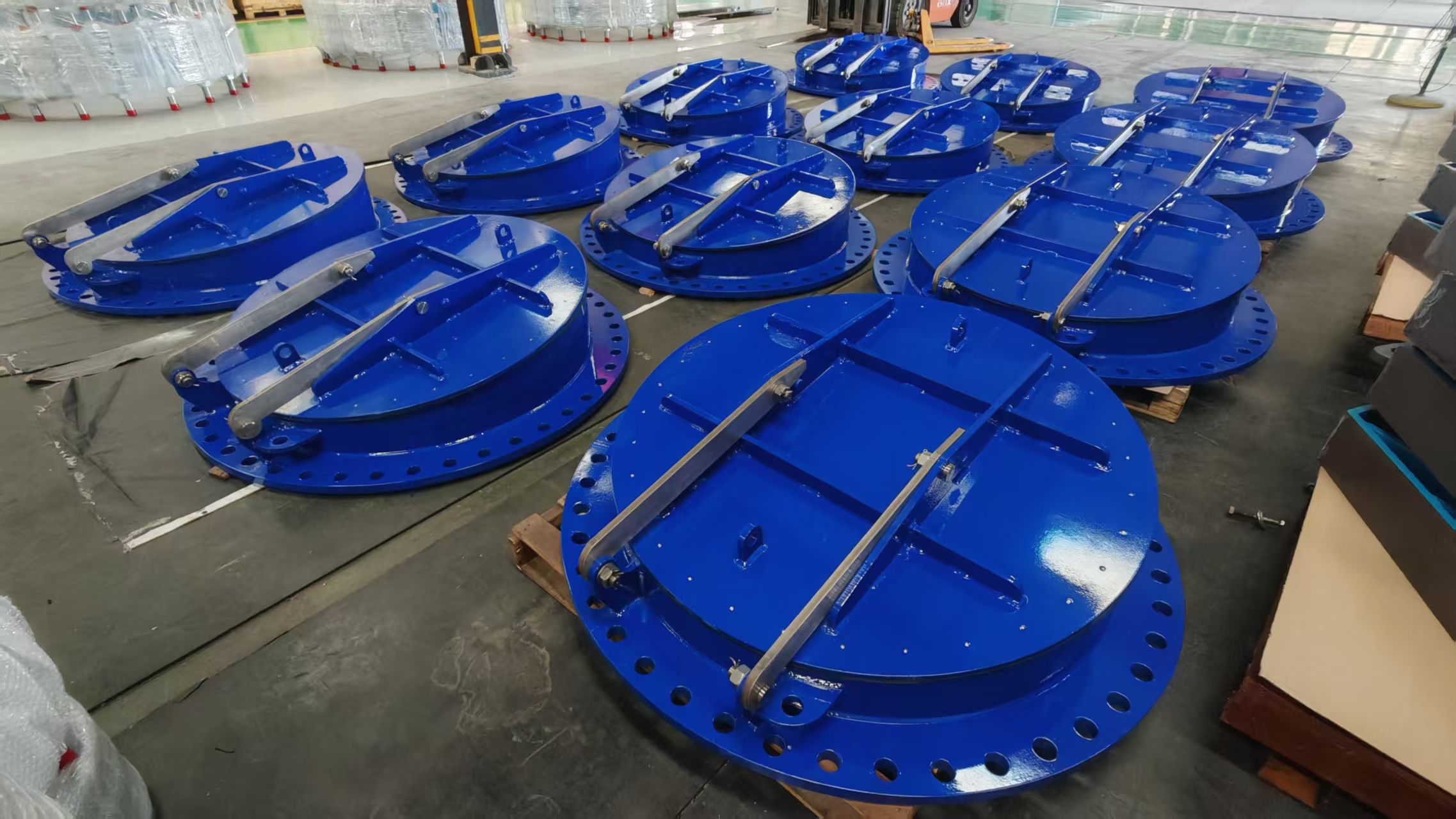
Reliability isn't just a buzzword—it's the backbone of systems where lives, livelihoods, and trust hang in the balance. From medical devices that must perform flawlessly in an operating room to aerospace components enduring extreme stresses, every design decision carries weight. We embed redundancy and rigorous testing not as afterthoughts, but as foundational principles. Each circuit, each line of code, each mechanical joint is scrutinized under conditions far harsher than they'll ever face in the field. This isn't about meeting specifications; it's about anticipating the unexpected and ensuring that when the moment demands perfection, there's zero room for doubt.
In high-stakes environments, failure modes aren't simply catalogued—they're hunted down and eliminated before a prototype ever leaves the lab. Our approach layers multiple safeguards: from material selection that resists fatigue decades into the future, to software architectures that self-heal without human intervention. We stress-test beyond theoretical limits, pushing prototypes until they break, not to find their breaking point but to build resilience well within it. Every anomaly is a gift, a chance to reinforce weak links long before they become liabilities. This relentless pursuit of robustness creates products that don't just work today—they perform consistently when it matters most, year after punishing year.
True resilience is often invisible. You won't notice it when the pacemaker fires perfectly with each heartbeat, when the braking system engages milliseconds before you're aware of danger, or when the power grid reroutes itself during a catastrophic storm. But behind that seamless experience lies a mountain of deliberate choices: derated components, radiation-hardened circuits, exhaustive FMEAs, and cultures that encourage engineers to speak up when something feels off. We build not for the average day, but for the worst possible moment, because in our world, "close enough" is never enough. Reliability isn't a feature—it's a promise etched into every layer of our engineering DNA.
The Invisible Force Behind Critical Flow Networks
Modern civilization leans heavily on vast, interconnected systems that shuttle resources from source to sink without a second thought. Whether it's electricity pulsing through high-voltage lines, water streaming through municipal pipes, or data packets ricocheting across fiber optics, these critical flow networks operate on a simple premise: keep things moving. Yet anyone who has stared at a traffic jam or a delayed flight knows that capacity, congestion, and unpredictable demand can throw even the best-laid plans into disarray.
What few people realize is that behind the scenes, an invisible orchestration hums along—sophisticated control logic, sensor-driven feedback loops, and often a quiet synergy between centralized algorithms and distributed intelligence. It’s the hand that nudges voltage levels when a wind farm drops offline, the logic that reroutes internet traffic around a severed cable, and the calculus that decides which water pumps to fire up before a heatwave hits. This force doesn't scream for attention; it just quietly prevents collapse.
The elegance—and occasional fragility—of these unseen mechanisms lies in their ability to balance efficiency with resilience. Too much optimization and the system becomes brittle, unable to absorb shocks. Too little, and waste spirals. The real mastery isn’t in building a perfect model, but in designing networks that can dance with real-world chaos, learning and adjusting without ever needing a spotlight. That’s the quiet power that keeps the world flowing.
When Standard Valves Won’t Do: Bespoke Engineering
Off-the-shelf valves often fall short when process conditions push beyond conventional limits. Extreme temperatures, aggressive chemicals, ultra-high pressures, or the need for a precise flow characteristic that simply doesn’t exist in a catalog can bring a project to a standstill. That’s when bespoke engineering moves from a luxury to a necessity. It’s not about reinventing the valve for the sake of it; it’s about crafting a solution that fits the exact operational fingerprint of your system—matching materials, trim designs, and actuation in ways no standard product ever could.
True custom valve engineering digs into the details that mass production overlooks. We might modify body geometries to eliminate dead legs in hygienic processes, develop a multi-stage trim to quiet cavitation in a high-pressure drop application, or engineer a seal arrangement that withstands thermal cycling without relaxation. These aren’t just tweaks—they’re informed responses to real-world failures and performance gaps. Often, the breakthrough comes from cross-pollinating ideas from different industries, applying a fugitive emissions packing design from oil and gas to a critical containment need in pharma, for instance.
The real payoff of a bespoke valve isn’t just that it works—it’s that it keeps working, reducing downtime and eliminating workarounds. When the design is tailored to your specific media, duty cycle, and maintenance capabilities, you get a component that feels almost invisible in its reliability. It’s engineering that respects the uniqueness of your process, not a compromise forced into a standard shell. And in an era where operational margins are tighter than ever, that kind of precision isn’t a premium—it’s the only sane choice.
Proven Performance in the World’s Harshest Environments
From the frozen tundras of Siberia to the scorching deserts of the Sahara, our equipment has consistently demonstrated an unyielding capacity to thrive where others falter. Every component is engineered not just to withstand extreme temperatures, corrosive elements, and relentless mechanical stress, but to maintain peak operational efficiency under these punishing conditions. This isn’t theoretical robustness—it’s a track record forged through decades of real-world deployment in the most inhospitable corners of the planet.
What sets us apart is the depth of our field validation. We don’t rely solely on simulated lab tests; instead, our systems endure the unpredictable chaos of nature itself—blinding sandstorms, polar vortexes, and high-altitude pressure drops. Each unit is hardened through a iterative design process that incorporates feedback from operators who depend on them daily in remote, high-stakes environments. The result is a lineage of products that do more than survive—they excel, turning environmental adversity into a benchmark of trust.
This unwavering performance isn’t just a feature—it’s a responsibility we carry into every engineering decision. In places where a single failure can jeopardize months of work or human safety, our solutions provide the quiet confidence that comes from knowing the machinery will respond predictably and powerfully. It’s not about being tough for the sake of it; it’s about ensuring that when the environment throws its worst, you can count on us to remain unfazed, focused, and relentlessly effective.
A Partnership Approach to Long-Term Flow Integrity
Achieving lasting flow integrity demands more than just robust engineering or periodic maintenance—it requires a shared commitment between operators, service providers, and technology partners. When all parties align their goals from the earliest design phase, potential risks like corrosion, scaling, or mechanical wear are identified and mitigated long before they become costly failures. This collaborative ethos shifts the focus from reactive fixes to proactive, predictive strategies that safeguard asset performance over decades.
By weaving together real-time monitoring data, advanced analytics, and hands-on operational expertise, a partnership model creates a continuous feedback loop. Field insights inform smarter material choices, while digital twins and predictive models are refined through on-the-ground experience. The result is a dynamic, evolving system where every stakeholder contributes to a unified integrity management plan—one that adapts to changing reservoir conditions, production profiles, and regulatory landscapes without missing a beat.
Ultimately, this approach fosters a culture of shared responsibility, where transparency and trust replace siloed decision-making. Regular joint reviews, open data sharing, and co-developed risk assessments ensure that integrity is not just a technical specification but a living partnership. It’s this sustained collaboration that turns flow integrity from a near-term target into a long-term, self-reinforcing reality.
FAQ
The founders saw repeated failures in traditional check valves used in wastewater and stormwater systems. They set out to create a flap gate design that could handle debris, backpressure, and corrosive environments without jamming or leaking, essentially rethinking the hinge and seal from scratch.
You'll find them in flood control channels, tidal outfalls, and industrial cooling water lines. Municipalities and heavy industry rely on them because the flap gate's simplicity prevents backflow in situations where power actuators aren't practical or reliable.
Instead of simply welding standard components, they cast the body and disc in-house from duplex stainless steel or nickel-aluminum bronze, then machine each seat to micron tolerances. This integrated approach gives them full control over material quality and fit, which translates to fewer warranty claims.
Every valve goes through a custom fatigue rig that cycles it open and closed under simulated head pressure for 100,000 operations. They also submerge samples in salt spray and acidic media to verify corrosion resistance, so field failures related to environmental wear are extremely rare.
Yes, the bottom-hinged design and wide clearance between the disc and body allow branches, grit, and even small stones to pass through. The pivot point is also elevated out of the sediment zone, so buildup doesn't hinder operation.
Standard ranges cover 6 to 72 inches, but they regularly engineer larger units for flood barriers or unusual shapes like square or rectangular cross-sections. Wall thimbles, grates, and elastomer seals can all be adapted to match the installation's exact requirements.
Their field engineers do on-site inspections to check seat alignment and seal wear, often using laser measurement to spot subtle distortions in the frame. They also stock common spare parts kits and offer a re-machining service for seats that have been scored by debris over time.
Conclusion
At Flap Gate Valve Company, the approach to flow control begins with a fundamental reimagining of check valve design—stripping away assumptions and rebuilding from first principles to eliminate common failure points. This philosophy yields valves that operate seamlessly where reliability is absolute, in settings ranging from deep-sea outfalls to high-consequence industrial networks. Rather than forcing standard solutions onto unique challenges, the company’s engineers collaborate closely with infrastructure teams to craft bespoke geometries, materials, and actuation methods that align precisely with operational demands. The result is an invisible backbone inside critical flow systems: resilient, self-actuating, and maintenance-minimal hardware that quietly prevents backflow while withstanding punishing pressures, abrasive slurries, and corrosive chemistries.
What truly distances Flap Gate Valve Company from conventional suppliers is a partnership model built around long-term flow integrity. Each project begins with on-site analysis and performance modeling, then progresses through tailored manufacturing and life-cycle support. In the world’s harshest environments—Arctic pipelines, tropical wastewater plants, desert mining operations—these valves have earned a reputation for unwavering performance, backed by field data rather than marketing claims. By viewing every installation as a multi-decade commitment, the company turns flow control into a strategic asset, not just a component. This fusion of inventive engineering, rigorous field proving, and genuine customer collaboration redefines what reliability means in a flap gate valve, setting a benchmark that few can match.
Contact Us
Contact Person: Su Zhang
Email: [email protected]
Tel/WhatsApp: +86-25219206
Website: https://www.tht-valve.com/