

Gel Seat Cushion Vendor: How to Find a Trusted Supplier for Lasting Comfort
2026-11-16
Most gel seat cushions feel great for a week. Then the flattening starts, the heat builds, and you're back to square one. That's why choosing the right vendor isn't a box-ticking exercise—it's the difference between lasting comfort and a costly cushion graveyard. In this post, we'll look at what actually signals a trustworthy supplier, from foam density to cooling tech. One brand we keep coming back to in these conversations is Kunbao, and for good reason.
Spotting Gel Quality Issues Before They Reach Your Customers
A tiny air bubble trapped under a label can turn into a customer complaint before the product even leaves the warehouse.
Most gel quality failures don't happen during formulation—they happen during filling, sealing, or storage. The trick is catching them when the cost is pennies, not when a buyer sends back an entire pallet.
Run a quick visual check for micro-fractures around the cap threads, settle tests to spot uneven pigment dispersion, and squeeze a few tubes from each batch to feel for viscosity drift. Ten minutes at the line beats ten days of returns.
Questions That Uncover a Vendor’s True Comfort Testing Process
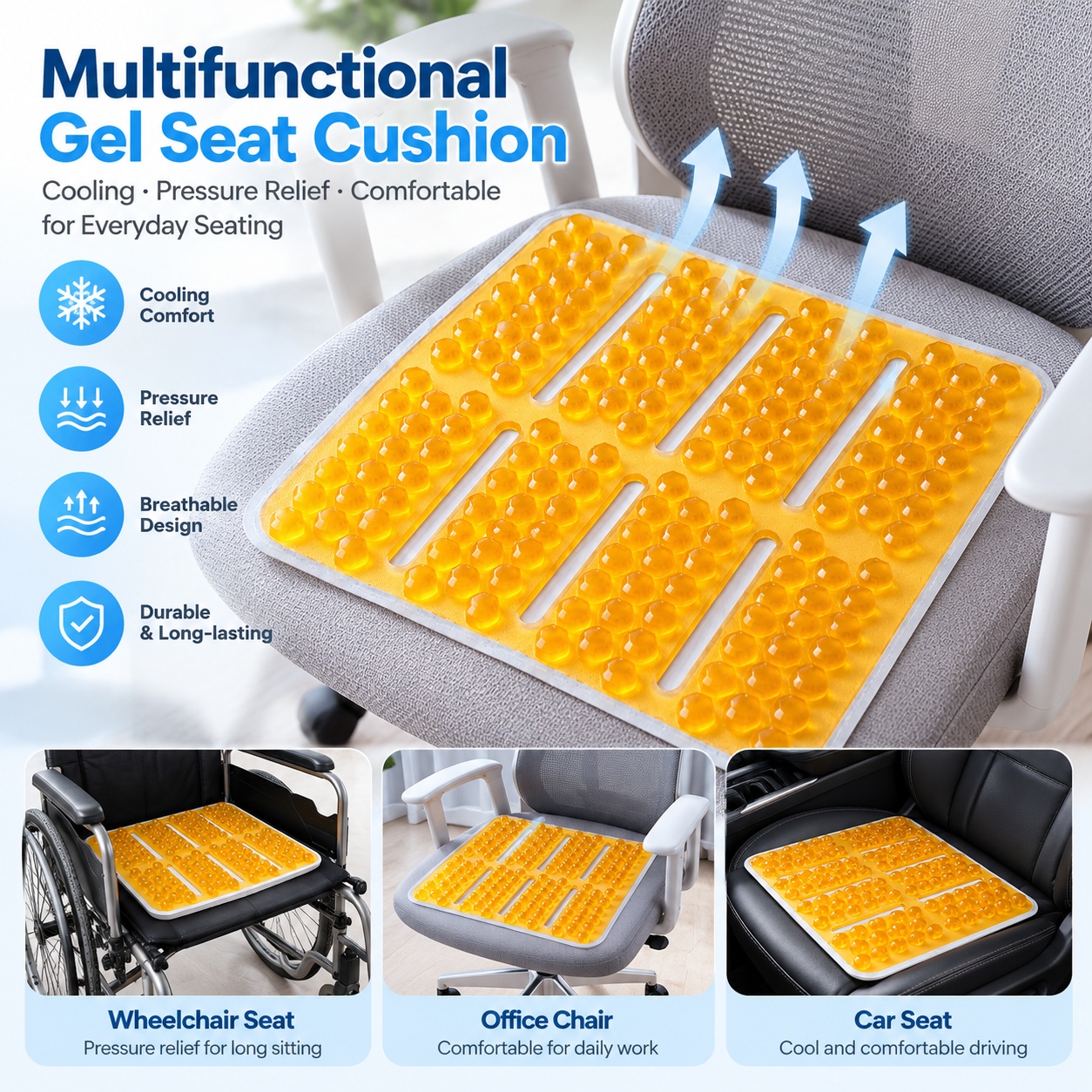
A vendor can say "we test for comfort" and leave it at that. But the real story emerges when you ask them to walk you through a recent study from start to finish. Which participants did they recruit? How many, what demographics, what exclusion criteria? What exact metrics got recorded—pressure mapping, subjective scales, time-to-discomfort, or something messier like fidget counts? If the answer stays at "we used a focus group," you haven't found a process; you've found a marketing line.
Push harder on the failures. Every honest testing program has a drawer full of products that didn't pass. Ask: "Tell me about the last product that failed comfort testing. What specifically made it fail, and what changed before the next round?" A vendor who hesitates, claims nothing ever fails, or pivots to a sales pitch is hiding either a shallow process or no process at all. Real comfort testing means products get rejected, redesigned, and retested—sometimes multiple times—and the vendor should be able to name the exact iteration where a cushion density or seam placement got fixed.
Also ask about blinding and controls. Were participants comparing against a reference product, or just sitting on one chair and filling out a smiley-face form? How were environmental factors—temperature, humidity, lighting—kept consistent? Can they share raw data, not just summary slides? A vendor with a genuine process will offer lab notes, anonymized participant logs, and even invite you to observe a session. Anyone who gets defensive or vague at these questions is telling you everything you need to know.
Why Density and Gel Placement Matter More Than Marketing Buzzwords
A lot of people get pulled in by terms like “melted hairline” or “4x4 closure” before checking the boring stuff. Density is the boring stuff that actually makes or breaks a unit. Too much hair and the piece looks like a helmet; too little and the lace shows through under bright light. Neither issue gets fixed by a fancier name on the package.
Gel placement is where wearers either get a second day out of a style or end up with lace lifting at the temple by noon. The glue line needs to sit just behind the hairline, not on top of the baby hairs, and it has to follow the curve of the head rather than a straight strip. Buzzwords won't tell you that, but the wrong placement will make even the most expensive unit look fake within hours.
Once you've handled a few installs, you stop asking about “invisible knots” as a selling point and start flipping the unit over to check how the hair is distributed along the part and whether the gel points match your scalp shape. These details hold up over a long day, through humidity and sweat, while marketing adjectives fade by the first wash.
Sample Flaws That Predict Early Cushion Failure
Cushions rarely die from old age; they die from a handful of small mistakes made at the cutting table or sewing floor. One of the most telling is inconsistent foam density. When a seat pad is built from leftover blocks or mixed batches, the softer areas start to collapse within weeks, leaving a dip that no amount of fluffing can hide. Another red flag shows up in the inner liner. If the ticking goes around raw foam without a bonded polyester wrap, the cover grinds directly against the foam, causing it to crumble at the corners long before the fabric itself shows wear.
Seam allowance matters more than most people think. A cushion sewn with a scant 3/8-inch allowance instead of the standard 1/2-inch will pull apart at the piping after a few months of normal use. And when manufacturers skip the separate baffle or channel stitching inside a back cushion, the fill shifts downward, turning a plump cushion into a flat pancake at the top and a hard bulge at the bottom. These flaws are easy to miss on a showroom floor, but they show up quickly once someone actually sits down every day.
How to Verify a Supplier’s Consistency Across Production Batches
Consistency checks should start long before the finished goods arrive. Ask the supplier to lock in a golden sample and a detailed specification sheet that covers raw material sources, critical process parameters, and acceptable tolerance ranges. Without this reference point, even well-meaning factories will drift, and you won't have a clear way to catch it.
Request batch-level inspection data instead of relying on a certificate of conformance. Compare results for key characteristics such as dimensions, hardness, color, or chemical composition across at least three recent production runs. If the numbers show a slow upward or downward trend, that's often a stronger warning sign than a single out-of-spec reading.
For critical components, schedule periodic on-site audits or use a third-party inspector to watch the same production line over time. Pay attention to whether operators are following the written procedures, how often equipment is calibrated, and whether any raw material substitutions have been made without your approval. A supplier that manages change poorly will eventually deliver inconsistent batches.
Building a Vendor Relationship That Keeps Long-Term Comfort Intact
A vendor relationship built only on price rarely survives the first unexpected breakdown. When your comfort depends on a system that runs around the clock, you need more than a contractor—you need someone who knows the quirks of your setup, remembers which filter was last changed, and answers the phone before you have memorized the hold music. That kind of familiarity doesn't come from a one-time install; it grows from repeated, low-stakes interactions that prove reliability before an emergency does.
Long-term comfort stays intact when the vendor treats your property as a continuing project, not a closed ticket. Good technicians ask about changes in how the space is used, keep notes on past repairs, and proactively suggest adjustments before small inefficiencies become expensive failures. It's the difference between calling a stranger during a heat wave and having a partner who already knows your system's history.
To build that relationship, look for vendors who follow up after service, remember names, and don't push replacements at the first sign of wear. Paying slightly more for someone who documents their work and shows up on time is often cheaper than cycling through budget crews that leave hidden gaps. Over time, this consistency turns routine maintenance into a quiet guarantee that comfort won't drop unexpectedly.
FAQ
Look beyond the product photos. Ask for material certifications and test reports that show the gel won't flatten or leak after months of daily use. A trustworthy vendor will share these without hesitation.
Request details about the cushion's pressure distribution testing or ergonomic studies. Vendors who invest in research usually mention specific data, like peak pressure reduction percentages, rather than just saying "extra soft."
Samples matter more than reviews. Order the same spec from two or three suppliers and compare stitch quality, gel density, and cover fabric after sitting on them for a week. Reviews can be filtered or incentivized; your own sit test won't lie.
Watch for vague material descriptions like "premium gel" without durometer ratings, no clear warranty on gel compression set, or unwillingness to provide batch-level quality checks. These often hide cheap fillers that break down quickly.
Ask for records from their last three production runs, including tolerance reports for gel thickness and cover dimensions. A reliable supplier will have these documented and can show how they handle deviations before shipping.
Confirm whether the fabric is treated for stain resistance and if zippers are YKK or equivalent with lockable sliders. Cheaper zippers fail first and can ruin an otherwise good cushion, so this detail reveals the vendor's overall quality philosophy.
Yes, focus on total value, not just unit price. Ask about mixed pallet options, shorter lead times for repeat orders, or co-branded packaging. Vendors who are confident in their product will prefer long-term partnership over squeezing every cent from the first PO.
Look for at least a 12-month warranty against gel deformation and seam failure, not just manufacturing defects. The return policy should allow field testing for 30 days and full refund if the cushion doesn't maintain its shape. If they won't stand behind it, walk away.
Conclusion
Finding a gel seat cushion supplier who can deliver lasting comfort starts long before the first shipment arrives. You need to look past glossy catalogs and ask pointed questions about how a vendor tests cushioning under real body weight and repeated use. Request samples, then press them flat and check for uneven gel distribution, thin spots near pressure points, or edges that collapse after a few hours of sitting. Density is not just a number on a spec sheet—where the gel sits in the cushion matters far more than any marketing term. A well-placed, firmer center with softer perimeter channels can prevent the slow sag that turns a promising seat into a backache after two weeks. If a sample already shows creasing, weak seams, or a chemical smell, treat that as a prediction of early failure, not a one-off flaw.
Beyond the first impression, consistency across production batches is what separates a dependable partner from a gamble. Ask the vendor to pull cushions from three different production runs and compare weight, thickness, and rebound speed—if the numbers drift, comfort will drift too. A supplier who tracks batch records, shares test data, and is willing to adjust formulations based on your feedback is far more valuable than one who simply promises “premium” gel. Building a relationship where you can flag heat buildup or flattening issues and see real changes in the next run keeps long-term comfort intact. That kind of transparency, combined with hands-on sample testing and a clear understanding of gel placement, gives you a supplier you can trust when your customers sit for hours each day.
Contact Us
Contact Person: Catherine Peng
Email: [email protected]
Tel/WhatsApp: +86-13434169510
Website: https://www.kbcoolgel.com/