

Heterocyclic Intermediate CRO: Driving Breakthroughs in Pharmaceutical Synthesis
2026-07-25
The pharmaceutical industry thrives on innovation, and at the heart of many groundbreaking therapies lie heterocyclic intermediates—complex molecules that serve as the building blocks for life-saving drugs. Yet, synthesizing these compounds with precision and scalability remains a formidable challenge. This is where specialized contract research organizations (CROs) step in, turning synthetic hurdles into streamlined pathways. Among them, DSL Chemicals has emerged as a driving force, combining deep expertise in heterocyclic chemistry with a commitment to accelerating drug development. In this blog, we explore how their tailored CRO services are enabling breakthroughs that reshape the pharmaceutical landscape.
The Hidden Power of Heterocyclic Cores in Modern Drugs
The structural backbone of many life-saving pharmaceuticals owes its versatility to a deceptively simple feature: rings containing atoms beyond carbon. These heterocyclic cores, often featuring nitrogen, oxygen, or sulfur, are far more than passive scaffolds—they actively shape how a drug interacts with its biological target. By fine-tuning electronic distribution and molecular geometry, a single heterocycle can transform a mediocre compound into a potent therapeutic. From the β-lactam ring in penicillin to the benzimidazole in omeprazole, these frameworks enable precise binding to enzymes, receptors, or DNA, often determining selectivity and minimizing off-target effects. Their subtle influence on solubility and metabolic stability further explains why so many blockbuster drugs rely on them not just for activity, but for the practical ability to reach their destination in the body intact.
Beyond their role in target engagement, heterocycles serve as molecular chameleons, adapting to the demands of different therapeutic areas. In kinase inhibitors, a pyrimidine or quinazoline core anchors the drug into the ATP-binding pocket, while in antivirals, a triazole ring can mimic a nucleobase, tricking viral enzymes into incorporating a false building block. Even subtle modifications—swapping a pyridine for a pyrimidine, or introducing a fluorine atom—can dramatically alter a molecule’s pharmacokinetic profile. This tunability has made heterocyclic chemistry a playground for medicinal chemists seeking to balance potency, selectivity, and drug-like properties. As a result, nearly two-thirds of all small-molecule drugs approved in the past decade contain at least one heterocyclic ring, a testament to their understated yet indispensable role in modern medicine.
Perhaps the most underexplored dimension is how heterocycles influence not just the drug, but the disease landscape itself. By enabling the design of molecules that can cross the blood-brain barrier or resist rapid metabolism, they have opened doors to treating central nervous system disorders and chronic infections once considered intractable. Consider clopidogrel, whose thienopyridine core undergoes metabolic activation to become an irreversible platelet inhibitor, or the benzodiazepines, where a simple diazepine ring transforms a molecule into a tranquilizer. These examples reveal a deeper truth: the power of a heterocycle lies not in its presence alone, but in how chemists exploit its inherent electronic and steric features to solve specific biological challenges. In an era of increasingly complex drug targets—from protein-protein interactions to allosteric sites—the quiet mastery of heterocyclic cores will continue to be a decisive factor in turning chemical intuition into clinical breakthrough.
Synthesis Specialists Who Turn Complex Heterocycles into Reality
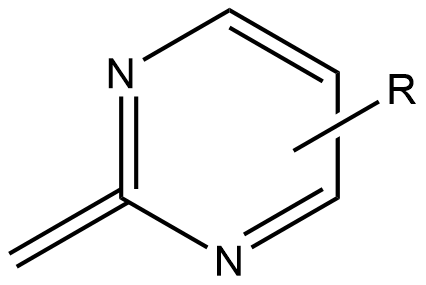
Turning a molecular blueprint into a physical compound is rarely straightforward, especially when that blueprint features intricate heterocyclic cores. These ring systems, often containing nitrogen, oxygen, or sulfur, are the backbone of countless pharmaceuticals and agrochemicals. Yet their construction demands more than textbook reactions—it requires a deep understanding of reactivity, selectivity, and the courage to venture into uncharted chemical space. This is where synthesis specialists step in, bridging the gap between a conceptual structure and a tangible substance that can be tested, optimized, and ultimately manufactured.
What sets these specialists apart is their ability to dissect complex targets into manageable pieces, then reassemble them with precision. They are fluent in the language of protecting groups, catalytic cycles, and multi-step sequences that must gracefully tolerate diverse functional groups. Whether it's a strained macrocycle or a heterocycle with unusual substitution patterns, they devise routes that balance elegance with practicality. Often, this means inventing new methodology on the fly—transforming a synthetic obstacle into a publishable discovery while still delivering the target molecule on time.
Their impact reverberates far beyond the lab notebook. A pharmacologist's hypothesis remains just that until a synthesis specialist renders it testable. By navigating the treacherous terrain of heterocyclic synthesis, they enable drug discovery programs to explore novel chemical matter, pushing the boundaries of what's biologically possible. In a very real sense, they are the architects of molecular innovation, turning ambitious ideas into the compounds that may one day become life-saving medicines.
Rapid Iterations, Reliable Results: Heterocycle CROs at Work
In the fast-moving world of drug discovery, speed without precision is wasted motion. Heterocycle-focused CROs have honed this balance, turning complex synthetic challenges into streamlined workflows. By leveraging deep expertise in heterocyclic chemistry—mastering the nuances of ring-closing reactions, regioselective substitutions, and functional group interconversions—they shorten the gap between design and delivery. Clients aren’t just handed compounds; they’re given a partnership built on method optimization that slashes trial-and-error, ensuring every iteration teaches something useful.
Reliability isn’t accidental. It’s engineered through robust quality-by-design principles, where process understanding drives consistent outcomes. From handling air-sensitive intermediates to scaling multi-step sequences without scrambling purity, these teams treat reproducibility as a core deliverable, not an afterthought. The result? A steady stream of diverse, druggable scaffolds that arrive on time and ready for biological testing, letting discovery programs pivot quickly without backtracking to fix synthetic missteps.
What sets top-tier partners apart is their ability to embed adaptability into reliability. When a lead series demands subtle scaffold hopping or late-stage diversification under tight deadlines, they don’t just react—they’ve already anticipated the pivot through modular route design. This foresight turns what could be a bottleneck into a fluid transition, ensuring that rapid iterations don’t fracture reliability but actually reinforce it, building a cycle where each result sharpens the next question.
Overcoming the Toughest Heterocyclic Bond-Forming Reactions
For decades, heterocyclic bond construction has tested the limits of synthetic chemistry. The stubborn reluctance of certain ring closures—especially those demanding high activation energies or sensitive functional group tolerance—has forced chemists to innovate relentlessly. Advances in transition metal catalysis have reshaped this battlefield, with palladium and copper complexes enabling once-inaccessible cross-couplings that stitch together nitrogen-, oxygen-, and sulfur-rich cores under surprisingly gentle conditions.
Beyond metal-mediated strategies, the rebirth of radical chemistry and photoredox platforms has opened routes that circumvent traditional thermodynamic barriers. Single-electron transfer events, precisely triggered by visible light, allow the formation of congested C–C and C–heteroatom bonds without the aggressive reagents that would otherwise dismantle fragile architectures. These reactions don’t just succeed where classical methods fail—they often do so with higher atom economy and fewer purification headaches.
Yet the true paradigm shift lies in how we think about bond disconnection. Retrosynthetic analysis is no longer limited to obvious nucleophile-electrophile pairings; leveraging C–H activation or strained intermediates can transform seemingly inert positions into reactive handles. Pair these conceptual leaps with biocatalytic approaches that mimic nature’s own cyclization finesse, and you get a toolbox that turns once-impossible heterocyclic assemblies into routine operations. The field isn’t just overcoming tough bonds—it’s redefining what “tough” means.
Tailored Heterocyclic Libraries for Your Lead Optimization
In the search for promising drug candidates, the quality of your compound library can make all the difference. Rather than sifting through vast collections of generic structures, we design tailored heterocyclic libraries that align precisely with your target profile and synthetic feasibility. By incorporating privileged scaffolds and underrepresented ring systems, we help you explore chemical space more intelligently, reducing the time spent on unpromising leads.
Our approach starts with a deep dive into your biological data and physicochemical requirements. We then apply robust medicinal chemistry principles to craft focused sets of analogs, often featuring novel heterocyclic cores that offer better selectivity, metabolic stability, or improved pharmacokinetics. This bespoke strategy not only accelerates hit-to-lead progression but also opens up opportunities for intellectual property generation, giving your program a competitive edge.
Every library is built with scalability and practical synthesis in mind, ensuring that the compounds you test can be readily resynthesized and further elaborated. We use reliable chemistries and commercially available starting materials whenever possible, seamlessly connecting early discovery efforts with later-stage development. The result is a stream of high-value compounds that maintain momentum throughout lead optimization, helping you reach key milestones faster and with greater confidence.
Precision and Purity: Heterocyclic Intermediates That Meet Stringent Standards
Every heterocyclic intermediate in our portfolio is crafted through rigorously controlled synthetic pathways, where precision is not just a goal but a baseline requirement. From pyrrolidines to pyridines, each scaffold undergoes multi-step purification processes that eliminate even trace impurities, ensuring the final product consistently exceeds 98% purity by HPLC. This attention to detail translates directly into reliable downstream reactions, sparing researchers the frustration of troubleshooting failed couplings or unexpected side products.
We understand that for drug discovery and agrochemical development, the margin for error is razor-thin. That’s why our batch-to-batch consistency is underpinned by advanced analytical testing—NMR, mass spectrometry, and elemental analysis are standard, not optional. Residual solvents, heavy metals, and chiral impurities are kept well below ICH guidelines, giving you the confidence to scale from milligram to kilogram without revalidation. Every lot comes with a certificate of analysis that tells the full story, not just a minimal checklist.
Beyond numbers on a data sheet, true purity means eliminating hidden variability that can derail months of research. Our intermediates are stored and shipped under inert conditions when necessary, protecting sensitive functional groups from moisture or oxidation. Whether you need a building block with a delicate boronic ester or a fused heterocycle prone to hydrolysis, we’ve already fine-tuned the handling and formulation so it arrives ready to use, not ready to repurify.
FAQ
They're compounds containing ring structures with at least one atom other than carbon—like nitrogen or oxygen—and they serve as foundational building blocks in creating APIs. Their prevalence in nature and biological systems makes them indispensable for crafting molecules that interact effectively with biological targets.
By offering dedicated expertise, advanced infrastructure, and a track record of tackling complex chemistries, a specialized CRO can bypass lengthy in-house trial-and-error. They streamline route scouting, optimize reaction conditions, and deliver scalable processes, significantly condensing the timeline from hit to candidate.
Deep domain know-how. They don't just execute reactions—they design elegant pathways around stubborn heterocyclic cores, handle air-sensitive or hazardous reagents safely, and often possess proprietary methodologies that turn low-yielding steps into high-efficiency transformations.
Think of kinase inhibitors like imatinib (Gleevec) or antivirals like remdesivir. Their complex heterocyclic cores—piperazine, pyrimidine, indole—required precision synthesis. CROs have frequently been the quiet enablers, refining intermediates that later became pivotal in these drugs.
Regioselective functionalization, instability of certain rings, and handling toxic intermediates top the list. Seasoned CROs counter these with computational modeling to predict reactivity, inert atmosphere techniques, and in situ generation protocols that sidestep isolation hazards.
Through rigorous analytical characterization and quality-by-design principles. Each batch undergoes HPLC, LC-MS, and NMR profiling; some intermediates are further subjected to ICH-compliant stability studies. Full traceability and thorough documentation guarantee that they meet cGMP expectations.
Photoredox and electrochemical synthesis are reducing reliance on harsh reagents. Continuous flow chemistry is enabling safer scale-up of energetic intermediates. And AI-driven retrosynthetic analysis is starting to propose routes that a human chemist might never consider—all of which CROs are integrating to push boundaries.
Conclusion
Heterocyclic intermediates form the backbone of most modern pharmaceuticals, yet their synthesis often presents formidable challenges that can stall drug development. Contract research organizations specializing in these scaffolds bring deep expertise to the table, turning intricate molecular blueprints into scalable realities. Their teams navigate notoriously difficult bond-forming reactions—such as regioselective functionalizations and strained ring closures—with creativity and consistency, enabling medicinal chemists to explore chemical space that would otherwise remain inaccessible. Rather than relying on off-the-shelf building blocks, these CROs construct bespoke heterocyclic libraries tailored to specific lead optimization programs, rapidly iterating through analogues to improve potency, selectivity, or metabolic stability. Each compound is delivered under rigorous quality control, ensuring that every batch meets the stringent purity profiles required for reliable biological testing and eventual regulatory submission.
Behind every successful candidate lies a synthesis route optimized not just for yield but for practicality—minimizing steps, avoiding hazardous reagents, and integrating smoothly with downstream scale-up. The ability to troubleshoot problematic steps in real time and pivot to alternative strategies means that even the most stubborn heterocyclic cores, from fused bicyclic systems to spirocycles, become viable targets. This operational agility shortens the gap between medicinal chemistry hypothesis and in vivo proof of concept, removing synthetic bottlenecks that often delay progression. By merging advanced synthetic methodology with a collaborative, problem-solving mindset, heterocyclic intermediate CROs provide the critical link between a promising biological target and a compound ready for the clinic. The result is not merely a transactional supply of molecules, but a partnership that fundamentally accelerates the path from discovery to drug, quietly powering breakthroughs that reshape patient outcomes.
Contact Us
Contact Person: Wei Zhang
Email: [email protected]
Tel/WhatsApp: 862163529955
Website: https://www.dslchem.com