

High-Quality Ultrasonic Spray Pyrolysis System for Uniform Thin-Film Coatings
2026-10-22
Getting a perfectly uniform thin film is harder than most people think—one clogged nozzle or inconsistent droplet size can ruin an entire batch. Ultrasonic spray pyrolysis has become the go-to method for researchers and manufacturers who refuse to compromise on coating quality. And in that space, Siansonic stands out with systems built for repeatable, defect-free coatings across a wide range of substrates. Here's a closer look at what their technology brings to the table.
Droplet Size Distribution: The Overlooked Lever for Layer Uniformity
A narrow droplet size distribution often gets treated as a mere quality metric, but it quietly governs how evenly a liquid layer settles. When the spray contains a wide range of droplet diameters, larger droplets carry disproportionate momentum and flatten on impact, while smaller ones decelerate rapidly and may land short or drift. The result is a patchwork of local thickness variations that no downstream smoothing step can fully erase.
Layer uniformity is not just about average deposition rate; it hinges on the overlap between neighbouring droplet footprints. If the size distribution shifts even slightly toward the coarse end, the resulting film develops high spots where droplet centres cluster. Conversely, an excess of fine droplets often leaves thin, porous regions because the liquid evaporates before it can coalesce. These subtle shifts change how capillary forces redistribute material during drying, making the final layer more sensitive to substrate temperature and surface energy.
Improving layer uniformity therefore starts with measuring the full droplet size spectrum, not just the Sauter mean diameter. Simple adjustments such as tightening the atomizer pressure band, filtering out satellite droplets, or modifying the nozzle-to-substrate distance can compress the distribution. When the droplet population becomes more monodisperse, the liquid arrives with consistent velocity and mass, allowing the film to build with predictable overlap and far fewer hidden weak spots.
Keeping Edge Thickness in Check with Dynamic Substrate Heating
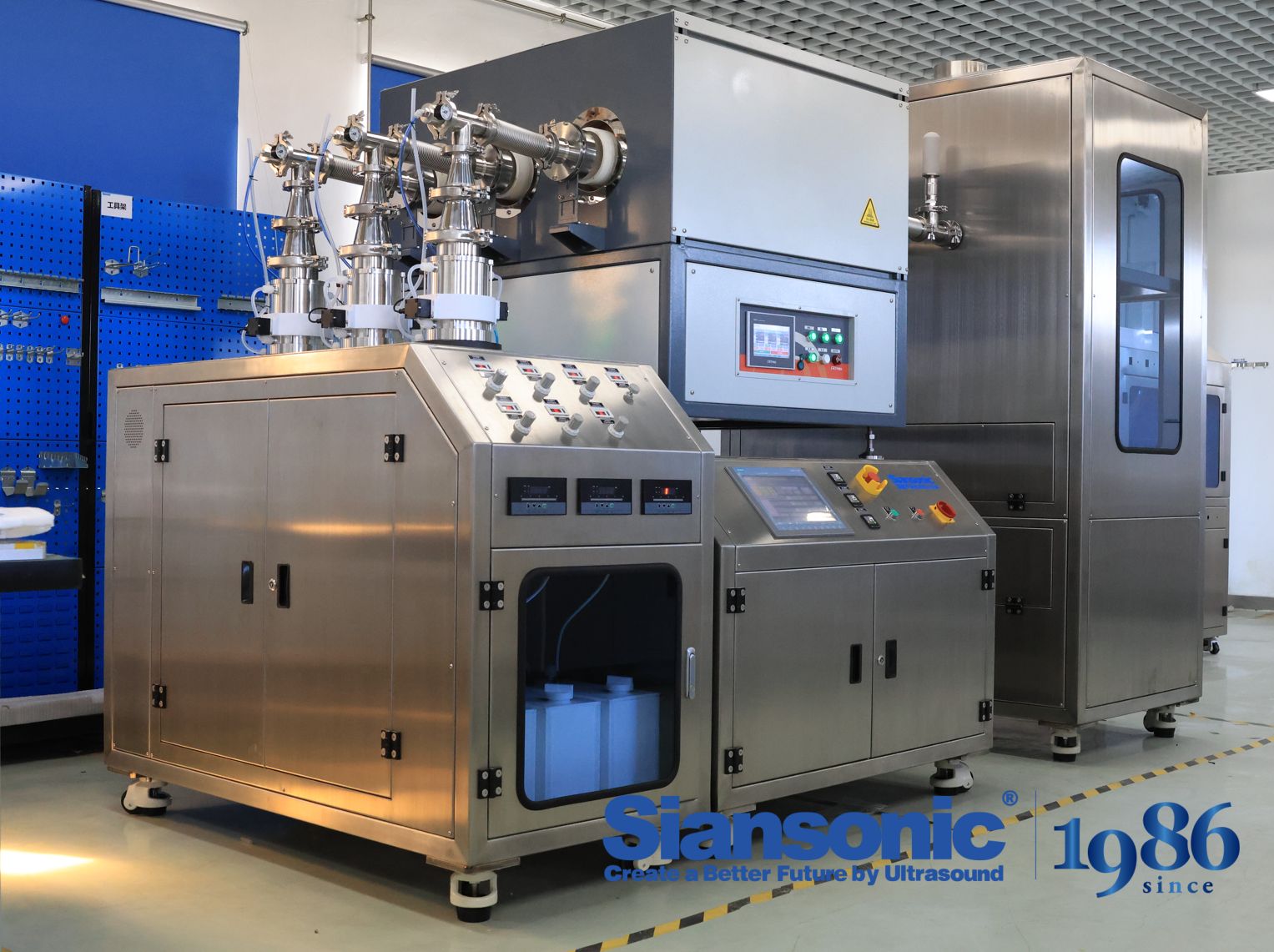
Maintaining uniform edge thickness has always been a headache in coating processes, especially when dealing with high-viscosity fluids or complex substrate geometries. The edges naturally pull in more liquid due to surface tension and capillary effects, creating ridges that dry into thick rims. Static heating plates only make it worse, as they deliver the same temperature profile everywhere and often amplify edge buildup instead of smoothing it out. By switching to dynamic substrate heating, you can actively manipulate the thermal field in real time, making the fluid flow away from the edges or evaporate more evenly across the entire surface.
The trick is not just cranking up the heat, but modulating it with spatial precision. For instance, applying slightly higher temperatures near the perimeter can reduce the local viscosity just enough to let the coating relax and level out before it cures. This isn't a one-size-fits-all setting though—substrate material, fluid rheology, and line speed all influence how aggressively you need to compensate. Some operators have found success with pulse-width modulated zones that cycle the edge heaters on and off, preventing thermal overshoot while still knocking down the rim. It feels counterintuitive at first, because you're essentially driving heat into the exact area where you don't want the material to pile up, but the physics works in your favor once the viscosity drops below a critical threshold.
What separates a robust dynamic heating strategy from a band-aid fix is feedback. Without a way to sense the wet film profile—whether through laser triangulation, capacitance probes, or even thermal imaging—you're flying blind and will inevitably drift back into the old edge-thickness problem. The real payoff comes when the controller adjusts the edge zones continuously, responding to drift in coating weight or changes in ambient humidity. That's when you stop chasing defects and start preventing them. In high-volume production, that kind of stability translates directly into fewer scrapped panels, tighter tolerances on functional layers, and a coating line that actually runs overnight without constant fiddling.
Precursor Viscosity and Nozzle Frequency: A Critical Pairing
Getting the precursor viscosity and nozzle frequency to work together isn't just a matter of dialing in two independent settings. The viscosity dictates how the fluid relaxes after leaving the nozzle, while the frequency controls the interval between ejection events. If the frequency is too high for a given viscosity, the fluid doesn't have enough time to form a clean meniscus before the next pulse, leading to ragged droplets, satellite spray, or partial clogging at the orifice. Conversely, a very low frequency with a low-viscosity precursor can cause the stream to pinch off prematurely, creating inconsistent deposit widths and poor edge definition.
In practice, the useful operating window shifts noticeably when you change either parameter. For example, a shear-thinning precursor that thins out under high shear may tolerate higher frequencies because its effective viscosity drops during ejection. But the same material at rest, especially in a cooled or partially cured state, will demand a slower cadence or a larger nozzle diameter to avoid pressure spikes. Many operators discover that the most reliable prints come from mapping viscosity against frequency for the actual working temperature, not from relying on the manufacturer's nominal viscosity value.
Iterative tuning is nearly unavoidable because small batches of precursor can vary in solvent content or particle loading. A quick way to land in the right zone is to start at a conservative frequency and step upward while watching the filament or droplet shape under magnification. When the trailing edge of the ejected volume starts breaking into distinct secondary droplets, you've crossed the upper limit for that viscosity. Backing off by about ten to fifteen percent from that threshold often gives the cleanest pairing without sacrificing throughput.
Solvent Evaporation Control to Avoid Coffee-Ring Defects
The coffee-ring stain arises because the contact line pins and evaporation is fastest near the droplet’s edge. Solvent lost there must be replenished by liquid from the interior, and that outward flow drags dispersed particles toward the rim. Controlling evaporation is therefore less about stopping drying altogether and more about reshaping how and where the solvent leaves the droplet. Slowing edge loss—by raising the surrounding vapor pressure or cooling the substrate slightly—can reduce the outward current enough to let particles deposit more evenly.
One practical route is to introduce a small amount of a lower-boiling, lower-surface-tension co-solvent. The uneven evaporation creates a surface tension gradient that drives a recirculating Marangoni flow back toward the center, counteracting the outward particle transport. This method works well for many aqueous inks, though the balance is delicate: too little co-solvent does not stop the ring, while too much can produce a central accumulation instead. Mixed solvent systems tend to be tuned by observing the final deposit pattern rather than by relying on bulk property tables alone.
Temperature and vapor environment deserve equal attention. A modest drop in substrate temperature slows the edge evaporation rate without changing the ink formulation, and an enclosure that maintains a solvent-rich atmosphere can extend the drying window. In high-throughput printing, these physical controls are often paired with slower-drying formulations, but the central principle remains the same: reduce the mismatch between edge and interior evaporation, and the ring has less reason to form.
Uniform Coverage on High-Aspect-Ratio Features Without Shadowing
Achieving uniform film thickness inside deep trenches or vias often comes down to controlling the arrival angles of depositing species. Traditional physical vapor deposition creates a line-of-sight flux that leaves lower sidewalls starved of material, especially when the aspect ratio climbs above 10:1. One way around this is to switch to a chemically driven process where precursor molecules diffuse into the feature, react selectively with the surface, and then desorb by-products without building up overhangs at the opening.
A practical route is to use short, separated precursor pulses rather than a continuous flow. This gives molecules enough time to penetrate to the bottom of the structure before the next reactant is introduced, preventing early closure. In high-aspect-ratio vias, the purge step matters just as much as the dose step: any residual precursor left in the narrow space will react unevenly and create a gradient in film thickness. Keeping the chamber pressure slightly below the viscous-flow threshold also helps maintain a more random molecular trajectory inside the feature, reducing the chance that the top corners intercept most of the incoming flux.
When plasma is involved, the bias and ion energy distribution must be tuned so that energetic species reach the bottom without damaging the sidewalls. A moderate ion-to-neutral ratio, combined with a low-frequency pulsed plasma, can re-sputter material from the bottom corners to the lower sidewalls, smoothing out the coverage profile. In practice, the goal is not to eliminate shadowing entirely but to make it irrelevant by balancing deposition and etching on a cycle-by-cycle basis.
Continuous Spray Pyrolysis: Preserving Film Quality While Scaling Up
Moving from a lab-scale batch reactor to a continuous spray pyrolysis line introduces a host of variables that can quietly degrade film quality if not actively managed. In batch mode, the substrate remains stationary and experiences a single, well-defined thermal cycle. Continuous operation forces the substrate through zones of varying temperature and aerosol density, which can produce subtle banding, thickness drift, or shifts in crystallinity across the moving surface. The first step in preserving film quality is recognizing that uniformity is not automatic; it has to be engineered into the transport path, the spray plume, and the exhaust flow.
A practical approach centers on controlling the droplet size distribution and the residence time in the reaction zone. Ultrasonic or electrostatic atomizers offer tighter droplet spectra than conventional pneumatic nozzles, and when paired with a carefully shaped air curtain, they reduce overspray and satellite droplet formation. The conveyor speed must be matched to the solvent evaporation rate so that each arriving droplet hits a surface that is neither too wet nor too dry. Slight adjustments to the carrier gas flow and the spacing between nozzle and substrate can prevent the common defect of rings or coffee-stain patterns, which become more visible on large-area films produced at high throughput.
Real-time monitoring closes the loop. Instead of relying on post-run characterization alone, optical thickness sensors and thermal cameras placed along the conveyor track can flag deviations before they turn into rejected material. Feedback control can then tweak the precursor flow rate, substrate speed, or zone temperature in a narrow window. This adaptive strategy allows a continuous line to hold the same film density, surface roughness, and optical transparency as an optimized batch recipe, even as production volume increases by an order of magnitude. The goal is not just more film per hour, but a film that looks and performs as if it were made one careful batch at a time.
FAQ
The system uses high-frequency ultrasonic vibration to atomize the precursor into fine, uniform droplets, which ensures consistent film thickness and composition across the substrate.
Unlike conventional air-pressure nozzles that produce a wide droplet size distribution, the ultrasonic nozzle generates a narrow droplet spectrum, leading to smoother and more homogeneous films with fewer defects.
Yes, it can process a wide range of precursor chemistries, including metal oxides, sulfides, and doped compounds, as long as the solution viscosity and surface tension fall within the operational window.
The system works with glass, silicon wafers, flexible polymers, and metal foils, provided the substrate can withstand the required processing temperature for pyrolysis.
Yes, thickness and rate can be tuned by adjusting parameters such as precursor flow rate, nozzle-to-substrate distance, ultrasonic power, and substrate temperature, giving operators fine control over the final film properties.
While primarily designed for research and pilot-scale work, the system can be scaled up by using multiple ultrasonic nozzles or a moving substrate stage to coat larger areas with good uniformity.
Routine maintenance includes cleaning the nozzle tip to prevent precursor buildup, checking the ultrasonic transducer for wear, and periodically calibrating the liquid delivery system to maintain consistent droplet generation.
Substrate temperature drives the pyrolysis reaction; too low a temperature leaves residual organics in the film, while too high a temperature can cause premature decomposition or grain growth, so a carefully optimized temperature profile is key to high-quality coatings.
Conclusion
Achieving uniform thin-film coatings with ultrasonic spray pyrolysis demands more than just a fine mist. The droplet size distribution sets the baseline for layer consistency—oversized droplets create local thickness variations while undersized ones evaporate too early. Pairing that with dynamic substrate heating prevents the familiar edge-thickening effect, since heat can be ramped or profiled to match evaporation demand at the wafer periphery. Precursor viscosity and nozzle frequency also work in tandem: a lower viscosity needs a higher frequency to maintain stable atomization, and small mismatches here show up as striations or cloudy patches in the cured film.
Solvent evaporation control is the next lever, especially for avoiding coffee-ring defects that degrade optical and electrical performance. By fine-tuning the evaporation rate relative to droplet impact spacing, the solute deposits evenly instead of migrating to the edges. For high-aspect-ratio features, the same system keeps coverage conformal without shadowing—ultrasonic energy produces a low-velocity mist that wraps around trenches and pillars rather than line-of-sight spraying. Finally, continuous spray pyrolysis preserves these quality gains during scale-up, using closed-loop feedback on droplet size, substrate temperature, and exhaust flow to maintain the same film uniformity from R&D coupons to full production wafers.
Contact Us
Contact Person: Ivy Zhang
Email: [email protected]
Tel/WhatsApp: +86 1081502288
Website: https://www.siansonic.com/