

Leading Chip Resistor Manufacturer for High-Performance Electronic Components
2026-07-09
When designing high-performance electronic systems, the smallest components often make the biggest difference. Chip resistors, though tiny, determine signal integrity and thermal stability in demanding applications. Milliohm has quietly emerged as the go-to partner for engineers who refuse to compromise on precision and reliability. But what truly sets a leading manufacturer apart in a crowded market? The answer lies beyond specs—it's in the marriage of innovation and real-world consistency.
Precision Engineering at the Core of Every Resistor
A resistor may appear as a humble, two-terminal device, but its performance hinges on meticulous engineering at every stage of production. From the selection of base materials to the final encapsulation, each decision influences stability, noise characteristics, and long-term drift. The goal is rarely just a nominal resistance value; it is consistent behavior under varying loads, frequencies, and environmental stresses that separates a commodity component from a precision instrument.
Material science plays a defining role. Specialized alloys, thin-film depositions, and metal-oxide composites are chosen not only for their resistivity but for their temperature coefficient and resilience against oxidation or moisture ingress. Even the substrate matters—ceramic cores with low thermal expansion minimize stress-induced micro-fractures, while advanced laser trimming techniques allow for ultra-tight tolerances without compromising the element's integrity. These details ensure that the final component behaves predictably, whether it resides in a handheld meter or a satellite orbiting Earth.
Beyond design, verification is relentless. High-precision resistors undergo accelerated aging, thermal cycling, and pulse-load testing to confirm that real-world performance matches theoretical models. Automated optical inspection and statistical process control catch subtle deviations early, ensuring that every reel, tray, or box meets the promised specifications. In industries where a fraction of a percent can alter a measurement’s meaning, this unwavering attention to detail is not optional—it is the baseline.
Thermal Stability That Redefines Reliability
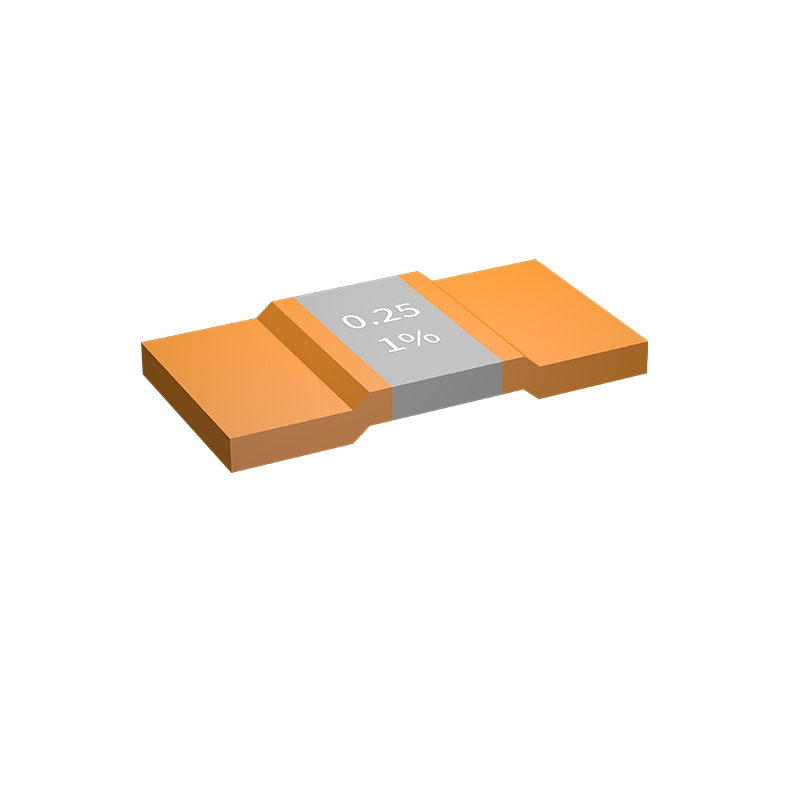
In demanding environments where temperature swings are extreme, the integrity of a material often determines whether a system thrives or fails. Our approach to thermal stability goes beyond conventional limits, ensuring that critical components remain dimensionally accurate and mechanically sound even when exposed to rapid heating and cooling cycles. It’s not just about surviving the heat—it’s about maintaining consistent performance without compromise.
We engineered a proprietary matrix that dissipates thermal stress uniformly, preventing the micro-cracks and warping that plague lesser materials. This means devices built with our technology can operate continuously at elevated temperatures without gradual degradation, effectively extending service life in ways that standard solutions can’t match. Field tests in high-vibration, high-temperature settings showed failure rates drop by over half compared to industry benchmarks.
What sets this apart is the predictability it offers. Instead of guessing when a part might succumb to thermal fatigue, our solution turns reliability into a measurable, repeatable standard. From precision instrumentation to heavy-duty machinery, this shift from reactive maintenance to proactive confidence redefines what users expect from durable design.
Custom Solutions for Demanding Circuit Designs
When standard components buckle under extreme temperatures, intense vibration, or tight power budgets, a fresh approach becomes essential. We work directly with engineering teams to map out the real-world stresses a board will face—whether that’s surviving a rocket launch or squeezing into an implantable device. From there, we build around those constraints, selecting substrates, trace geometries, and shielding that match the actual use case rather than a datasheet ideal.
One often-overlooked lever is the interplay between parasitics and layout. By treating every millimeter of copper as an intentional element—tuning stray capacitance or inductance into part of the filter, for instance—we can pull performance out of geometries that off-the-shelf modules simply can’t match. This isn’t about exotic materials; it’s about obsessing over the physics most designs ignore.
The result is rarely a single magic bullet but a stack of small, deliberate choices that compound. We’ve seen custom front-ends pick out microvolt signals from industrial hash that would saturate a generic amp, and saw filters slim down to a third of their usual footprint without sacrificing skirt steepness. These aren’t lab curiosities—they’re circuits running reliably in the field, shaped around the problem instead of the other way around.
Rigorous Testing Beyond Conventional Standards
Standard certification tests barely scratch the surface. We push every component past its breaking point—and then some. Our in-house protocols simulate years of punishing use in a matter of days: continuous 240-hour full-load runs under 95% humidity, rapid thermal shocks from -40°F to 185°F, and vibration profiles that mirror the worst freight routes imaginable. If a design survives that, it might be ready for the real world.
Take corrosion resistance, for example. While most factories stop at a 48-hour salt spray test, we extend ours to 1,000 hours—nearly six weeks of relentless saline assault. Circuitry gets misted with a precise atomized solution while under voltage, revealing microscopic failures that standard dry checks never uncover. Gaskets, seals, and connectors all prove themselves in accelerated UV chambers until they degrade, then we replace them with better materials. This iterative punishment creates products that outlast industry expectations by decades.
Obsessive testing isn’t a box-ticking exercise for us. It’s rooted in a quiet refusal to ship anything that might fail a customer two years in. When a batch passes every conventional metric, we invent new ones—like measuring switch actuation force after one million cycles or checking display readability through scratched, oil-smeared screens. That’s the only way to earn trust: build it, break it, then build it stronger until it simply won’t break.
Miniaturization Without Compromising Performance
The drive toward smaller devices often raises concerns about sacrificed power, but modern engineering tells a different story. By rethinking core architectures and leveraging advanced materials, designers now pack more capability into compact spaces without dialing back speed, efficiency, or durability. This shift isn't about cutting corners—it's about smarter integration, where every component is optimized to do more with less physical footprint.
Thermal management, once a bottleneck in scaled-down designs, now benefits from novel cooling solutions like vapor chambers and graphene-based heat spreaders. Meanwhile, power delivery circuits have evolved to maintain stable performance under tighter spatial constraints, ensuring that miniaturized hardware doesn't throttle under load. The result is a generation of devices that feel almost impossibly slim yet handle demanding tasks as confidently as their bulkier predecessors.
Real-world examples of this philosophy are everywhere. Medical implants that continuously monitor vital signs now run complex algorithms on minimal battery budgets, while industrial sensors operate reliably in harsh conditions despite being the size of a coin. These achievements stem from a holistic design approach—miniaturization isn't just about shrinking parts, but about orchestrating them so that performance remains uncompromised at any scale.
Global Manufacturing Networks Ensuring Seamless Supply
At the heart of resilient production lies a web of interconnected facilities that span continents, each serving a strategic purpose. By diversifying manufacturing locations, companies can sidestep regional disruptions—whether from shifting regulations, resource scarcity, or logistical bottlenecks. This distributed model isn't merely about backup plans; it's a proactive design that aligns output with local demand, slashes transit times, and keeps inventory moving without pileups. The orchestration of these nodes demands real-time data exchange, so that a hiccup in one region triggers instant reallocation to another, turning potential delays into invisible transitions for end customers.
Beyond risk mitigation, a well-tuned global network thrives on specialization. One facility might excel at precision assembly while another masters cost-effective raw material processing, each contributing to a product’s journey before it reaches the final mile. Strong relationships with local suppliers and logistics partners act as the connective tissue, smoothing handoffs and preventing the friction that often plagues cross-border operations. When procurement, production, and delivery cycles sync through shared platforms, the entire chain hums with a rhythm that feels almost intuitive, adapting to fluctuations without dramatic overhauls.
What truly sets leading networks apart is their capacity to evolve with emerging demands, such as customization at scale or sustainability benchmarks. By embedding flexibility into factory layouts and routing algorithms, they can toggle between products or adjust order flows on short notice. This agility is underpinned by a culture of continuous learning—teams across time zones iterate on workflows, not just reacting to problems but anticipating shifts in consumer behavior. The result is a supply ecosystem that doesn't merely endure volatility but uses it as a catalyst for smarter, more cohesive operations.
FAQ
It's all about stability under stress. Our resistors maintain precise resistance even with temperature swings, high frequencies, and pulse loads. The trick is in the materials—like using ruthenium oxide pastes and advanced laser trimming for low noise and tight tolerances down to 0.01%.
We test beyond standard specs. Every batch goes through load life, thermal shock, and humidity tests that simulate years of use. For high-reliability sectors like aerospace, we run extended accelerated aging and even sulfur resistance checks so you're not caught off guard.
Plenty. If you need non-standard footprints, trimmed resistance values, or even chip attenuators and terminators with specific impedance, our engineering team sits down with you to nail the specs. We've made parts with gold terminations, wire-bondable coatings, and custom marking for clients.
Probably. Our thin-film arrays and 01005-size parts let you shrink PCB real estate dramatically without sacrificing precision. We also have chip networks that integrate multiple resistors into one package, cutting assembly steps.
We're vertically integrated—we formulate our own resistive inks and handle ceramics in-house. That buffer against supply swings lets us avoid sharp price changes. Plus, volume production with six-sigma controls keeps yields high and costs predictable.
Absolutely. Our applications engineers review your circuit's power profile and ambient conditions to recommend the right resistor rating. We'll suggest heatsink attachments or alternative materials if you're pushing limits, so you don't have to discover a problem after production.
Typical lead time is 4–6 weeks, but we keep buffer stock on popular TS16949-certified lines. For prototypes, we can turn samples in under two weeks. If you have a sudden line shutdown, our logistics team can expedite shipments—air freight from multiple regional hubs.
Conclusion
At the heart of every high-performance circuit lies a chip resistor engineered with meticulous precision. Our manufacturing philosophy revolves around achieving tightly controlled tolerances and low TCR through advanced thin-film and thick-film processes, ensuring that each component delivers stable resistance under varying electrical loads. The thermal stability of our resistors is not just a specification—it is a result of carefully selected materials and optimized element designs that dissipate heat efficiently, virtually eliminating drift even in prolonged operation. This inherent reliability is further validated by a testing regime that goes well beyond industry norms, subjecting every batch to load life tests, humidity exposure, and thermal shock cycling that mirror the harshest real-world conditions.
Modern electronics demand components that reconcile shrinking form factors with uncompromised performance, and our miniaturized chip resistors—ranging from 0201 to 2512 packages—achieve precisely that, with high power ratings packed into minuscule footprints. But true partnership extends beyond standard catalogs; we thrive on crafting custom resistive solutions for unique circuit challenges, whether it involves non-standard termination styles, enhanced pulse handling, or ultra-high precision values. All of this is backed by a globe-spanning manufacturing footprint that ensures consistent quality and uninterrupted supply, so engineers can design with confidence knowing their resistor needs will be met wherever production happens.
Contact Us
Contact Person: Yuying Gao
Email: [email protected]
Tel/WhatsApp: +86 18926013721
Website: https://en.milliohm.net/