

OEM Electric Vehicle Charger Solutions: What Buyers Need to Know
2026-11-16
Most EV charger sourcing guides read like a spec sheet with extra steps. This one won't. If you're comparing OEM partners, the real differences show up in firmware control, lead-time honesty, and what happens after installation. BEILIN has learned those lessons on the factory floor, not in a marketing deck. Here is what buyers need to know before choosing who builds your chargers.
Charger Design Decisions That Shape Long-Term Ownership Costs
The outer shell and connector finish often say more about a charger's true cost than its wattage label ever could. A thin polycarbonate blend that feels fine on day one can develop micro-cracks around the USB port after repeated plugging, eventually letting moisture in and killing the internals. Opting for chargers with zinc-alloy frames, reinforced strain relief, and gold-plated contacts means you are paying once instead of replacing the unit every year.
Heat is the quiet budget killer in charger design. Many budget models pack components tightly behind a sealed case, relying on the plastic itself to dissipate heat, which pushes electrolytic capacitors past their comfortable operating range. A well-designed charger uses a mix of thermal pads, exposed copper planes, or even a small temperature-controlled fan to keep internal temperatures low. That extra engineering keeps charging speeds stable and prevents the slow capacity fade that forces you to buy a higher-wattage model later.
Repairability and firmware support are less talked about but equally costly design decisions. Some chargers come with detachable cables and modular sub-boards, so a broken connector or a failed capacitor can be swapped without discarding the whole unit. Firmware updates also matter: a charger that can adapt to new fast-charging handshakes via software will outlast one that becomes obsolete when standards shift. If the manufacturer backs this with a multi-year warranty and publishes internal photos, that is usually a sign the design was built to lower your total cost of ownership, not just to hit a low sticker price.
Matching Charger Power Ratings to Actual Use Patterns
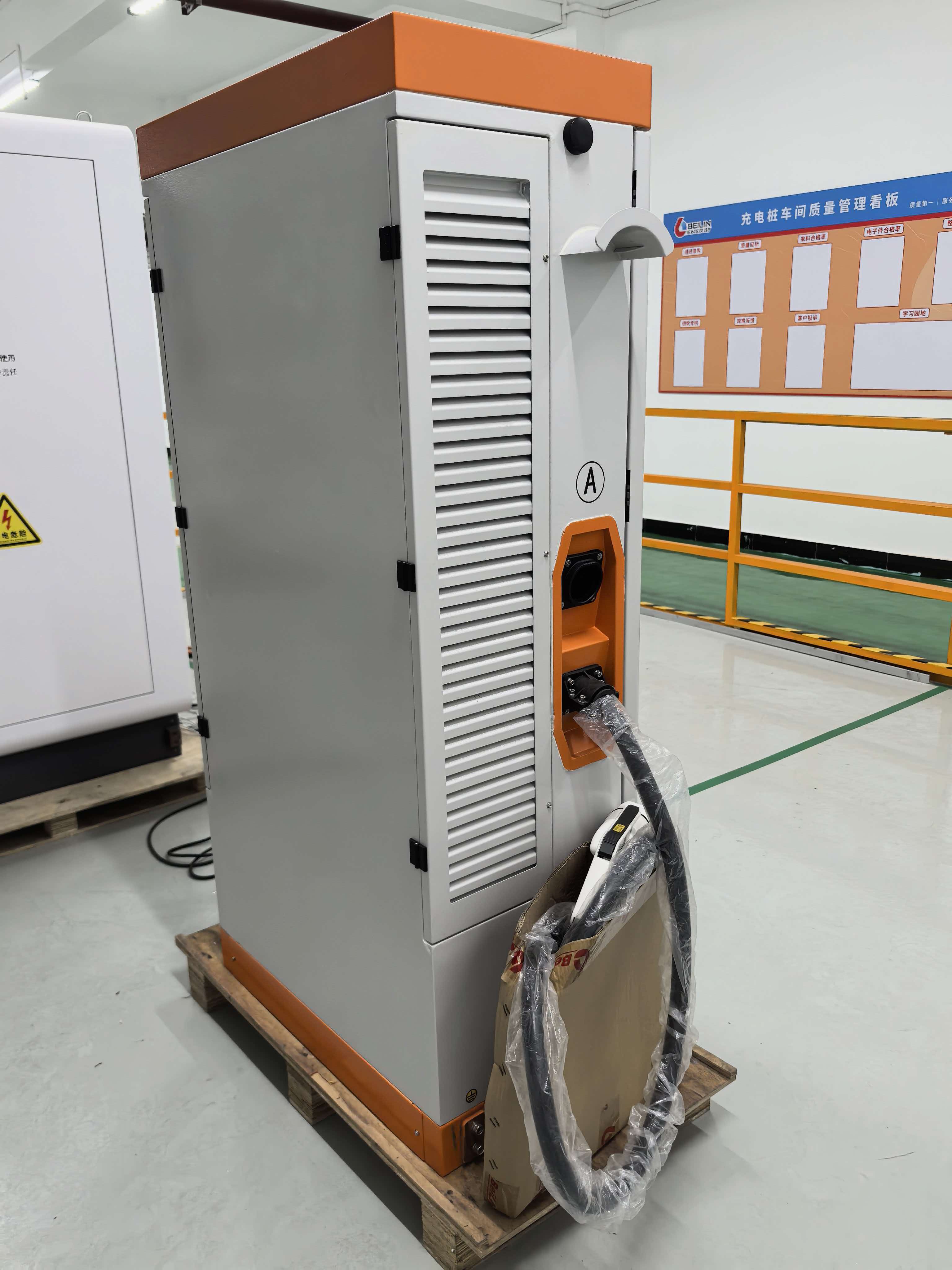
Choosing a charger isn't just about grabbing the highest wattage you can find. A 100W brick might sound impressive, but if your daily routine only involves topping up a phone overnight, that extra power mostly goes unused. Matching the charger's output to how you actually charge—single device vs. multiple, short bursts vs. overnight sessions—makes more sense than chasing specs.
Think about your typical day. If you travel light with a phone and earbuds, a compact 30W charger handles both without bulk. On the other hand, someone who powers a laptop and tablet simultaneously during work hours benefits from a 65W or higher multi-port unit. The key is to map the charger's sustained output to your most common charging scenario, not the rare emergency top-up.
It also helps to consider how your devices negotiate power. Many phones cap out at 25W or 45W regardless of what the charger offers, so a 96W adapter won't speed things up unless your laptop or tablet actually requests that much. Checking the charging protocol your gear supports—like USB PD or Quick Charge—and aligning it with a charger that delivers the right voltage steps avoids wasted capacity and keeps heat in check.
The Real Durability Story Behind Connectors and Cables
Durability in connectors and cables rarely comes down to just the thickness of the metal shell or the gauge of the wire. It lives in the contact interface—the microscopic points where two surfaces actually touch. Over time, vibration, thermal cycling, and even humidity can trigger fretting corrosion, which builds up insulating oxide layers smaller than what most failure reports mention. A connector that looks pristine from the outside may already be degrading electrically, with intermittent resistance spikes that only show up under load.
The real story also involves mechanical tolerance stacking. A cable assembly might pass a pull test in a lab, yet fail after six months in a moving robot arm because the strain relief allows micro-motion at the solder joints. Manufacturers who focus only on IP ratings or bend cycles often miss this slow degradation. Lasting durability comes from designing for the specific environment: choosing the right plating, controlling insertion force repetition, and accepting that a connector is never just a static part—it's a wearing interface that needs margin for electrical contact, not just physical survival.
Open Protocols vs. Proprietary Software: A Tradeoff Worth Examining
The appeal of open protocols lies in their neutrality. Anyone can inspect how data moves, build a compatible client, or leave without asking permission. That freedom often gets framed as an obvious win, yet it carries real costs. Development can stall when no single party is responsible for pushing updates, and the lack of a commercial gatekeeper sometimes means nobody has a strong incentive to fix security holes or polish rough edges.
Proprietary software, on the other hand, trades that openness for focus and accountability. A company that owns the stack can ship features faster, offer support, and take direct responsibility when something breaks. The downside is equally clear: users are locked into decisions made elsewhere, and the software can disappear or change terms overnight. Neither approach is universally better; the real question is what you're optimizing for—control or convenience, longevity or responsiveness.
Firmware Update Strategies That Keep Chargers Relevant
Modern chargers ship with basic functionality, but that's just the starting point. Firmware updates let manufacturers refine charging curves, improve thermal management, and patch safety issues long after the device leaves the shelf. A charger that can adjust its behavior based on real-world usage data remains useful for years, not months.
Some forward-thinking brands use over-the-air updates to add entirely new capabilities—like support for emerging fast-charging standards or custom profiles for specific vehicle models. Others collect anonymized diagnostics to detect early signs of component wear, then push targeted fixes before failures occur. This proactive approach turns a simple power brick into an evolving piece of hardware.
The key is balance: updates must be meaningful without forcing users to jump through hoops. Seamless background updates, clear release notes, and rollback options build trust. When done right, firmware strategy extends product life, reduces e-waste, and keeps customers loyal—without ever mentioning the need to stay visible in crowded markets.
Warranty Coverage and Support: Reading Between the Lines
Standard warranty documents tend to highlight the headline number—say, three years or 36,000 miles—while burying the exclusions in fine print. Wear-and-tear items like brake pads, wiper blades, and certain gaskets rarely make the cut, and many policies void coverage if you miss a single scheduled service at an authorized center. Reading closely often reveals that "bumper-to-bumper" doesn't actually mean the bumpers are covered at all.
Support quality varies even more than coverage scope. One brand might promise 24/7 roadside assistance but route you to a third-party call center with hour-long hold times; another might offer free software updates for the first two years, then quietly switch to a subscription model. Some warranties include loaner vehicles during repairs, while others only reimburse taxi fares up to a laughably low daily cap. The real question isn't what's written on the brochure—it's what happens at 2 a.m. when the alternator dies in a parking garage.
Before signing anything, ask the dealer or manufacturer to email you the full warranty booklet, not the summary sheet. Highlight every instance of "excluding," "normal wear," "pre-existing condition," and "authorized facility." Then test the support channel once: call the roadside number before purchase and see how long it takes to reach a human. If they can't handle a simple inquiry politely, imagine them handling a breakdown. That five-minute test tells you more than any rating or review.
FAQ
A complete OEM solution usually covers the hardware, embedded firmware, housing, cable management, and sometimes the back-end software or app integration. The exact scope depends on whether you just need the charging unit or a turnkey package that includes connectivity modules, payment terminals, and branding.
Off-the-shelf units are cheaper and faster if your use case is standard public AC charging. Custom builds make sense when you need unique power levels, specific connector types, unusual environmental ratings, or a housing that matches your brand's industrial design. But custom tooling can add months and tens of thousands in upfront costs, so it's only worth it for volume commitments.
For North America, UL 2594 is the baseline for EVSE, and for Europe you'll need CE marking with compliance to IEC 61851 series. If you're selling in Canada, CSA certification helps. Also check for FCC Part 15 for radio emissions if the charger has Wi-Fi or cellular, and look for Energy Star if efficiency matters to your customers.
Overlooking local grid requirements and plug standards is common, as is signing a contract without a clear software update policy. Some buyers focus only on unit price and ignore hidden costs like import duties, certification retesting, or the cost of custom cable lengths. Others don't ask about lead times for replacement parts.
You can customize far more than just the logo: cable length, connector type, power output, enclosure material, color, and even the user interface flow on the screen. But each change adds engineering validation time. A good OEM will guide you toward modular options that keep costs flat, like choosing from pre-tested cable assemblies instead of designing a new one.
Ask for a factory audit or at least third-party quality reports. Look at their production line for EVSE specifically, not just general electronics. A partner that does in-house SMT assembly and has an environmental test chamber for thermal cycling and humidity is a strong sign. Also check how they handle firmware version control, because that affects long-term reliability.
Software is no longer an afterthought. Even basic AC chargers need OTA update capability, load management, and some form of access control or billing integration. If the OEM's software stack is closed and they won't give you API access or a white-label app, you'll be stuck with their roadmap and branding limits. Ask for a demo of the management dashboard before you commit.
Expect at least a two-year warranty on electronics, with clear response times for remote diagnostics and a local service partner or depot for hardware swaps. Beware of OEMs that offer five-year warranties but have no established spare parts inventory. Ask for the RMA process in writing and test it with a small order before scaling up.
Conclusion
Many buyers fixate on upfront cost, but total cost of ownership depends on design choices that play out over years. Enclosure sealing, cooling approach, and component accessibility affect maintenance labor and downtime more than the initial price tag. Power rating is another area where overspending is common; a 150 kW charger at a site where vehicles rarely pull more than 60 kW means wasted infrastructure and higher demand charges. Conversely, undersized units leave drivers waiting and reduce throughput. Connectors and cables deserve particular scrutiny. Liquid-cooled cables handle repeated high-power sessions without overheating, but their couplings and strain reliefs tell the real story. A cheap-looking connector latch or thin insulation will fail within months in heavy use, and replacement costs quickly erase any savings.
Open protocols like OCPP give buyers flexibility to switch network providers and avoid being locked into one vendor's app and payment system, though proprietary software can offer tighter integration and smoother remote diagnostics. The tradeoff matters less if the vendor has a robust firmware update strategy; units that receive regular over-the-air updates stay compatible with new vehicle models and grid requirements. But updates only help if the hardware is still supported. Read warranty terms carefully. Many '5-year' warranties cover the main cabinet but exclude connectors, cables, and labor after the first year. Some contracts prorate replacement parts or require shipping the unit back at your expense. Ask for actual response times and local service partners, not just a toll-free number. A charger that works beautifully for two years and then sits dead for six months is not a bargain at any price.
Contact Us
Contact Person: Jason
Email: [email protected]
Tel/WhatsApp: 8615876017548
Website: https://www.bei-lin.com/