

OEM Galvanized Tangent Tower from China Engineered for Lasting Performance
2026-09-07
Most tangent tower failures don't start with a dramatic collapse—they start with small compromises: a rushed galvanizing bath, a bolt hole slightly off, a load case that was never questioned. For buyers sourcing OEM galvanized tangent towers from China, those compromises are exactly what Anbang refuses to make. The phrase 'engineered for lasting performance' gets thrown around often, but in the sections ahead, you'll see how it translates into material selection, coating thickness, and structural detailing that hold up long after installation.
Tangent Tower Deflection: Keeping Line Angles Within Spec Under Ice and Wind
On tangent lattice towers, deflection under combined ice and wind isn't just a serviceability check; it changes the effective line angle at each suspension point. When the crossarm tip moves downwind, the insulator attachment point shifts, and the conductor's departure angle may exceed the clearance or hardware swing limits. Utilities often set a maximum top deflection of about 1 to 2 percent of tower height, but for tangent towers in ice-prone corridors, a tighter cap is needed if the structure carries a slight line angle. The interaction between longitudinal imbalance from unequal ice shedding and transverse wind causes the tower to twist, and that rotation directly adds to the initial line angle. If not bounded, suspension clamps can bottom out or the conductor can slap the tower body. A typical fix is to model the tower with non-linear P-delta effects, not just static wind, and then verify that the post-deflection angle remains within the line's design angle tolerance.
Field measurements often show that the governing case for tangent tower deflection is not maximum wind alone, but ice combined with moderate wind because ice increases both conductor area and weight. Under radial ice, the tangent tower's arms deflect and the insulator string swings; for a tangent structure with a line angle of zero to two degrees, this can quickly erode the margin. The spec may require that the relative displacement between the tower body and the conductor attachment point be limited so that the angle of the conductor leaving the clamp never exceeds the specified maximum swing angle. To keep line angles within spec, some designers add redundant bracing or use slightly heavier crossarm members, not for strength but to reduce the geometric deformation that shifts line angle. Others adjust insulator length or add counterweights. The key is checking the actual deformed geometry, not just the nominal stringing angle.
Single-Dip Galvanizing Process and Why It Produces a More Uniform Coating
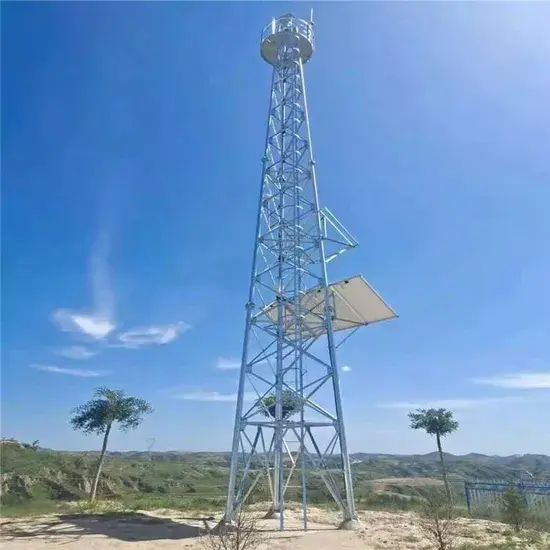
The single-dip galvanizing method involves submerging cleaned steel into a molten zinc bath just once, rather than passing it through multiple dips or varying temperatures. This straightforward approach minimizes the thermal cycling that can cause uneven zinc crystallization. As the steel is withdrawn, the zinc solidifies in a controlled manner, forming a tightly bonded layer that follows the base metal's contours closely. The result is a coating with consistent thickness across flat surfaces, edges, and corners, which is often harder to achieve with multi-step processes.
Uniformity in single-dip galvanizing comes from the steady immersion time and bath temperature, typically around 450°C. Because the entire steel piece reaches the same temperature before withdrawal, the metallurgical reaction between iron and zinc proceeds evenly. There is no reintroduction of heat or partial re-dipping that could create localized thick spots or thin areas. Additionally, the absence of secondary dips avoids the common issue of overlapping layers, which can trap flux residues or create brittle zones.
In practice, a single well-controlled dip often outperforms repeated dips for dimensional consistency. Fabricators appreciate that the coating's thickness can be predicted reliably based on steel chemistry and surface preparation, without the variability introduced by reheating. The smoother, more even surface also holds paint or powder finishes better, reducing the need for post-galvanizing grinding or touch-ups. For structural components exposed to corrosive environments, this uniformity translates directly into longer service life and fewer weak points.
OEM Drawings That Match Your Existing Tower Family Without Extra Tooling
Getting replacement parts or expanding your tower lineup often means dealing with expensive retooling, long lead times, and compatibility headaches. Our OEM drawing service eliminates that friction by providing drawings that slot directly into your existing tower family. Every dimension, mounting point, and interface detail is matched to your current design, so there’s no need to modify your production line or invest in new tooling.
We achieve this by working from a comprehensive library of standardized tower profiles and connection geometries. Whether you need a single component or a full assembly, our engineers pull the relevant technical specifications and generate drawings that align perfectly with what you already have. The result is a true drop-in solution that keeps your manufacturing process untouched while giving you the flexibility to scale or repair without delays.
This approach not only preserves the structural and aesthetic consistency of your tower family but also cuts costs dramatically. You avoid the sunk cost of custom molds, reduce design validation time, and get to market faster. From small brackets to complete frame sections, the drawings we deliver are ready for quoting and production, letting you focus on what matters most: keeping your operations running smoothly.
Low-Temperature Steel Certification for High-Altitude and Cold Climate Sites
High-altitude and cold climate sites impose exceptional demands on structural steel that go far beyond conventional load-bearing requirements. At temperatures well below freezing, ordinary carbon steels can undergo a ductile-to-brittle transition, losing toughness and becoming susceptible to sudden, catastrophic fracture. This risk is magnified by the thin air, extreme temperature swings, and wind-driven ice loading typical of mountain or polar installations. Low-temperature steel certification is therefore not a bureaucratic formality but a critical engineering safeguard—it verifies that the material will absorb sufficient energy during impact and resist crack propagation under the worst-case thermal conditions expected at the site.
Certification typically follows established test protocols such as ISO 148-1 or ASTM E23, which measure Charpy V-notch impact energy at specified temperatures. For high-altitude or arctic applications, steels are often required to meet minimum impact values at −20°C, −40°C, or even lower, depending on the design metal temperature. Beyond impact testing, full certification may include chemical analysis to control elements like phosphorus and sulfur that can embrittle grain boundaries, as well as through-thickness tensile testing to ensure ductility in welded joints. Common grades that meet these stringent criteria include normalized fine-grain steels such as S355NL or quenched and tempered plates like A537 Class 2, each chosen based on the lowest anticipated service temperature and the criticality of the structure.
In practice, low-temperature certification also influences fabrication and inspection procedures. Welding must be performed with low-hydrogen electrodes and controlled heat input to avoid creating local brittle zones; post-weld heat treatment might be specified for thick sections. Site engineers must verify that the delivered material's mill certificates match the design assumptions and that stamped heat numbers correspond to actual plates used. The payoff is substantial: certified low-temperature steel reduces the probability of brittle fracture, extends maintenance intervals, and ensures compliance with international codes like EN 1993-1-10 or AWS D1.1. For any permanent installation above the snow line or in permafrost regions, this certification is the difference between a structure that endures for decades and one that fails without warning on the coldest night of the year.
Trial Assembly Before Export Catches Bolt Hole Mismatches in the Factory
Before any shipment leaves the workshop, a full trial assembly is often the last line of defense against hidden fitting problems. Relying solely on dimension checks of individual parts rarely reveals how holes drift out of alignment once all the pieces are pulled together. Small tolerance stacks from different batches or subcontractors can turn a perfectly good bolt hole pattern into a frustrating mismatch at the final connection. Once those components reach an overseas site, even a minor offset means cutting, reaming, or sending parts back—costs that no one wants to absorb after the container is sealed.
In practice, the pre-export trial run involves laying out every structural member and connector exactly as it will be erected on site. Fitters walk through the sequence, inserting bolts by hand before any torque is applied. The moment a fastener refuses to pass cleanly through both flanges or requires a hammer and drift, work stops and the joint is tagged. Instead of guessing at the cause later, the team can trace the issue back to a warped weld, a worn drill jig, or a drawing revision that never made it to the shop floor. Most of these fixes take minutes, not weeks, when the parts are still inside the factory.
Beyond catching mismatches, this step also produces a useful record for the client. Any bolt that needed reaming or adjustment gets noted, along with the corrective action taken. That documentation travels with the shipment, giving the receiving crew confidence that the steel will go together without surprises. For non-standard or heavily customized assemblies, the extra few hours spent on a trial fit is a small price compared to the alternative—discovering the error on a remote site with limited tools and a tight schedule.
Erection Sequence Packing: Bolt Bags and Members Grouped by Tower Section
On a recent transmission line project, the erector opened the first crate and found bolt bags labeled not by generic type, but by the exact tower section they belonged to. Each bag carried a tag with the section number, bolt diameter, and torque value, so the crew never had to guess whether a handful of galvanized bolts was for the leg splice or the crossarm. This simple change removed the usual morning scramble of sorting hardware and let the ground crew hand up the right bag the moment the crane lifted the next section into place.
Members were stacked in the laydown yard in the same order they would go up: base plates and stub angles on the bottom, then mid legs, then the upper cage and crossarms on top. Each tier had its own manifest clipped to the bundle, listing member marks and matching bolt bag numbers. When the wind picked up and the crew had to move fast, they could grab the next bundle without digging through a mixed pile. The tower went together in one continuous pull, with no idle crane time waiting for a missing piece.
This packing method also helped with quality checks. A foreman could walk the stack and verify that every section had its hardware present before the crane ever arrived. If a bolt count came up short, it was caught at the yard, not at 80 feet in the air. For sites with limited access or steep terrain, having each tower section self-contained meant a single delivery could be staged exactly where needed, cutting down on double handling and keeping the right-of-way clear.
FAQ
A tangent tower is a transmission line structure placed along straight sections of a route. It supports the conductors without carrying heavy angle or tension loads, so it shows up frequently in long-distance power corridors and distribution lines.
Absolutely. Since it's an OEM product, we can adjust the tower height, cross-arm length, leg slope, bolt hole patterns, and galvanizing thickness to match your line design, loading requirements, and local construction practices.
Hot-dip galvanizing applies a durable zinc coating that bonds metallurgically with the steel. It protects against rust, salt spray, industrial fallout, and soil contact, often giving the tower a 30-year-plus service life with almost no maintenance.
The design accounts for the maximum wind speeds, ice thickness, and temperature ranges you specify. The steel grades and member sizes are selected so the tower remains stable and within safe stress limits under those conditions.
Yes, we can provide structural analysis reports, assembly drawings, and foundation reaction data. Just share your conductor specifications, ruling span, and local climatic loading criteria, and we'll confirm the tower design against them.
It varies with customization and order volume, but once drawings are approved, standard tangent tower production usually takes roughly 4 to 8 weeks, not including transit time to your destination.
Yes, each tower is fabricated in bolted sections that are compact to ship and straightforward to assemble. All sections are match-marked and drilled according to the erection drawings, which helps speed up site installation.
Conclusion
A tangent tower must hold line angles within tight limits even when ice builds up and wind loads peak, and that requirement shapes every stage of production for this OEM galvanized model from China. Rather than relying on heavier sections alone, the design controls deflection through a combination of tailored leg slopes, optimized bracing patterns, and verified load cases that reflect real service conditions. For sites at high altitude or in severe cold, the steel is supplied with low-temperature certification, confirming notch toughness at sub-zero values so the structure does not become brittle when temperatures drop. The protective coating uses a single-dip galvanizing process instead of multiple passes, which yields a more consistent zinc layer across complex joint details and reduces the risk of thin spots that often appear where plates and gussets meet. This approach supports long-term corrosion resistance without adding unnecessary coating thickness that could interfere with bolt fit-up.
Beyond structural behavior, the tower is built to match an existing family rather than forcing a utility to adopt new foundations or tooling. OEM drawings are developed to align with established tower outlines and member sizes, which means replacement or extension projects can proceed without extra jigs or re-tooling charges. Before export, every tower undergoes a trial assembly in the factory, during which bolt holes are checked for alignment and any mismatch is corrected before containers are loaded. Packing is organized by tower section, with bolt bags and members grouped so that erection crews can follow the sequence without sorting through mixed bundles. This level of pre-shipment coordination reduces field errors and shortens the time between delivery and energization, making the galvanized tangent tower a practical choice for projects that demand both mechanical reliability and installation efficiency.
Contact Us
Contact Person: antor khan
Email: [email protected]
Tel/WhatsApp: 8613863903569
Website: https://www.qdabtower.com/