

Oil-Injected Air Compressor Supplier: Your Complete Guide to Making the Right Choice
2026-07-29
Choosing an oil-injected air compressor supplier isn’t just about finding a machine—it’s about securing the efficiency and reliability your operations depend on. With so many options out there, how do you cut through the noise and make a decision you won’t regret? Whether you’re upgrading your workshop or equipping a new facility, the right partner makes all the difference. That’s where Seize Air steps in, blending proven technology with guidance that actually makes sense. In this guide, we’ll walk you through what really matters, so you can choose with confidence.
Understanding Your Compressed Air Needs Before Reaching Out
Jumping straight into conversations with suppliers without a clear picture of what your operation actually demands from a compressed air system can lead to mismatched recommendations, unexpected costs, and ongoing inefficiencies. Instead of chasing quotes immediately, take a step back and map out the basics: how much air you use, at what pressure, and for how many hours each day. Even a rough sketch of your peak demands and typical running load can prevent you from being talked into a system that’s either overbuilt and wasteful or undersized and perpetually struggling.
Air quality is another piece that often gets overlooked until it’s too late. If your processes involve sensitive electronics, food packaging, or precision spraying, the standard dry, filtered air might not be enough. Knowing whether you need oil-free output, a particular pressure dew point, or extra filtration up front saves you from retroactive fixes and keeps your equipment running clean. A simple audit of your tools and end-use points will quickly tell you if you should be discussing specialty dryers or multi-stage filtration rather than a generic setup.
Future-proofing your choice also starts long before you make a call. Consider where your shop might be a few years from now—new machines, expanded lines, or shifts in production volume. Even small growth can push a borderline compressor beyond its limit, so factoring in a modest buffer now is smarter than doubling up later. You don’t need to predict everything perfectly, but having a handle on your current baseline and a sense of where you’re going gives you a much stronger foundation when you finally sit down with an expert.
Key Engineering Specs That Separate Premium Oil-Injected Compressors from the Rest
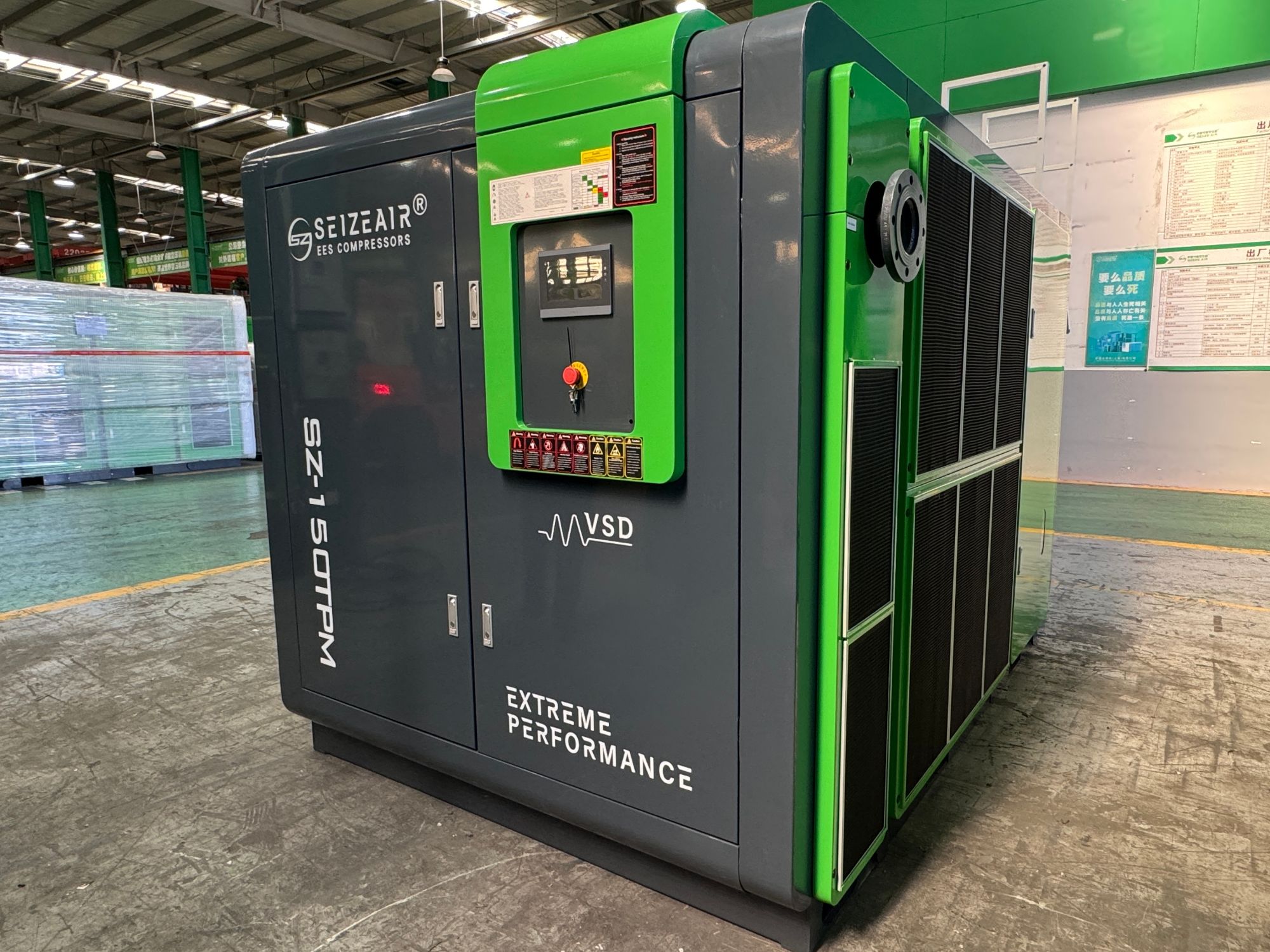
When evaluating oil-injected rotary screw compressors, the differences between a truly premium unit and a standard model often come down to a handful of engineering specifications that directly impact reliability, efficiency, and total cost of ownership. One of the most telling is the specific energy consumption at full load, typically expressed in kW per 100 cfm. Premium machines consistently push this number lower, not just through motor efficiency but by optimizing the airend profile, minimizing internal pressure drops, and using advanced variable speed drive algorithms that match output to demand without wasting energy.
Another critical spec is the maximum allowable ambient temperature and the compressor’s ability to handle it without derating. Cheaper units often claim a 104°F (40°C) limit but start losing performance well before that mark, while top-tier designs incorporate oversized coolers, strategically placed fans, and high-flow ducting that maintain rated output even in extreme conditions. This directly influences installation flexibility and long-term durability, especially in hot or confined spaces.
Beyond the headline numbers, fluid management separates genuine premium contenders from the competition. The fluid system’s efficiency—measured by its filtration quality, carry-over rate (often below 3 ppm in top models), and total fluid capacity—determines not only maintenance intervals but also downstream air quality. Premium compressors integrate multi-stage separation with cyclone pre-separation and deep-bed coalescing filters, ensuring cool, clean air reaches the system while protecting the compressor’s own bearings and rotors from contamination. This level of engineering detail is what ultimately defines reliability and long-term operational savings.
How to Assess After-Sales Support Without the Sales Pitch
One of the most revealing ways to gauge support quality is to reach out before you buy. Skip the sales chat and ask a technical question via email or social media. Pay attention to how long they take to respond and whether the answer feels thoughtful or canned. If they dodge specifics or push you back toward a sales rep, that’s a quiet red flag.
Dig into community forums and niche review sites, but ignore the star ratings. Look for recurring themes in user experiences: do people praise the help they received months after purchase, or does the enthusiasm fade once the transaction is complete? Genuine praise often comes with small but telling details, like a support agent who remembered a prior issue or went off-script to solve a quirky problem.
Finally, test the warranty and return process on paper. Read the fine print for repair turnaround times, shipping responsibilities, and what happens if a product is discontinued. Then, call to clarify a vague clause—no buying required. A company with strong after-sales care will make the policy easy to understand and won’t pressure you into a purchase during the conversation.
The Real Cost Equation: Beyond the Initial Price Tag
Most purchasing decisions start and end with the sticker price. It's a comfortable, concrete number that lets us feel like we've done our homework. But that simplicity is a mirage. The money leaving your account at checkout is only the first act in a much longer financial play. From the moment you take ownership, a quiet parade of secondary costs begins—energy consumption, replacement parts, subscription fees for features you assumed were included, and the inevitable repairs that arrive just after the warranty expires. A bargain printer becomes a sinkhole when its proprietary ink cartridges cost more than champagne per milliliter. A budget appliance turns costly when its inefficient motor pushes your utility bill higher every month for a decade.
Then there's the more insidious drain: the cost of your own time. Every hour spent wrestling with a glitchy interface, waiting on hold for customer support, or driving to a service center is an hour you can't get back. Professionals often frame this as opportunity cost, but you'll feel it in the erosion of your evenings and weekends. A tool that fights you instead of working with you generates friction that compounds daily. The product that was supposed to simplify your life becomes another chore to manage. When we ignore these invisible taxes, we end up paying rent on things we thought we bought outright.
The real challenge is that these long-term costs rarely sit still. They evolve with usage patterns, market shifts, and the product's own aging curve. A car's efficiency degrades; a software license jumps in price after the first year; a gadget's battery becomes a recurring expense. Smart buyers learn to sketch out a five-year ownership forecast before swiping a card, factoring in expected usage, maintenance, and even resale value if that matters. It turns a simple transaction into a strategic calculation—one that often reveals the cheapest option upfront is the most expensive over the horizon. The trick is to stop asking "What does it cost?" and start asking "What will it demand of me?"
Energy Efficiency Markers That Impact Daily Operations
From the moment a facility powers up, real-time consumption dashboards shape operator behavior. Displays tracking kilowatt-hours per production unit or HVAC runtime percentages offer immediate feedback, encouraging teams to adjust settings before waste compounds. Even subtle nudges—like color-coded alerts when energy drifts above baseline—turn passive monitoring into active management.
Equipment-level markers, such as motor load factors and compressed air leak rates, quietly dictate maintenance rhythms. A consistently underloaded motor might escape notice without efficiency tracking, yet it drags down overall system performance. Similarly, peak demand spikes captured by sub-meters reveal scheduling inefficiencies, prompting shifts in batch timing or staggered equipment startups that smooth consumption curves without disrupting output.
Occupancy-responsive systems add a dynamic layer, where lighting and climate controls anchored to actual usage patterns eliminate static assumptions. In one retrofitted office, linking workstation sensors to HVAC zones trimmed after-hours energy bleed by nearly a fifth, proving that granular markers—when surfaced plainly—arm day-to-day decisions with precision.
Practical Steps to Verify Supplier Expertise and Reliability
Start by requesting detailed case studies or project portfolios that closely match your requirements. Look beyond glossy brochures and focus on the specifics: timelines, challenges encountered, and measurable outcomes achieved. A supplier willing to walk you through a past project’s technical hurdles and how they navigated them is far more valuable than one offering generic references.
Arrange a technical deep-dive session with the actual team members who would handle your account, not just the sales representatives. Prepare real-world scenarios or problems you’ve faced and ask how they’d approach solving them. Pay attention to the questions they ask in return—those who dig into your context and constraints demonstrate a genuine understanding of the field.
Conduct a trial run where the supplier performs a limited-scope version of the service or produces a small batch of the product. Use this as a pressure test for their processes, communication style, and quality control. It’s during these hands-on assessments that inconsistencies in expertise or reliability become apparent, far more clearly than through audits or certifications alone.
FAQ
An oil-injected air compressor uses oil to lubricate, cool, and seal the compression chamber. This makes it more efficient and durable for heavy-duty use, but it requires oil maintenance and filtration to keep the air clean. Oil-free compressors skip the oil, producing cleaner air but typically with lower durability and higher operating temperatures.
Businesses often choose oil-injected compressors for their reliability in continuous, high-demand applications. They run cooler, last longer, and handle heat better than oil-free units, making them ideal for manufacturing, automotive shops, and industrial settings where uptime is critical.
Beyond the machine specs, look at the supplier's service network, parts availability, warranty terms, and their familiarity with your industry's air quality standards. A supplier who offers maintenance training and rapid support can save you costly downtime.
Even though oil is used internally, downstream filtration and air treatment equipment like coalescing filters, dryers, and oil separators can bring the air to ISO 8573-1 class 1 or 2 levels. Discuss your purity needs with the supplier so they specify the right treatment package.
Yes—installation, energy consumption, maintenance contracts, and consumables like oil, filters, and separators can add up. Request a total cost of ownership estimate, not just the purchase price. A reputable supplier will be transparent about these long-term expenses.
Watch out for suppliers who avoid discussing after-sales support, have vague warranty details, or can't provide local references. Also, if they push a one-size-fits-all solution without assessing your specific air demand and operating environment, that's a warning sign.
It's huge—energy can account for 70% or more of a compressor's lifetime cost. Look for variable speed drives, high-efficiency motors, and systems with intelligent controls. Ask the supplier for specific energy consumption data at your typical operating pressure and flow.
Absolutely. A good supplier will ask about your required flow (CFM), pressure (PSI), duty cycle, ambient conditions, and future growth plans. They might even conduct an air audit to avoid oversizing or undersizing, which both lead to inefficiency.
Conclusion
Selecting an oil-injected air compressor supplier goes far beyond comparing price lists. The process starts with a clear-eyed assessment of your actual compressed air needs—flow rate, pressure levels, air quality standards, and duty cycle—because these operational baselines define the machine you require and expose suppliers who genuinely listen versus those pushing stock. Premium units distinguish themselves through engineering choices: airend design, cooling systems, and filtration integration that directly affect longevity and maintenance intervals. Before committing, dig into after-sales support by asking calibrated questions: request real-world response time data, parts availability in your region, and references from similar industries. A supplier’s willingness to share this unvarnished information, rather than glossy promises, reveals their true service model.
The financial picture extends well past the initial purchase; lifecycle costs driven by energy consumption, maintenance labor, and consumables often overshadow the upfront figure. Look for compressors with verifiable specific power numbers at full load and part-load conditions, and insist on documentation like CAGI data sheets to compare efficiency markers objectively. Modern controls and leak management strategies also play a decisive role in daily operational expenses. Finally, pressure-test a supplier’s expertise by visiting their facility, observing testing procedures, and discussing how they handle custom configurations or unexpected downtime. A reliable partner will demonstrate competence not through sales rhetoric but through transparent engineering discussions and a track record that checks out across multiple client engagements. This holistic evaluation ensures the choice you make today doesn’t become tomorrow’s operational liability.
Contact Us
Contact Person: Mia
Email: [email protected]
Tel/WhatsApp: +86 19821985894
Website: https://www.seize-air.com