

Original Manufacturer of Factory Cooling Fans: Reliable Industrial Ventilation Solutions
2026-07-25
Keeping a factory floor cool isn’t just about comfort—it’s about safety, equipment longevity, and consistent output. Yet too many facilities settle for generic fans that buckle under real industrial demands. That’s where VINDUSFAN changes the equation. As an original manufacturer, we engineer every cooling fan from the ground up for heavy-duty ventilation, not just moving air. In this post, we’ll strip away the marketing noise and show what truly makes a fan “reliable” when production lines can’t afford a breakdown. From custom blade geometries to motors built for 24/7 run times, here’s a look at industrial cooling that’s designed to last.
Built from the Ground Up: Custom Cooling Fan Design
When off-the-shelf cooling solutions fall short, we take matters into our own hands. Every custom fan design starts with a blank slate and a clear understanding of the thermal challenges at play. From blade geometry to motor specifications, each element is tailored to match the unique airflow and noise requirements of the system, ensuring performance that generic parts simply cannot deliver.
Iteration is at the heart of our process. Prototypes are tested, torn down, and rebuilt multiple times—refining materials, balancing rotors, and adjusting tolerances until the fan moves air efficiently and quietly under real-world conditions. This obsessive attention to detail means every curve and angle serves a purpose, and nothing is left to chance.
The result is a cooling fan that feels like a natural extension of the hardware it serves. It runs with a distinct acoustic signature, draws power judiciously, and handles thermal loads with headroom to spare. By designing from the ground up, we avoid the compromises that plague mass-produced alternatives, giving enthusiasts and professionals alike a solution that truly fits.
Engineered for Non-Stop Industrial Performance
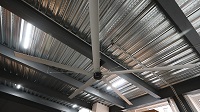
Built from the ground up to thrive in demanding environments, our systems incorporate reinforced components and intelligent thermal management that keep operations smooth even under continuous heavy loads. Every element, from the shock-resistant chassis to the dust-sealed connectors, is selected to minimize maintenance and maximize uptime.
Real-world reliability isn't just about robust hardware—it's the result of meticulous engineering that anticipates stress points before they become failures. By integrating predictive failure analytics and autonomous load balancing, we've turned potential disruptions into seamless adjustments that operators never even notice.
What sets this apart is the obsessive focus on longevity under duress. Our testing simulates years of 24/7 operation in extreme conditions, uncovering weaknesses that standard benchmarks miss. The outcome is a platform that simply refuses to quit, shift after shift, year after year.
Tailored Airflow Solutions for Every Factory Floor
Modern production lines vary dramatically from one facility to the next—even within the same industry. A cookie-cutter fan setup rarely meets the unique demands of different layouts, heat loads, and contaminant levels. That’s why we begin every project by mapping the actual movement of air, personnel, and materials across your floor. From welding bays that need aggressive fume extraction to clean rooms requiring ultra-stable pressure differentials, our engineering team designs airflow patterns that slot seamlessly into your existing workflows without compromising performance or safety.
We combine modular hardware with smart zoning controls, so each zone operates independently yet harmonizes with the whole. High-bay spaces get stratified air management that pushes heat away from occupied areas, while precision manufacturing cells receive low-turbulence laminar flow to protect sensitive processes. Our brushless EC motor arrays allow infinite speed adjustment across multiple fan banks—meaning you can dial in conditions for a single shift or a single machine without over-ventilating the rest of the plant. Factory acceptance testing includes smoke visualization and tracer gas analysis, ensuring the installed solution matches the engineered design before we hand over the keys.
After installation, the real customization continues. We embed industrial IoT sensors that track temperature, humidity, particulate concentration, and pressure in real time. These data streams feed into a simple dashboard, but more importantly, they enable adaptive algorithms that learn your factory’s rhythm. When a delivery bay opens for fifteen minutes every morning, the system preemptively adjusts fan speeds to counteract the incoming air mass. During summer afternoons, it shifts to night-purge mode earlier if thermal mass dictates. No two floors behave identically, and our airflow solutions evolve with yours—bringing energy savings, consistent product quality, and a healthier environment without requiring constant manual overrides.
Smart Airflow That Cuts Energy Costs
Modern ventilation often runs on rigid schedules, wasting energy when spaces are empty. By embedding subtle intelligence into airflow management, systems now adapt in real time. Sensors track occupancy patterns and air quality, nudging fans to slow down or speed up only where needed. It’s a quiet shift away from one-size-fits-all circulation toward something more attuned to daily rhythms.
This approach doesn't just trim utility bills—it reshapes how we think about building comfort. Instead of conditioning vast unused areas, treated air is directed precisely, room by room. The result feels natural rather than mechanical: fresh air arrives without the background hum of overwork, and temperature imbalances start to fade.
Behind the scenes, data weaves together predictive insights and simple adjustments. A meeting room preparing for 20 people gets a calibrated boost; a sunlit corner receives less cooling as the day progresses. Over months, the savings compound—often cutting ventilation-related energy use by a noticeable margin without anyone lifting a finger.
Built Tough: Materials That Outlast Harsh Environments
From the salty spray of coastal storms to the abrasive grit of desert winds, some materials simply refuse to break down. These aren't your average construction staples—they're engineered survivors, combining advanced alloys, dense polymers, and clever composites that shrug off corrosion, UV damage, and extreme temperatures in ways conventional substances never could.
Take marine-grade stainless steel, for example. Its molybdenum content creates a passive layer that actively resists pitting even after years submerged in saltwater. Or consider the ceramic coatings used in jet turbines, which handle thermal shocks that would warp ordinary metals. These materials don't just endure; they thrive where others fail, making them essential for everything from deep-sea infrastructure to high-altitude flight.
The real magic often lies in the microscopic details—grain boundaries engineered to halt crack propagation, or polymer chains cross-linked to repel chemical attack. It's not brute strength alone but a carefully balanced mix of toughness and resilience that lets these materials outlast their environment. When you need a structure or component to perform flawlessly for decades with zero maintenance, you're not just picking material—you're choosing a long-term partnership with physics itself.
Skip the Middleman, Gain Total Quality Control
When you remove intermediaries from your supply chain, you're not just cutting costs—you're reclaiming ownership of your product's entire journey. Direct relationships with manufacturers, farmers, or artisans let you define quality standards from raw material to finished good, without compromising to meet a middleman's margin requirements. It's about looking at a product and knowing exactly how it was made, who made it, and that it meets your uncompromised vision.
That direct line of sight transforms quality control from a reactive headache into a proactive advantage. Instead of inspecting shipments and hoping they match your spec, you embed your team—or trusted partners—on the ground, catching issues before they multiply. You tweak processes in real time based on real feedback, not filtered reports passed through layers of distribution. The result is consistency that your customers feel in every purchase, building a reputation that no third-party brand can dilute.
Over time, this control becomes a competitive moat. You’re free to innovate quickly, launch small-batch experiments, or pivot materials without renegotiating contracts or explaining changes to a distributor. Every decision serves your customer and your craft, not someone else’s inventory spreadsheets. Skipping the middleman isn't just a cost play—it's a commitment to unapologetic quality, where your name is the only one on the line, and you wouldn't have it any other way.
FAQ
We engineer every fan in-house from the ground up, so you get custom airflow, noise reduction, and housing designs that fit tight factory layouts—not a one-size-fits-all compromise.
Our fans go through accelerated life testing under heat, dust, and moisture extremes before shipping. We also use IP-rated motors and reinforced bearings to handle constant abuse.
Absolutely. We hold raw materials in stock and have a flexible assembly line, so rush orders with bespoke specs can ship within 72 hours in many cases.
Yes, our engineers can come to your facility, map airflow patterns, and recommend the ideal fan placement and mounting solution—then we build the units to match.
Non-OEM sellers often mix lower-grade components, skip quality checks, and vanish when performance issues arise. With us, you get direct accountability and traceable materials.
We fine-tune blade aerodynamics and motor vibration for each order. Where needed, we add acoustic enclosures or speed controllers so your crew can communicate without shouting.
Steel mills, chemical plants, and automotive assembly lines choose us because we understand their unique heat loads and corrosion challenges—and we build fans that won't quit.
We stock critical spare parts and offer remote troubleshooting within hours. For major issues, a technician is dispatched to your site within 48 hours, anywhere in the country.
Conclusion
As an original manufacturer of factory cooling fans, we take a hands-on approach from the very first sketch, crafting custom ventilation designs that match the exact demands of your floor layout. There’s no off-the-shelf guessing—every blade curve, motor rating, and housing dimension is purpose-built to move air exactly where it’s needed, at the right velocity. That means you’re not adapting your operation to fit a fan; the fan is built for your specific thermal load, noise limits, and space constraints. Because we control the entire process in-house, we engineer for the long haul: bearings sized for 24/7 run times, sealed housings that shed dust and moisture, and impellers balanced to eliminate vibration drift even after years of non-stop use. The durability comes from real material choices—galvanized steels, marine-grade coatings, and stainless options—that laugh off corrosive washdowns, abrasive particulates, and extreme temperature swings. It’s the difference between a fan that survives and one that keeps performing without unplanned downtime.
Beyond brute reliability, we build intelligence into the airflow itself. Our designs integrate variable-speed drives and smart sensors that align rpm with actual cooling demand, trimming energy waste without sacrificing temperature control. Whether you need high-velocity spot cooling for a casting line or gentle, uniform circulation in an assembly hall, the pattern and volume of air are tailored exactly to the workstation level—no dead zones, no wasteful turbulence. Best of all, dealing directly with the manufacturer puts quality in your hands from raw material to final test run. There are no third-party compromises, no black-box refits; you see the testing data, witness the balancing, and know your fan will drop right in and run. That transparency, paired with an engineering team that treats every order as a unique challenge, turns a simple ventilation upgrade into a strategic edge for your operation. When uptime and precision matter, you stop shopping for a product and start building a solution—one that’s quietly moving air, lowering costs, and staying dependable through the toughest shifts.
Contact Us
Contact Person: Michael Danielsson
Email: [email protected]
Tel/WhatsApp: +1 951 565 7769
Website: https://www.vindusfans.com