

Power Line Inspection Drone Simulator Company Enhances Utility Worker Safety Through Realistic Training
2026-09-02
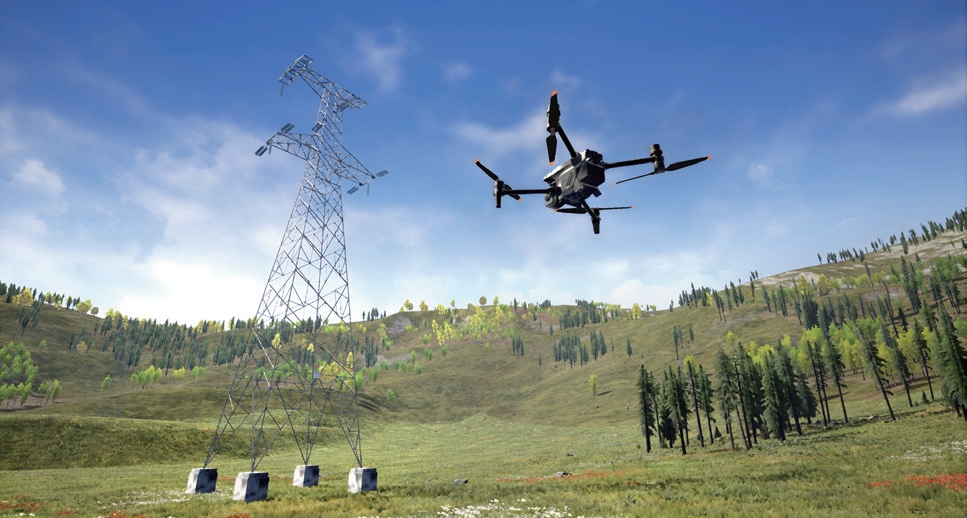
Utility workers face a brutal reality: one wrong move near a power line can be fatal. Traditional training helps, but it can't safely replicate every emergency—until now. SRIZFLY has built a drone simulator that puts crews inside hyper-realistic power line inspection scenarios, from storm damage to equipment failure, without the risk. The result? Confident workers who've already 'lived' the worst-case moments before they ever leave the ground.
Why Utility Crews Still Need a Training Wheels Moment
Ask any lineworker who's been in the trade for a decade, and they'll tell you the same thing: the moment you think you've seen it all is the moment the job bites back. Utility work doesn't care how many storm restorations you've logged or how many transformers you've swapped. It pivots without warning—new gear, revised switching orders, a substation layout that defies the old mental map. That's why even the saltiest veterans need to step back and let someone hold the handlebars for a minute. It's not about admitting weakness; it's about respecting the fact that muscle memory can turn into a blind spot when the ground shifts under your boots.
We tend to treat "training wheels" as a phase you outgrow, but in this industry, that's a dangerous mindset. A refresher on the basics isn't a demotion—it's a recalibration. Think about the last time you picked up a tool you hadn't used in six months. Your hands remembered, but your judgment needed a nudge. Utility crews face the same reality every time a manufacturer rolls out a new piece of line equipment or a regulator introduces a procedural tweak. The work demands a kind of humble repetition: watch, mimic, get corrected, repeat. Without that loop, a ten-year lineman can make the same mistake as a first-year apprentice, only faster and with higher stakes.
There's also a quiet culture problem at play. Crews pride themselves on toughness, and asking for a walkthrough can feel like admitting you're not up to speed. But the best teams normalize the "training wheels moment" as a regular tool, not a rare fallback. When a senior lineman says, "Show me that new crimping procedure again," it gives everyone else permission to do the same. Safety doesn't come from pretending you've got it all locked down. It comes from knowing when to slow down, ask the dumb question, and let a patient hand guide you through the unfamiliar—because in this line of work, the unfamiliar is always closer than you think.
Inside the Simulator That Punishes Rookie Mistakes Without Real Consequences
The first time the landing gear warning blares inside the cabin, most trainees freeze. The simulator doesn't care. It logs the mistake, shakes the seat, and replays the moment with a red overlay showing exactly where the angle of descent went wrong. No repair bill arrives. No flight instructor yells. The only consequence is a debrief screen that waits for you to try again.
What makes this setup stick is how it turns errors into muscle memory. Instead of memorizing checklists from a manual, you feel the control yoke go soft when you flare too early. The sim's scoring system quietly docks points for small oversights—forgetting to scan engine temps, missing a radio call—but never ends the session. You can crash three times in ten minutes and still walk away with a clearer picture of what not to do next.
That loop of instant feedback without real-world stakes is what separates simulation from traditional training. A rookie can blow a tire on a wet runway, misjudge crosswind, or stall at 2,000 feet, and the only damage is to a virtual airframe. That freedom to fail repeatedly builds confidence faster than any classroom lecture, because the lesson lands exactly when the mistake happens.
When a Virtual Gust of Wind Saves a Real Life
It started with a breeze that wasn’t there. Inside the headset, the trainee felt a sudden crosswind shear while walking a high-rise scaffold. The simulation’s physics engine had added a random gust, not part of the scripted lesson. Her body instinctively shifted left, away from the virtual edge. In the real room, that same half-step put her clear of a loose floor panel that no one had noticed.
Virtual gusts have quietly moved from novelty to safety tool. Engineers use them to test how signage and glass panels behave before a building goes up. Emergency crews practice in digital wind fields that mimic rooftop fires, where one wrong lean can mean a fatal fall. The wind doesn’t need to exist to change a decision; it only needs to feel real.
None of this is about escaping reality. It’s about borrowing its invisible forces long enough to outsmart them. A few lines of code, a burst of air from a fan array, and someone walks away from a hazard they couldn’t see. That’s the odd bargain: a gust that never existed spares a body that does.
The Hidden Physics Most Utility Drone Courses Skip
Most utility drone programs rush straight into flight modes and mission planning, but they rarely mention how a rotor's angle of attack changes the instant you add payload. Add a few extra pounds of sensors or a LiDAR unit, and the same throttle input that once gave you a crisp climb now produces a mushy, lagging response. That's not just a power issue—it's blade stall creeping in on the retreating side, throwing off your lift symmetry and making the craft want to roll unexpectedly.
Then there's the ground effect that nobody talks about in a classroom. Fly low over a hot asphalt parking lot and you get a cushion of turbulent air that can fool your altimeter and make you overcorrect. When you descend quickly, the downwash recirculates back into the propellers, reducing effective thrust exactly when you need it most. These aren't edge cases; they happen on nearly every job site survey, yet they get glossed over because they don't fit neatly into a checklist.
Utility work often means flying near structures, and that's where rotor wash becomes its own beast. A wall or building edge can create a vortex that pulls the drone sideways without any stick input. Understanding how your own propeller wake interacts with nearby surfaces—and why sudden yaw corrections can spiral into a vortex ring state—is the difference between a clean inspection and an expensive crash. The physics isn't optional; it's the invisible layer that decides whether your mission survives the first gust of wind.
From Simulated Arc Flash to Confident Hands: One Crew’s Shift
The morning started like any other, but the air in the training room felt different when the arc flash simulator lit up. What had once been a jolt of adrenaline—heavy gloves fumbling for the breaker, breath fogging the face shield—now settled into a familiar rhythm. The crew moved through the sequence not as individuals fighting the flash, but as a single unit that had learned where every hand and tool belonged.
By noon, those same hands were working a live panel on the plant floor. No flinch when the breaker snapped into place, no hesitation on the torque wrench. The simulation had stopped being a test and started being muscle memory. One apprentice, who three months ago dropped a voltage tester during a simulated fault, now passed the meter to his journeyman without a word, their timing like a pit crew.
At shift change, the supervisor leaned against the tool rack and said what everyone already felt: "Nobody rushed today." That was the real victory. Arc flash training used to be about passing a scenario. Now it was about showing up with hands that knew the work before the brain had to think. The simulator didn't just teach safety—it taught confidence that outlasted the alarm.
Building Muscle Memory Before the Rotors Leave the Ground
Long before the first lift-off, a pilot's hands need to know where every switch sits without a glance. Spending quiet hours in the cockpit with the power off, running through startup sequences and emergency drills, builds the kind of automatic response that can't be faked. The goal isn't just memorization—it's making the motions feel boring, so the brain can stay ahead of the aircraft instead of chasing it.
Chair flying often gets dismissed as silly, but it works. Sitting in a normal chair with eyes closed, visualizing the cyclic and collective, and moving through a hover entry or an autorotation glide forces the body to rehearse the exact coordination needed later. Ten focused minutes a night beat an hour of distracted sim time because the repetition is deliberate and cheap.
By the time the rotor actually starts turning, those ground repetitions should have settled into muscle memory. That means less mental bandwidth spent on basic control inputs and more available for wind shifts, traffic calls, or a sudden gauge anomaly. It's the difference between reacting to the helicopter and simply operating it.
FAQ
They create drone simulators designed specifically for power line inspection training.
Workers can practice dangerous inspection flights repeatedly in a virtual setting, so they are better prepared before facing real power lines.
Utility companies and their field crews who inspect high-voltage lines with drones.
It recreates the exact challenges of power line environments, including wire proximity, wind gusts, and electromagnetic interference, rather than just basic flight controls.
Realistic training reduces the chance of costly mistakes and accidents when flying near energized lines, which protects both the worker and the electrical grid.
Yes, it starts with fundamental control lessons and gradually introduces complex line-following and hazard avoidance scenarios.
The company can cut training costs and downtime while giving workers hands-on experience without risking equipment or lives.
It includes scenarios like sudden weather changes, GPS loss, and battery failure, so pilots learn to react calmly and correctly.
Conclusion
Utility line crews often master the textbook basics of drone flight, yet real-world power line inspection throws surprises that no manual can fully prepare them for. The Power Line Inspection Drone Simulator Company builds a bridge between classroom confidence and field competence, offering a safe space where rookies can make costly mistakes without risking equipment, outages, or lives. Inside the simulator, a virtual gust of wind or a misjudged arc flash delivers immediate, consequence-free feedback, teaching crews to respect the hidden physics—electromagnetic interference, rotor wash near conductors, sudden thermals—that most commercial drone courses skip entirely.
This training wheels moment is not about coddling new pilots; it is about building muscle memory before the rotors ever leave the ground. By rehearsing tight maneuvers around energized lines, emergency landings, and coordinated crew communication in a realistic virtual environment, utility workers shift from hesitant operators to confident hands. One crew’s experience tells the story: after hours in the simulator, their first live inspection felt less like a high-stakes test and more like a familiar routine. The result is a workforce that can respond to real-world volatility with calm precision, turning simulated failures into real-world safety margins.
Contact Us
Contact Person: Niles Liu
Email: [email protected]
Tel/WhatsApp: 8619945009803
Website: https://srizfly.com/