
Sewer Jetting Machines Supplier in China: Your Trusted Source for High-Pressure Drain Cleaning Equipment
2026-10-28
Blocked drains don’t wait for convenient moments, and neither should your cleanup strategy. If you’re sourcing high-pressure drain cleaning equipment that can handle stubborn sewer blockages without constant downtime, the search often leads to China’s industrial hubs. Among them, AMJET has built a reputation for sewer jetting machines that pair rugged performance with straightforward maintenance. In this guide, we’ll walk through what actually matters when choosing a supplier—from pump pressure and hose reach to after-sales support—so you can decide with confidence.
Why High-Pressure Jetting Outperforms Snaking for Tough Sewer Blockages
When a sewer line clogs with stubborn grease, sludge, or tree roots, the traditional drain snake often falls short. A snake works by poking a hole through the blockage, but it rarely removes the buildup completely. The remaining debris clings to pipe walls, inviting another clog within weeks. High-pressure jetting, by contrast, uses a concentrated stream of water at up to 4000 PSI to scour the entire pipe interior. That means the blockage is not just punctured—it’s washed away down the line.
The real advantage shows up in those tough, recurring blockages where snaking only buys you a month or two. Jetting blasts through years of layered grease, mineral scale, and root masses, restoring the pipe close to its original diameter. For property owners tired of paying for repeat service calls, this difference matters. Snaking may be cheaper upfront, but jetting often ends the cycle of callbacks, saving money and frustration in the long run.
Another overlooked point is what snaking leaves behind: the snake’s auger tip can scratch or dent older pipes, creating rough spots where new debris catches. High-pressure water, on the other hand, is non-abrasive to the pipe material. It runs through the line without metal-on-metal contact, making it safer for aging clay or cast iron sewers. When you’re dealing with a truly stubborn blockage, the choice isn’t just about clearing today’s mess—it’s about protecting the pipe for years ahead.
The Overlooked Advantages of Sourcing Sewer Jetters from China
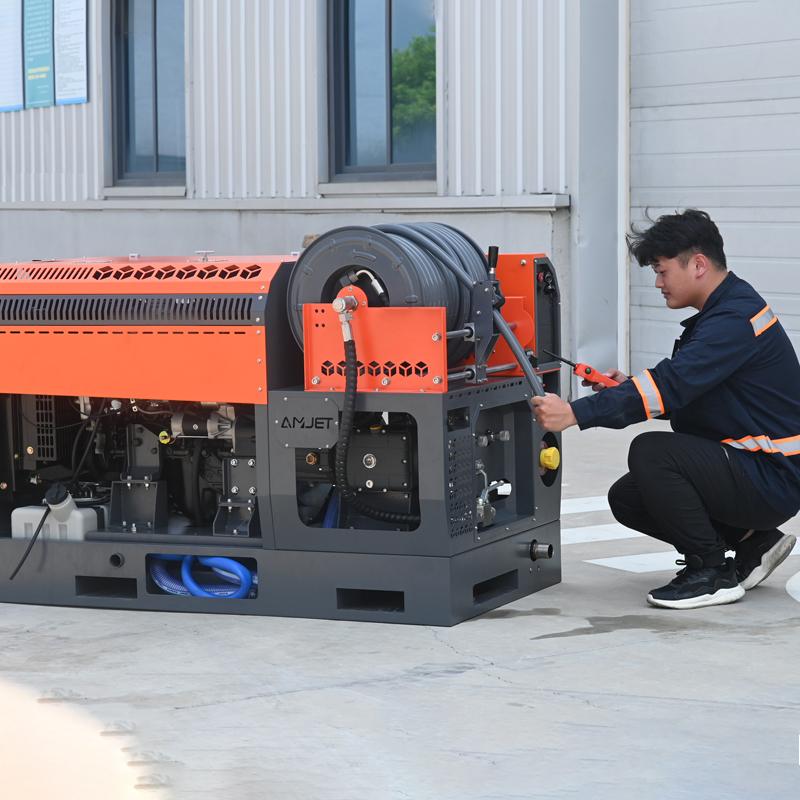
Most buyers fixate on unit price when they look at Chinese sewer jetters, but the real leverage often sits in the tooling flexibility. A mid-sized workshop in Ningbo can retool a hose reel bracket or swap a pressure gauge port within a week, sometimes without a new mold fee. That responsiveness gets lost in the standard catalog comparisons—yet it's what lets a distributor ship a variant that fits a niche municipal tender instead of fighting on identical specs with a dozen competitors.
Another quiet advantage is component traceability that has matured over the last decade. Rather than anonymous assemblies, many factories now stamp batch codes on pumps, valves, and frames, and they keep digital torque records for critical fittings. When a warranty claim does arise, you are not guessing which subcontractor produced a stubborn leak—the paper trail points to the exact production window. For service-heavy equipment like jetters, that reduces field downtime far more than a cheaper nozzle kit ever could.
There is also the matter of mixed-container logistics that rarely appears in sourcing guides. Because sewer jetters share freight class with pressure washers and drain cameras, a buyer can consolidate a 20-foot container with two or three complementary product lines from the same industrial cluster. The freight cost per unit drops, and the supplier relationship deepens when you are not a one-SKU customer. It is a less glamorous kind of optimization, but it compounds on every reorder.
Specs That Actually Matter When Buying High-Pressure Drain Cleaning Equipment
Pressure and flow rate get all the attention, but they mean little if the pump can't sustain them under load. Look for a triplex plunger pump rather than a wobble plate design—it runs cooler, lasts longer, and delivers consistent pressure even when the nozzle hits a tough clog. Check the thermal relief valve too. Without one, hot water bypassing back into the pump can cook the seals in minutes.
Hose diameter and length often decide whether you finish the job or spend an hour repositioning the machine. A 3/8-inch hose provides a good balance between flexibility and flow, but if you're running lines over 100 feet, step up to 1/2 inch to reduce pressure drop. And don't overlook the reel. A poorly designed reel kinks the hose at the drum, cutting its life in half.
Finally, match the nozzle kit to the pipe size and blockage type. Fixed forward jets clear soft blockages, but a rear-facing spinning nozzle does the heavy lifting in grease-packed lines. If the machine ships with only one nozzle, budget for a proper set—it's the cheapest way to make a mid-range unit perform like a professional one.
Extending the Lifespan of Your Sewer Jetting Machine in the Field
Most sewer jetting machines die young not because they wore out, but because they were ignored in the field. A five-minute walk-around before each shift catches the small stuff—loose fittings, a kinked hose, a filter that’s starting to clog—before it turns into a roadside breakdown. Pay attention to the water tank level and the pump’s prime. If the machine sits for more than a day, drain the lines and blow out the nozzle to stop mineral buildup from hardening inside.
The biggest killer isn’t a faulty part; it’s heat and vibration working together. Run the engine at the recommended RPM instead of idling high for “more pressure,” and let the hydraulic system warm up for a few minutes before you hammer the jetter. Check the oil temperature with the back of your hand—if it’s too hot to touch for more than a second, shut it down and figure out why. Grease every zerk fitting you can reach, even the ones hidden behind the reel, because a seized bearing on a hose reel has ended more jobs than a cracked pump.
Finally, write things down in plain language, not a maintenance log that nobody reads. A grease pencil note on the side panel like “changed nozzle tip 3/14, check o-ring next week” works better than a polished spreadsheet. Teach whoever runs the machine to listen for changes—a new whine, a thump, a slower pressure build—and to stop and investigate instead of pushing through. That habit alone will stretch the machine’s life by hundreds of hours, and it costs nothing but attention.
Trailer-Mounted or Skid-Mounted: Choosing the Right Jetter Configuration
A trailer-mounted jetter earns its keep when you need to move between job sites without dedicating a whole truck to one tool. You can tow it behind a half-ton pickup, unhitch at the curb, and still use the truck to haul cameras, locators, or extra hose. The tradeoff is total length—maneuvering a 16-foot trailer through a condo complex or narrow alley can eat up time. Contractors who handle mostly residential drain lines often prefer this setup because the water tank can be sized generously without sacrificing payload in the work vehicle.
Skid-mounted units, by contrast, live inside a van or box truck and become part of the vehicle’s footprint. There’s no trailer to back up or park, which is a real advantage in dense urban areas where a separate trailer might block traffic or get ticketed. The downside is commitment: once the skid is bolted in, that truck is a jetter first and a general service vehicle second. If your fleet already has a truck that can be dedicated to drain cleaning, a skid keeps everything self-contained and shortens setup time at each stop. The choice usually comes down to whether you value trailer flexibility or the compact, always-ready nature of a skid.
What the Buying Process Really Looks Like with a Chinese Supplier
When you first reach out to a Chinese supplier, don't expect a polished corporate sales pitch. Most initial replies are short, sometimes just a price list or a few product photos. They're gauging whether you're a serious buyer or just browsing. If you ask for samples, be prepared to pay for shipping—many factories won't cover that for new clients.
Once you place a trial order, the real rhythm sets in. Production timelines are often fluid, not fixed. A promised 15-day lead time can easily stretch to 25 if the factory gets a larger order from a regular customer. You'll need to check in weekly, not daily, to avoid annoying the salesperson. Payment terms usually shift from 30% deposit and 70% before shipment to full payment upfront for small orders.
The inspection stage is where trust is tested. If you can't visit the factory, hire a third-party inspector. They'll send you photos and a detailed report, but remember that minor defects—like a loose thread or a slightly off-color logo—are common and often negotiable. Don't expect Western-style return policies; you'll likely settle for a discount on the next order instead.
FAQ
We build trailer-mounted, truck-mounted, and skid-mounted units with pressure ratings from 1500 to 5000 PSI. Flow rates go up to 50 gallons per minute, so there's a match for everything from residential lateral lines to large municipal mains.
The key is the combination of nozzle design and water velocity. Our machines use ceramic plunger pumps to push water through specialized jetting nozzles that cut through grease, roots, and hardened sludge without damaging the pipe wall. For really tough clogs, we offer rotating root-cutting nozzles.
Yes, we supply multiple nozzle sizes and hose lengths so operators can switch between 2-inch residential pipes and 24-inch storm drains. The pressure and flow can be adjusted at the control panel to avoid over-speeding smaller lines.
We stock common wear parts like seals, nozzles, and high-pressure hoses in our warehouse, and we can ship them within 48 hours. Each machine comes with a detailed maintenance video, and our engineers are available on WeChat or WhatsApp for troubleshooting.
Every unit is pressure-tested at 1.5 times the rated working pressure before leaving the factory. We use burst-proof hoses, pressure relief valves, and a temperature shutdown on the pump. For regions that need CE or UKCA marking, we coordinate third-party certification.
Definitely. Our compact cart-mounted models weigh under 200 pounds and can fit in a pickup truck bed. They run on a gasoline engine or electric motor and still deliver 2000 PSI, which is enough for most residential drain lines and light commercial work.
We wind our own high-pressure hoses in-house and use stainless steel fittings from Japan. The frames are hot-dip galvanized instead of just painted, so they resist rust even when covered in mud. Every pump is run for 8 hours on a test bench before assembly.
We keep the most popular trailer and cart models in stock, so they can leave the port within 7 days. Custom builds with specific engine brands or trailer dimensions typically take 25 to 30 days before shipping.
Conclusion
A sewer jetting machine is only as good as the pressure and flow behind it, and that’s why high-pressure jetting consistently outperforms snaking on tough blockages. Grease, sludge, and root intrusion don’t just sit in the pipe—they cling to the walls and reform after a basic snake passes through. A properly configured jetter from a Chinese supplier can blast through those deposits while scouring the full diameter of the line, which is exactly what maintenance crews need for lasting results. When comparing units, flow rate, pressure rating, hose reel capacity, and engine type matter more than flashy extras. Many buyers also overlook the advantage of working directly with a Chinese factory: you can specify tank size, pump brand, nozzle kit, and trailer or skid configuration without paying for features you won’t use.
Field longevity comes down to habits that are easy to ignore—draining the pump before freezing weather, checking inlet filters, and flushing nozzles after every job. A trailer-mounted jetter makes sense for municipal crews covering long distances, while a skid-mounted unit fits better in a service truck that already carries other equipment. The buying process itself is straightforward: confirm the working pressure and flow you need, ask for a detailed quotation with pump and engine specs, approve production photos or video, and arrange inspection before shipping. That level of direct communication is why a trusted Chinese supplier can be a practical source for high-pressure drain cleaning equipment, especially when you need a machine built around real field conditions rather than a one-size-fits-all catalog item.
Contact Us
Contact Person: Mike
Email: [email protected]
Tel/WhatsApp: +86 19545555505
Website: https://www.amjeting.com/