

Slate Flexible Stone Veneer Suppliers You Can Trust for Your Next Project
2026-09-10
Slate flexible stone veneer gives your next project the look of natural stone without the heavy lifting—literally. But not all suppliers deliver the same quality, and a bad batch can turn a dream finish into a costly redo. That’s where Magic Stone comes in, with veneer that bends around curves, resists weather, and arrives ready to install. Before you commit to a supplier for your upcoming build, here’s what trustworthy sourcing actually looks like—and why it matters more than you might think.
What Actually Makes Slate Veneer Flexible Enough for Curved Walls
Slate itself is brittle in thick slabs, but veneer gets its bend from being sliced down to a fraction of its typical depth—usually around 1 to 2 millimeters. At that thickness, the stone’s natural cleavage planes can flex without snapping. The real trick, though, is what’s bonded to the back. A flexible backing made of fiberglass mesh or polyester fleece is glued to the stone with a high-strength elastomeric adhesive. That composite structure lets the thin stone move with the curve while the backing absorbs the tensile stress that would normally crack a rigid tile.
Another factor is the resin treatment. Many manufacturers saturate the backing and even the stone surface with a clear acrylic or polyurethane resin. Once cured, this resin creates a micro-bridge across the stone’s micro-fractures and grain boundaries, so the panel can be wrapped around a radius as tight as a few feet without visible stress lines. The grid pattern of the fiberglass also matters: it distributes bending forces evenly instead of concentrating them at a single point, which is what makes the difference between a clean bend and a snapped corner.
On-site, installers sometimes warm the veneer slightly or mist the back with water before forming it around a curved substrate. Heat softens the adhesive and backing just enough to increase elongation, while moisture reduces the risk of brittle failure at the stone’s edges. Combined with the thin profile and reinforced backing, that’s why good slate veneer can follow a gentle arch or a wrapped column without cracking—something solid slate could never do.
Questions Worth Asking Before You Commit to a Supplier
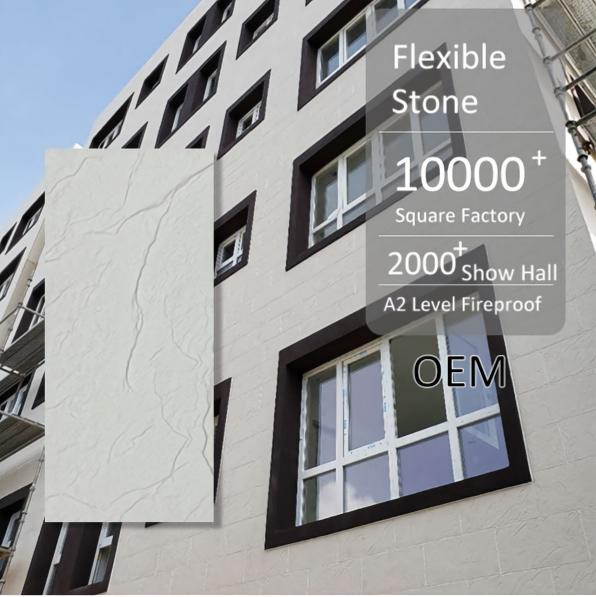
Most procurement headaches trace back to a few questions that never got asked. Before you sign anything, dig into how the supplier handles capacity spikes and raw material shortages. Ask for their current utilization rate, their longest lead time under pressure, and what happens when a key component suddenly becomes scarce. If they hesitate or recycle vague assurances, that's your signal to keep looking.
Quality claims mean little without proof tied to your specific product. Request samples from the same production line that would handle your order, not a handpicked batch. Ask who owns the final inspection signoff and whether they use an independent third party for critical tolerances. Also check how they document nonconformances; a clear corrective action log tells you more than any certificate.
Finally, test their communication under stress. Send a technical question outside regular hours or request a revised quote with a tight turnaround. Pay attention to whether they answer the actual question or just send a boilerplate reply. A supplier who is responsive, specific, and willing to admit limitations before you commit will likely behave the same way after the contract is signed.
How to Spot Veneer That Will Fade or Crack Too Soon
A quick fingernail test along the edge tells you more than any spec sheet. If the surface layer feels like paper and you can feel the core material underneath with only light pressure, that veneer is already too thin to handle seasonal movement. Solid veneer over a stable core still has a slight spring to it, while the cheap stuff feels brittle from day one.
Get down at eye level with a bright light and examine corners, seams, and areas near hardware. Faint ripples, lifted edges, or tiny cracks in the clear topcoat are early warnings that the veneer will fail long before the furniture does. Also, compare the grain pattern across several pieces from the same set. Printed wood-grain veneers repeat too predictably, and those printed layers nearly always fade unevenly and split along the pattern lines.
Finally, ask about the core and the finish. Veneer bonded to solid wood or high-density plywood with a UV-cured topcoat tends to hold up far better than a printed skin stuck to medium-density fiberboard with a thin lacquer. If a piece is destined for a sunny spot or a room with big humidity swings, that caution now will save you from watching the surface turn into a cracked, chalky mess.
Real Projects Where Thin Slate Veneer Changed the Look
A tired 1960s split-level in Portland got an entirely new street presence when thin slate veneer replaced the faded wood siding on the lower half. The mottled charcoal and rust tones grounded the house visually, making the upper white clapboard appear crisper. Neighbors kept asking if the owners had added a stone foundation, but the real change was just a lightweight skin that didn't require any structural work.
Inside a new lake house, the fireplace wall shifted from an afterthought to the room's anchor once thin slate veneer went up. The installer worked the stone in a dry-stack pattern with uneven edges left exposed, so the wall caught afternoon light in a way painted drywall never could. It made the whole living area feel less like a spec build and more like a custom retreat.
A corner coffee shop in Austin used thin slate veneer to wrap the bar face and the column beside the door. Against the polished concrete floor and black steel shelves, the slate's matte, layered surface took the edge off the industrial vibe. Regulars started referring to it as the rock wall, and the owners noticed people lingering a little longer in the queue, running their hands over the rough ridges.
Comparing Samples Without Getting Overwhelmed
Pulling up a dozen sample variations and staring at the raw numbers is a sure way to burn an afternoon. Instead of trying to absorb every metric at once, give yourself one question to answer at a time. Maybe it starts with "which version holds attention longest?" or "which one has the fewest drop-offs?" Keep a simple grid on the side—just three or four columns for the metrics that actually matter—and fill it in as you go. That narrows the comparison from a wall of data to a handful of decisions.
It also helps to group samples before you compare them. If you have twenty variants, cluster them by the change they test: headline styles, button colors, layout shifts. Then compare within each cluster rather than jumping across all twenty at once. Set a rule early for what counts as a meaningful difference, like a five percent lift or a consistent pattern across two days. If a sample doesn't clear that bar, you let it go without second-guessing.
Finally, lean on visuals that show many samples in a single view. Small multiples—the same chart repeated for each variant—work better than overlaying everything on one busy graph. Keep the axes identical so your eyes catch outliers quickly. And don't skip writing down why you kept or dropped a sample; that log becomes your memory when someone asks about the result three weeks later.
Installation Details That Most Guidebooks Skip
Most guides assume your walls are flat and floors are level, but they rarely are. Before drilling, run a straightedge across the mounting area and check the floor with a 4-foot level. If there's a gap, mark the low spots and keep shims within reach. Also check outlet height and door swings so appliance doors and drawers don't hit trim or handles after everything is set.
Another skipped detail is verifying what's behind the drywall. A stud finder with deep-scan mode helps locate pipes and conduit, not just studs. If you're using toggle bolts or anchors, confirm their weight rating against the full loaded weight, not the empty unit. Pre-drilling with a slightly smaller bit than recommended can prevent cracked tiles or plaster, especially in older homes.
Finally, don't overlook clearance for ventilation and service access. Many instructions show only front dimensions, but side and top clearance can affect heat buildup and any future repairs. Leave at least the manufacturer's minimum gap, and if a water line or drain is involved, test the connection with a dry run before sealing panels. Small oversights here are what turn a simple install into a return trip.
FAQ
Ask for a sample from the current production batch, not just a brochure. Check how they handle shipping damage claims and whether they provide detailed installation guides. A supplier that offers technical support after delivery tends to be more trustworthy than one that only focuses on closing the sale.
Look at the backing material and adhesive compatibility. Some suppliers use fiberglass backing, others use fabric or resin. If the backing isn't stable in high humidity or temperature swings, the veneer can warp or delaminate. Always ask about expansion rates and whether the product is rated for exterior use if your project requires it.
Yes, but request samples from the same color lot if possible. Variations between batches can be significant with natural slate. Compare how each sample bends, how the edges finish, and whether any mineral flakes come loose easily. A reliable supplier won't hesitate to send a current sample and explain any color variation.
Many suppliers claim exterior suitability, but you should ask for accelerated weathering test results or at least examples of installations in similar climates. Check whether the sealer and adhesive recommended by the supplier are UV-stable. Without that, slate color can fade and the bendable layer may break down after a few seasons.
Beyond a basic PDF, look for suppliers who provide video tutorials, live chat with technical staff, or direct access to a product engineer. Ask if they can recommend certified installers in your area. A supplier that understands substrate preparation and movement joints will help you avoid failures that aren't obvious from product photos.
Packaging is often the difference between receiving usable sheets and a pile of cracked corners. Ask if the veneer ships flat or rolled, what kind of edge protection is used, and how long it can stay in the box before installation. A supplier who uses reinforced tubes and desiccant packs is paying attention to more than just the product itself.
Be cautious if the supplier can't explain the difference between their grades, avoids giving a clear warranty, or has no verifiable project references. Also watch for unusually low prices that don't match the cost of real slate. Some products sold as flexible slate are actually printed textures on vinyl, which won't perform the same way.
Break down the cost per square foot including recommended adhesive, sealer, and waste factor. Ask about minimum order quantities and whether bulk pricing applies to mixed colors. A slightly higher upfront price from a supplier with strong packaging and support often saves money because there's less breakage and fewer callbacks.
Conclusion
Flexible slate veneer earns its name from a thin layer of real stone bonded to a backing that lets it bend around curves without snapping. That backing choice—often fiberglass or polyester—matters more than most suppliers admit. Before you commit, ask how the veneer is made, whether the stone is quarried for consistent color, and what happens to the adhesive under freeze-thaw cycles. Cheap products hide flaws until the first summer heat wave. A trustworthy supplier will talk openly about UV stability, moisture resistance, and edge chipping rather than pushing glossy brochures. Look for ones who suggest ordering a few extra square feet for waste and who can point to actual curved-wall installations, not just flat feature walls.
Comparing samples often turns into a blur of near-identical greys and browns. Instead of lining up ten swatches, narrow it down by use: exterior cladding needs different flex and thickness than a kitchen backsplash. Ask for full-size flexible sheets, not tiny chips, and bend them yourself. Real projects show the difference—thin slate veneer can wrap a fireplace column, soften a commercial entryway, or turn a hallway into a textured accent without heavy masonry work. On install day, pay attention to what most guidebooks skip: the substrate must be clean and slightly rough, corners need relief cuts, and the veneer should sit at room temperature for a day before you peel the backing. Those small steps separate a lasting finish from one that cracks in two seasons.
Contact Us
Contact Person: Vito
Email: [email protected]
Tel/WhatsApp: 86 13088879266
Website: https://www.magicstonemcm.com