

Substantial DC Circuit Breaker Technologies Enhancing Grid Stability and Renewable Integration
2026-07-27
As grids evolve to handle more renewable energy, the weak link often lies in how we manage DC faults. Without the right protection, a single disturbance can cascade. This is where substantial DC circuit breaker technologies step in—designed not just to interrupt fault currents, but to stabilize the entire system. From ultrafast mechanical types to hybrid and solid-state solutions, these devices are rewriting the rules of grid resilience. At the forefront, Chang Song has been quietly advancing a new generation of breakers that pair speed with reliability, making seamless renewable integration more than a concept. In this post, we’ll unpack what makes modern DC breakers tick and why they’re becoming the backbone of tomorrow’s grids.
Reinventing Grid Protection: The Rise of DC Circuit Breakers
For decades, alternating current has dominated the world’s power grids, not because it was inherently superior in every way, but largely because we knew how to tame it. The humble circuit breaker—the silent sentinel preventing overloads and short circuits—evolved to perfection in AC systems. But the grid is undergoing a quiet revolution. Solar panels, wind farms, battery storage, electric vehicle chargers, and data centers all speak the language of direct current. Suddenly, the old AC-centric protection playbook feels like a relic. Enter the DC circuit breaker, a device once deemed impractical, now at the forefront of a protection renaissance.
Unlike its AC counterpart, which can rely on a natural current zero-crossing to extinguish an arc, a DC breaker must forcibly create that interruption point—and do it before disaster strikes. The challenge is part electrical, part philosophical: how do you stop a current that never pauses for breath? Early attempts were bulky, expensive, and sluggish, relying on massive mechanical switches or semiconductor arrays that bled energy. Today’s designs, however, blend ultrafast power electronics with novel mechanical actuators, detecting and clearing faults in microseconds. They don’t just interrupt; they intelligently modulate, choreographing a near-instantaneous dance between contacts and solid-state devices to keep systems stable.
This is more than a component upgrade—it’s a fundamental rethink. As multi-terminal DC networks begin stitching together offshore wind farms, islanded microgrids, and urban energy hubs, the breaker’s role expands from simple safety catch to dynamic system manager. Faults can be isolated selectively without plunging entire zones into darkness. Regenerative energy from a collapsing magnetic field can be absorbed or redirected. The result is a grid that’s not only safer but also more resilient and efficient. The DC breaker, long overshadowed by its AC sibling, is finally stepping into the spotlight, and it’s bringing a new kind of intelligence to the infrastructure that powers our world.
How Advanced DC Breakers Stabilize Modern Power Networks
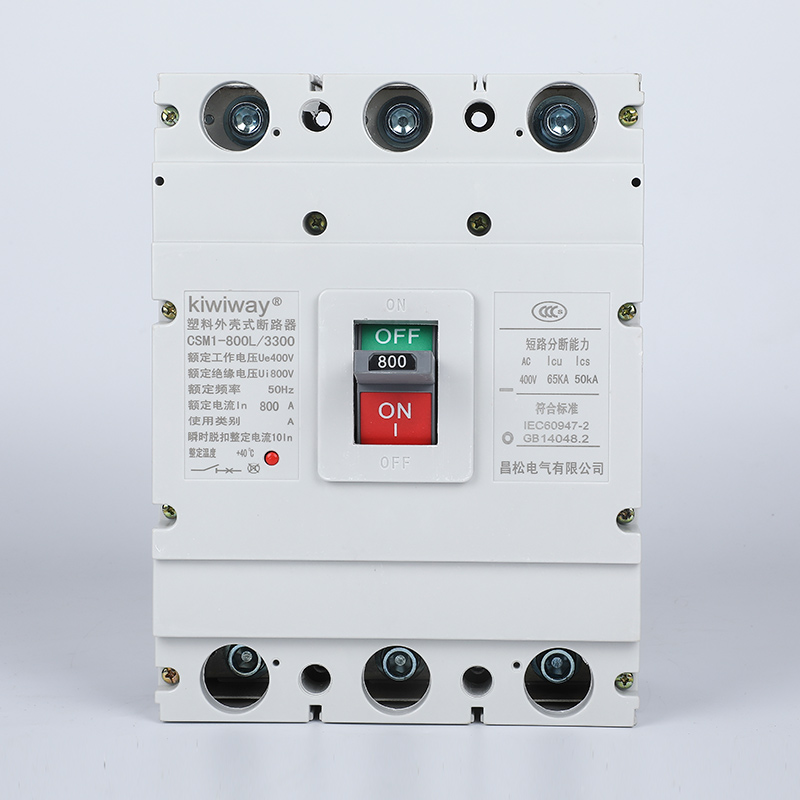
The shift toward renewable energy and the growing use of DC-based systems in data centers, electric vehicles, and microgrids have put DC breakers at the heart of grid stability. Traditional AC breakers rely on the natural zero-crossing of current to extinguish arcs, but DC systems have no such inherent interruption point. Advanced DC breakers overcome this by using hybrid or solid-state designs that can force a current zero or dissipate energy within microseconds. This rapid fault clearance prevents cascading failures that would otherwise ripple through interconnected converters and storage units, essentially acting as high-speed gatekeepers that segment the network before instabilities can spread.
One of the less obvious but critical roles these breakers play is in maintaining voltage quality during normal operation. Renewable sources like solar and wind are intermittent, and their output fluctuations can cause harmonic distortions or transient dips. Sophisticated DC breakers integrate sensors and control logic that continuously monitor system parameters. When they detect anomalies, they don’t just trip blindly; they can momentarily decouple a noisy source or a lightly loaded feeder, then seamlessly reintegrate it once conditions normalize. This selective isolation helps keep voltage ripple within tight limits, which is vital for sensitive loads like medical imaging equipment or precision manufacturing tools that cannot tolerate even minor power wobbles.
Beyond protection, advanced DC breakers are becoming active participants in power routing and energy management. In multi-terminal DC grids, where power flows are dynamically adjusted based on generation and demand, breakers equipped with communication interfaces can coordinate with system controllers. For instance, if a section of a shipboard power system needs to be rapidly reconfigured after a generator failure, these breakers can execute switching sequences faster than any mechanical alternative. By doing so, they not only prevent blackouts but also optimize energy use, shaving peak loads and routing surplus solar power to storage. This versatility turns them from simple safety devices into essential enablers of truly resilient and adaptive power networks.
Seamless Renewables Integration Through Rapid Fault Interruption
Modern power grids are increasingly reliant on inverter-based renewable sources, which behave very differently from conventional synchronous generators during disturbances. A fault anywhere in the network can trigger voltage dips or frequency swings, and if the inverters disconnect too slowly—or worse, unnecessarily—grid stability can unravel. Rapid fault interruption steps in as the critical bridging technology: by detecting and clearing electrical faults within milliseconds, it prevents the cascade of protective disconnections that would otherwise cause widespread loss of generation. This speed keeps the inverters connected and riding through the transient, preserving the balance between supply and demand even while the fault is being isolated.
Achieving this level of responsiveness demands a departure from traditional protection schemes. Solid-state circuit breakers and advanced relaying algorithms are now at the heart of the strategy, combining local sensing with peer-to-peer communication to make split-second decisions. Rather than waiting for a control room command, these intelligent devices assess fault current, direction, and grid topology on the spot, tripping only the faulted segment and leaving the rest of the system operational. The result is a grid that can absorb a higher share of renewables without compromising reliability: solar and wind plants see the fault as a minor blip instead of a reason to disconnect, steadying the grid through the disturbance and enabling a smoother, faster return to normal operation.
Beyond AC: Why DC Breakers Are Critical for Future Grids
For decades, alternating current (AC) has been the backbone of global power networks, primarily because it can be easily stepped up or down with transformers to minimize transmission losses. This historical advantage led to widespread adoption of AC infrastructure, from generation to distribution. Yet, as we push toward a more sustainable and digitally integrated energy landscape, the limitations of AC-centric grid protection are becoming starkly apparent. Renewable sources like solar and wind inherently produce direct current (DC), and modern loads—LED lighting, electric vehicles, data centers—often operate natively on DC or require rectification. Each conversion step between AC and DC introduces energy losses, complexity, and points of failure. More critically, the fault management devices designed for AC grids, such as traditional circuit breakers, exploit the natural zero-crossing of AC current to extinguish arcs. DC, on the other hand, flows continuously without a zero-crossing, making arc interruption significantly more challenging and demanding a fundamentally different approach.
The rapid expansion of high-voltage DC (HVDC) transmission lines underscores this shift. HVDC is increasingly favored for long-distance power transport, subsea connections, and interlinking asynchronous grids because it eliminates reactive power losses and allows precise control of power flow. However, protecting these multi-terminal HVDC networks is not a simple matter of scaling up AC components. A fault anywhere in a DC grid can cause currents to rise to destructive levels within milliseconds, requiring breakers that can detect and isolate the faulted segment without de-energizing the entire system. Unlike AC grids, where mechanical breakers are sufficient for most applications, DC fault interruption demands hybrid or solid-state breakers capable of operating at extraordinary speeds—often within a few milliseconds. These devices combine ultrafast mechanical switches with power electronic components to force a current zero and dissipate the stored magnetic energy, a technical leap that traditional AC protection schemes cannot replicate.
Beyond transmission, the proliferation of distributed energy resources and direct-DC microgrids is reshaping the medium- and low-voltage landscape. Commercial buildings, industrial facilities, and even residential complexes are increasingly adopting DC distribution to seamlessly integrate solar panels, battery storage, and DC-native loads. In such setups, a DC breaker isn’t just a protective afterthought; it’s an enabler of resilience and efficiency. It allows fault isolation at a granular level, preventing a single short circuit from cascading into a system-wide blackout. Moreover, because DC breakers can operate with minimal arcing and lower maintenance, they enhance safety and longevity in environments where personnel might be in close proximity. As the grid evolves from a unidirectional, centralized model to a bidirectional, decentralized web of prosumers, the ability to quickly and reliably interrupt DC currents becomes not just an advantage but a necessity. In this context, DC breakers are the silent guardians that will allow tomorrow’s grids to be both flexible and robust.
Key Innovations Driving High-Performance DC Circuit Breakers
The push for more resilient DC grids in renewable energy, electric vehicle charging, and data centers has exposed the limits of traditional mechanical breakers. Slow interruption speeds and severe contact wear under DC arcs once forced engineers into bulky, maintenance-heavy designs. Today’s high-performance devices sidestep these problems through a blend of solid-state switching, ultrafast actuators, and novel current-limiting materials that reshape how faults are cleared.
Hybrid topologies combining a fast mechanical bypass with a semiconductor-based commutation path now achieve arc-free interruption in under a millisecond. Wide-bandgap devices like silicon carbide MOSFETs push power density higher while slashing conduction losses, allowing compact breakers that sit directly on busbars. Meanwhile, resonant snubber circuits and magnetically triggered vacuum interrupters quench fault currents with minimal voltage overshoot, preserving the stability of downstream converters and sensitive loads.
Intelligence has become equally critical. Embedded monitoring of current rise rates, contact temperature, and ambient conditions lets modern breakers predict faults before they escalate. Adaptive trip curves and self-diagnostic routines tailor behavior to the specific DC microgrid, whether it is a solar farm or a shipboard power system. By fusing real-time analytics with modular, power-electronic cores, next-generation DC breakers are shrinking, accelerating, and learning—all while remaining serviceable by local technicians without specialized high-voltage training.
Real-World Impact: Enhancing Reliability and Safety in Renewable Systems
In the rapidly evolving landscape of renewable energy, the true measure of success extends beyond mere generation capacity. It lies in the ability to deliver uninterrupted, stable power to communities and industries that depend on it. Real-world deployment of solar farms, wind parks, and hybrid systems has uncovered a range of operational challenges—from sudden grid instabilities to component fatigue under harsh environmental conditions. These are not abstract engineering puzzles; they directly affect the flow of electricity into hospitals, factories, and homes. Enhancing reliability means embedding resilience into every layer of the system, from smart inverters that preemptively adjust to voltage fluctuations, to predictive maintenance algorithms that catch early signs of equipment wear long before a failure occurs.
Safety, too, takes on a grounded, urgent meaning in the field. Technicians working on towering turbines or vast solar arrays face unique risks, and a single arc flash or structural failure can have devastating consequences. The industry has moved beyond compliance checklists, embracing a culture where safety is woven into design and daily operations. Advanced monitoring tools now provide remote diagnostics, reducing the need for risky on-site interventions, while robust physical safeguards—such as rapid shutdown mechanisms and fire suppression systems—are becoming standard even in smaller installations. The aggregate effect is a renewable infrastructure that not only meets technical specifications but also earns the trust of the people who live and work alongside it.
Ultimately, the push for reliability and safety is redefining what it means to sustain a renewable grid. It’s no longer enough to simply add more megawatts; each new project must prove its ability to withstand the unexpected—whether a grid transient, a supply chain delay, or an extreme weather event. This shift is sparking innovation in energy storage synchronization, decentralized control architectures, and fail-safe communication protocols. The outcome is a quieter, yet profound transformation: renewable systems that quietly and consistently deliver power, earning their place as the backbone of modern energy rather than a volatile supplement.
FAQ
They act as critical safety valves, quickly interrupting fault currents to protect equipment and maintain stable operations, especially with the rise of DC-based systems.
AC breakers rely on natural zero-crossing points to extinguish arcs, but DC faults lack these, making interruption more challenging and requiring specialized DC breakers for fast isolation.
Advanced designs using hybrid or solid-state mechanisms can interrupt high DC currents in microseconds, preventing cascading failures and ensuring grid resilience even under heavy renewable loads.
Renewable sources often generate DC power or connect via DC links; DC breakers enable safe and reliable interconnection, reducing conversion losses and allowing flexible power routing.
Absolutely. They isolate faulted segments instantly, keeping the rest of the network operational. This prevents widespread outages and helps the grid bounce back faster after disturbances.
Solid-state versions use semiconductors to switch off current without moving parts, resulting in faster response times, no arc formation, and longer lifespans, though they may need parallel cooling systems.
Several pilot installations, such as those in offshore wind farms and multi-terminal HVDC systems, have shown promising results in improving system reliability and reducing downtime.
Conclusion
The shift toward renewable energy and distributed generation is exposing the limitations of traditional AC grid protection. DC circuit breakers are reinventing how we safeguard electrical infrastructure, offering a direct response to the unique demands of modern power networks. These devices do more than simply interrupt current; they actively stabilize systems that must handle fluctuating inputs from solar arrays and wind farms. While AC breakers have served us well for decades, the physics of DC faults—characterized by rapid current rise and no natural zero-crossing—demands a fundamentally different solution. Advanced DC breakers fill this gap, enabling fault clearance in microseconds and preventing cascading failures that could otherwise cripple high-voltage links and microgrids. Their ability to isolate trouble spots without sacrificing overall network integrity makes them indispensable for tomorrow's grids.
When renewables feed into the system, every millisecond counts. A short circuit in a photovoltaic array or offshore wind cable can escalate swiftly without fast intervention. Here, high-speed DC breakers are transformative, disconnecting faulty segments almost instantaneously and allowing the rest of the system to ride through the disturbance. This rapid fault interruption is the linchpin for seamless integration of clean energy sources, which are inherently variable. Behind this performance lie key innovations: solid-state designs using wide-bandgap semiconductors, hybrid topologies that combine low on-state losses with ultra-fast interruption, and intelligent control algorithms that predict fault behavior. In the field, these breakthroughs are already enhancing reliability and safety. Solar farms, battery storage facilities, and electric-shipboard systems now count on DC breakers to maintain continuous operation and protect critical assets. The result is a more resilient, flexible power infrastructure that can confidently accommodate higher shares of renewables.
Contact Us
Contact Person: Tonglun Chen
Email: [email protected]
Tel/WhatsApp: 8618906642555
Website: https://www.cncsele.com