

Substantial HV Switchgear: What Makes It Critical for Modern Power Infrastructure
2026-09-08
As power grids strain under rising demand and renewable integration, the unsung heroes of electrical safety often lurk behind steel enclosures. Substantial HV switchgear does far more than flip circuits—it anchors fault isolation, arc flash protection, and load management in substations that cannot afford downtime. But what elevates a switchgear from standard to genuinely critical? Durability under thermal stress, precision in breaking fault currents, and adaptability to smart grid protocols all play roles. In this post, we’ll unpack the engineering nuances that separate robust high-voltage switchgear from the rest, with insights drawn from Chang Song's field experience. Whether you're planning a new substation or retrofitting aging infrastructure, the factors ahead may change how you evaluate your next procurement decision.
Why a Single Switchgear Failure Can Cascade for Miles
Switchgear failure often begins with something mundane: a corroded bushing, a tracking insulator, or a slow leak of SF6 that goes unnoticed until the gas pressure drops below the trip threshold. At that point the protection relay may open the breaker, but if the fault is internal—say an arc flash inside the compartment—the breaker alone cannot clear it. The overcurrent then propagates upstream, tripping the feeder breaker at the substation, which de-energizes an entire distribution circuit, not just the block where the switchgear sits.
That circuit can stretch for miles through industrial parks, residential streets, and commercial strips. When it opens under fault, voltage on the adjacent feeders sags because they share the same bus or are coupled through network protectors. If the sag is deep enough, motor contactors drop out, variable frequency drives shut down, and sensitive relays in neighboring switchgear misinterpret the condition as a local fault. They open too, and the outage jumps from one circuit to another.
The cascading effect is not a simple chain but a mesh of hidden dependencies. Protective coordination settings are often tuned for rare, isolated events, not for multiple breakers operating within seconds during heavy load. Throw in a hot summer afternoon when underground cables are already running at thermal limit, and a single failed switchgear can become the trigger that pushes a sub-transmission transformer into overload lockout. That's how an arc in a basement vault ends up darkening windows three miles away.
Taming Fault Currents Without Breaking a Sweat
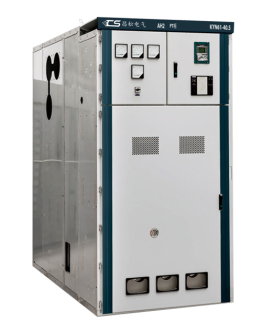
When a short circuit strikes, the resulting fault current can quickly outpace the ratings of switchgear, busbars, and protective devices. Rather than replacing everything with heavier, more expensive equipment, many engineers are turning to fault current limiters that quietly absorb the punch. These devices keep let-through energy low enough that existing components stay within their comfort zone, even on a bad day.
Current-limiting fuses, series reactors, and solid-state fault current limiters each bring a different tool to the fight. The trick is matching the limiter's impedance and response time to the specific fault signature of the facility. Once that's dialed in, the system handles a bolted fault almost as if it were a minor disturbance—no sweat, no drama, just a clean trip and a quick reset.
The Renewable Grid's Hidden Shock Absorbers
Grid operators once leaned on spinning metal to keep voltage and frequency steady. Now that inverter-based solar and wind are displacing those turbines, a quieter set of stabilizers is doing the heavy lifting. Synchronous condensers—essentially free-spinning generators that produce no net power—are being bolted into substations across Texas, South Australia, and northern Scotland. They react to grid faults in milliseconds, injecting reactive power and providing the inertia that keeps the whole network from tripping when a cloud bank sweeps over a solar farm.
Battery systems have grown good at mimicking this muscle, but the real trick is in how they are controlled. Grid-forming inverters, which set voltage and frequency rather than just following them, are moving out of research labs and into interconnection requirements. Combined with flywheel storage that can absorb a sudden frequency dip in under a second, these devices turn renewable-heavy grids from brittle to elastic—cushioning the same variability they create.
Sensors That Predict Trouble Before It Starts
Most factories still run on calendar-based maintenance, swapping out parts because a spreadsheet says so. Predictive sensors flip that logic. A small accelerometer bolted to a pump housing listens for the faintest change in vibration signature—long before a bearing starts to scream. Thermal imagers watch for hot spots on electrical panels, while ultrasonic microphones catch the hiss of compressed air leaks that no human ear can detect. The data streams into edge devices that compare each reading against a learned baseline, flagging only meaningful deviations.
The real shift is not just catching failures early but ranking them by urgency. One sensor might notice a gradual drift in motor current that suggests belt slippage; another detects a sudden spike in coolant temperature tied to a clogged filter. Maintenance teams get a prioritized list instead of a flood of alarms, so they can schedule downtime when it hurts least. Over time, the system learns which patterns lead to actual breakdowns and which are just noisy quirks of a particular machine.
That kind of foresight changes budgets, too. Instead of stocking shelves with spare parts for every possible failure, plants keep a leaner inventory and rely on the sensor data to order exactly what’s needed, shortly before it’s needed. Unplanned stops drop, energy waste from leaking air or misaligned drives falls, and the people on the floor spend less time reacting and more time improving the process.
Fit More Protection Into Less Space
The obsession with bulk often overshadows smart engineering. But packing serious protection into a slim profile isn't about using less material—it's about using each layer strategically. Impact zones get reinforced while low-risk areas stay lean, so the final shape remains easy to slide into a bag without sacrificing real drop safety.
That balance shows up in the details. Tapered edges, internal ribbing, and multi-density foam do the heavy lifting where it counts. The result is a cover that feels almost unexpectedly light yet still handles everyday knocks, bumps, and the occasional clumsy moment without turning your device into a brick.
Designing for Decades, Not Just Commissioning Day
The ribbon cutting and the commissioning certificate mark a beginning, not an endpoint. Too often, design teams pour energy into making sure every system performs flawlessly on day one, only to leave behind a building that quietly fights its occupants for the next thirty years. A truly successful project isn't measured by the smoothness of the handover meeting but by how the structure ages, how easily a filter gets changed, and whether the HVAC controls still make sense after the first tenant rearranges the floor plan. Think of commissioning day as the first mile of a marathon, not the finish line.
That shift in perspective leads to different choices on the drawing board. Instead of specifying the cheapest chiller that meets today's load, you look at part-load efficiency, service access, and whether replacement parts will still be available in fifteen years. You might trade a high-gloss lobby finish for a durable, repairable wall system that won't need a full renovation after five years of scuffs. You design electrical panels with spare breakers, leave headroom in conduit runs, and document everything so the next facilities team doesn't have to reverse-engineer your intent. These decisions rarely make the project photos, but they determine whether the building remains a joy to operate or becomes a recurring headache.
Perhaps the most important question to ask is: who will live with this decision? Owners change, tenants change, technology changes, but the building shell and core systems will be there for decades. If you design for the person who shows up on day one only, you risk locking in assumptions that expire quickly. Instead, imagine standing in the building twenty years from now. Does the layout still adapt? Can the cooling system handle a hotter climate? Can maintenance be done without shutting down an entire floor? When design conversations start with that long view, commissioning day becomes a quiet milestone rather than the only goal.
FAQ
It typically refers to switchgear rated above 72.5 kV, where the physical size, interrupting capacity, and safety clearances demand a dedicated bay or building. At this level you are no longer dealing with draw-out breakers on a rack; you are handling gas-insulated or air-insulated assemblies built around high-current busbars, disconnectors, and protection relays that coordinate across entire substations.
Because it is the only layer that can physically isolate a faulted section within milliseconds while keeping the rest of the network energized. Without that fast, selective clearing, a single tree strike or insulator flashover could cascade into a regional blackout. HV switchgear gives operators a controlled way to sectionalize, reroute power, and restore service without manual switching under load.
The circuit breaker is the obvious workhorse, but the disconnector and earthing switch matter just as much for safe maintenance. Current transformers and voltage transformers feed the protection scheme, while the busbar system handles continuous thermal and mechanical stress. In gas-insulated designs, the enclosure itself is critical because it maintains the SF6 or alternative gas at the pressure needed for insulation and arc quenching.
It relies on arc quenching media that can cool and deionize the arc rapidly. SF6 gas has excellent dielectric recovery, but vacuum interrupters and clean-air technologies are increasingly used for lower sections of HV. The mechanism driving the contacts is often spring-based or hydraulic, delivering enough speed to separate contacts within a few cycles, so the arc does not linger long enough to erode contacts or overheat internal components.
Renewable plants often connect to the grid through long transmission lines or subsea cables, where voltage swings and fault currents behave differently from conventional thermal plants. HV switchgear provides the flexible isolation and protection needed to manage variable infeed, switch capacitor banks or reactors for voltage support, and quickly disconnect a wind or solar farm if grid frequency drops or a line fault threatens stability.
Ignoring gas pressure trends is a big one. A slow SF6 leak might not trip an alarm until it is too late, and moisture ingress can drastically reduce insulation strength. Skipping contact resistance tests on bolted busbar joints allows hot spots to develop. Also, failing to exercise disconnectors and earthing switches during outages leads to stuck mechanisms when you need them most. Lubrication, timing tests, and partial discharge monitoring are not optional at this voltage level.
Instead of relying on periodic manual inspections, operators now use embedded partial discharge sensors, bushing monitors, and gas density transmitters that stream data continuously. This shifts maintenance from calendar-based to condition-based. Algorithms can spot subtle changes in contact travel time or arc duration and flag a breaker that needs attention before it fails. It also cuts down on unnecessary entry into high-energy compartments, which is a major safety win.
The biggest trap is matching only nameplate ratings; fault levels may have risen since the original installation, so verify the protection scheme and short-circuit duty first. Beyond that, footprint and environmental constraints often push utilities toward gas-insulated gear, which frees land and reduces visual impact. Plan for digital integration early because retrofitting sensors and communication protocols into a substation that was not designed for them is far more costly than building them in from day one.
Conclusion
A single high-voltage switchgear failure rarely stays local. When protection fails to isolate a fault, the resulting voltage sag or overload can propagate through substations and distribution feeders, knocking out power across entire districts. Substantial HV switchgear is engineered to interrupt fault currents within milliseconds, often handling tens of kiloamperes without the breaker mechanism breaking a sweat. That capability is not just about protecting transformers and cables; it's about preventing a minor fault from cascading for miles. As grids absorb more intermittent wind and solar generation, the same switchgear doubles as a shock absorber. It suppresses voltage spikes, damps switching transients, and provides the fast disconnection needed when a renewable plant's output fluctuates wildly or a feeder faults. Without this robust first line of defense, modern grids would be far more fragile.
Modern designs also embed sensors that track partial discharge, gas pressure, contact wear, and temperature trends. These aren't gimmicks—they give operators early warning of insulation breakdown or mechanical fatigue, allowing intervention before a failure occurs. Meanwhile, switchgear is being squeezed into tighter footprints through gas-insulated and hybrid technologies, packing more interruption capacity into less floor space, which is critical for urban infeed stations and offshore platforms. But the real test is longevity. Leading manufacturers design for decades of service, using corrosion-resistant enclosures, sealed-for-life interrupters, and maintenance cycles measured in years rather than months. Commissioning day is just the starting point; the equipment must perform reliably through heat waves, salt spray, and seismic events. Substantial HV switchgear, in short, is the quiet enabler of everything from renewable integration to urban resilience.
Contact Us
Contact Person: Tonglun Chen
Email: [email protected]
Tel/WhatsApp: 8618906642555
Website: https://www.cncsele.com