

Top 10 Aromatic Hydroxy Intermediates You Should Know
2026-08-29
Ask any process chemist which intermediates they'd never want to be without, and you'll hear a familiar chorus—catechol, resorcinol, hydroquinone. But aromatic hydroxy intermediates are a much richer family than that trio. In this post, we're counting down ten that deserve a permanent spot in your R&D toolkit, whether you're scaling up APIs, optimizing agrochemicals, or fine-tuning specialty polymers. For sourcing these compounds without supply-chain surprises, DSL Chemicals is the partner to know.
Why Aromatic Hydroxy Intermediates Deserve a Spot on Your Radar
Aromatic hydroxy intermediates rarely get the headline treatment, yet they quietly enable some of the most elegant bond-forming strategies in modern synthesis. Their phenolic -OH group isn't just a spectator; it directs electrophilic attack, stabilizes radical pathways, and serves as a convenient handle for late-stage diversification. When you need to install complexity without adding synthetic bulk, these compounds offer a surprisingly direct route.
Beyond classic reactions, the real appeal lies in their tunable redox behavior. By tweaking ring substituents, you can shift oxidation potentials enough to make the same scaffold serve as either a mild reductant or a persistent radical precursor. That versatility shows up in everything from photoredox catalysis to bioorthogonal probes, where the intermediate's fate can be fine-tuned with a single substituent choice.
There's also a practical argument: many aromatic hydroxy building blocks are shelf-stable, inexpensive, and compatible with aqueous or aerobic conditions that would destroy more sensitive intermediates. For process chemists and medicinal chemists alike, that robustness translates into fewer failed reactions and more reproducible scale-up. It's the kind of quiet advantage that rarely makes a title slide, but consistently shows up in successful routes.
Phenol, Cresol, and the Usual Suspects: A Closer Look
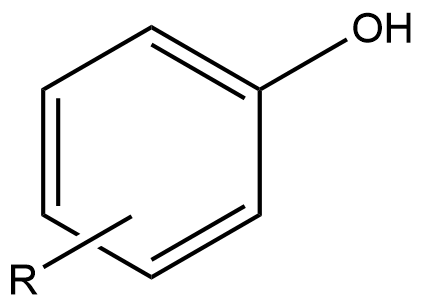
It is easy to lump phenol and cresols together on a safety data sheet, but their behavior in real formulations tells a more tangled story. Phenol itself has a long clinical history, and its sharp, almost medicinal odor is still the first thing people notice before any discussion of antimicrobial activity. The cresols—ortho-, meta-, and para-cresol—share a similar aromatic backbone, yet each isomer brings its own solubility quirks, toxicity profile, and smell. A formulator who treats them as interchangeable will quickly run into phase separation or an unexpected residue pattern.
What earns these compounds their usual-suspect status in disinfectant and preservative discussions is not just their efficacy, but their persistence in both product and environment. Phenol can denature proteins at relatively low concentrations, while cresols often appear as a technical mixture that is more potent against certain bacteria but also more irritating to tissue. The trade-off between broad-spectrum kill and user safety has pushed many modern formulations toward substituted phenols or entirely different chemistries, yet the original molecules still show up in niche industrial cleaners and laboratory reagents.
A closer look at the shelf also reveals companions like chloroxylenol, thymol, and quaternary ammonium compounds. These alternatives are often chosen because they offer a less aggressive odor or a better skin tolerance profile, but they introduce their own limitations—hard water incompatibility, narrow pH windows, or slower kill times. Understanding why phenol and cresols remain reference points, even when they are not the primary active, helps explain the compromises baked into many antimicrobial products.
From Aspirin to Anticancer Agents: Hydroxy Intermediates in Pharma
The chemical story of aspirin begins with a simple phenolic hydroxyl on salicylic acid, yet that same functional group now threads through the backbone of modern oncology pipelines. Hydroxy intermediates are not passive spectators; they act as nucleophilic handles that enable selective esterification, etherification, or sulfonation during active pharmaceutical ingredient synthesis. In early analgesics, the acetylated hydroxyl was the entire therapeutic trick—masking gastric irritation while preserving anti-inflammatory activity. Today, a free hydroxyl on a taxane or a kinase inhibitor can be the difference between rapid clearance and a clinically useful half-life.
In anticancer process chemistry, the installation or protection of a hydroxyl group often determines both yield and purity. Consider the synthesis of paclitaxel, where a secondary alcohol at C-13 is essential for attaching the side chain that confers tubulin-binding potency. A misplaced oxidation or an unprotected diol can lead to epimerization or unwanted ring-opening, so chemists lean on silyl, benzyl, or acyl protecting groups to shepherd hydroxy intermediates through multi-step sequences. These intermediates also enable late-stage functionalization, turning a common scaffold into a library of analogs with altered solubility or target affinity.
What sets contemporary pharma apart is the deliberate use of hydroxy intermediates as prodrug anchors. A phosphate or amino acid ester on a hydroxyl can transform an insoluble cytotoxic agent into an injectable or orally available form, with enzymatic cleavage restoring the active drug at the tumor site. This strategy, borrowed from the aspirin era’s acetylation logic, now powers antibody-drug conjugates and sustained-release formulations. The journey from a simple headache tablet to targeted cancer therapy is, at its chemical core, a story of learning how to place, protect, and release a single oxygen-bound hydrogen.
Beyond the Lab Bench: Hydroxy Intermediates in Plastics and Electronics
Walk into any modern plastics plant or electronics fab, and you'll find hydroxy intermediates quietly doing the heavy lifting. These molecules, carrying a simple -OH group, are the unsung connectors in polymer chains and the subtle modifiers that tune a resin's flexibility, adhesion, or heat resistance. Instead of hogging the spotlight, they sit mid-reaction, grabbing onto monomers and releasing them just as smoothly, often shaving energy costs without a single change to the visible product.
In electronics, the story shifts from bulk material to precision chemistry. Hydroxy intermediates appear in photoresists, where their polarity controls how light patterns transfer onto silicon wafers, and in solder masks, where they balance flow and cure speed. Engineers don't talk about them much because they work too well—mentioning an -OH group feels like bragging about the glue in a finished chair. Yet remove one hydroxyl at the wrong step, and a circuit board delaminates or a display coating clouds over.
What makes them interesting beyond the bench is their chameleon nature. The same hydroxy intermediate that toughens a phone case can, with a different backbone, help a plastic film degrade safely in a compost pile. That versatility keeps material scientists revisiting old reaction pathways, not to chase novelty, but to rediscover how a humble oxygen-hydrogen pair still outsmarts more fashionable functional groups.
Making the Grade: Practical Synthesis of Aromatic Hydroxy Compounds
Aromatic hydroxy compounds rarely come from direct hydroxylation of the parent arene, since the aromatic ring is electron-rich and oxidation tends to over-react. Instead, reliable synthetic routes exploit an existing substituent that can be converted into a hydroxyl group under controlled conditions. The classic laboratory approach begins with aniline derivatives: diazotization at low temperature followed by hydrolysis in hot aqueous acid gives phenols with predictable regiochemistry. This route works well for small-scale preparations where the position of the hydroxy group is fixed by the starting amine.
On an industrial scale, the cumene process remains the workhorse for phenol because it simultaneously delivers acetone and avoids stoichiometric oxidants. Cumene is oxidized to cumene hydroperoxide, then cleaved under acid to phenol and acetone in high overall yield. For naphthols and other substituted phenols, sulfonation followed by alkali fusion was historically important, though it has largely given way to hydrolysis of activated aryl halides or transition-metal-catalyzed hydroxylation where milder conditions are needed. The choice of method usually hinges on cost of the starting material, tolerance for acidic or basic media, and the need to isolate the product without tar formation.
Recent practical work has focused on reducing waste from these older routes. Enzymatic hydroxylation and photoredox methods show promise for late-stage functionalization, but they still struggle to match the throughput of diazonium or cumene chemistry. A pragmatic approach often combines a cheap aromatic precursor with a robust hydrolysis step and accepts modest extra purification rather than chasing an elegant but fragile catalytic system. In teaching labs, the diazonium route remains popular because it demonstrates the connection between nitrogen chemistry and oxygen substitution while giving a crystalline product that students can characterize by melting point and IR.
What's Next for These Versatile Intermediates? Trends and Green Chemistry
The next wave of innovation for these intermediates is being shaped by a quiet shift away from stoichiometric reagents and toward catalytic systems that operate at ambient temperature and pressure. Instead of treating green chemistry as a checklist, many labs now design intermediates with built-in handles for recovery and reuse, which cuts solvent demand and reduces the need for energy-intensive separations. This practical reframing often leads to shorter synthetic routes, fewer protection steps, and a smaller overall footprint without sacrificing yield.
One trend gaining traction is the integration of photoredox and electrochemical activation into intermediate synthesis, allowing reactions that once required harsh oxidants or reductants to proceed with visible light or a simple pair of electrodes. In parallel, continuous flow setups are being used to generate and immediately consume unstable intermediates, bypassing storage and transport risks. These approaches dovetail with bio-based feedstocks, where enzymes or engineered whole cells transform lignocellulose-derived building blocks into the same versatile intermediates that previously came from petroleum cracking.
Looking further ahead, the measure of success is moving beyond isolated yield to include atom economy, E-factor, and life-cycle impact as first-class design criteria. Researchers are also borrowing concepts from circular chemistry, such as designing intermediates that degrade into recoverable monomers or that can be regenerated after use. The result is not a single breakthrough but a steady convergence of catalysis, process intensification, and renewable inputs, which together are turning these intermediates from a source of waste into a testbed for cleaner manufacturing.
FAQ
It comes down to the ring substitution pattern and the role the hydroxyl group plays in later steps. A simple phenol often serves as a terminal building block, whereas a true intermediate—like resorcinol or p-cresol—has the -OH positioned to direct electrophilic attack or to be converted into ethers, esters, or quinones without destroying the aromatic core. That functional flexibility is what makes them workhorses in fine chemical synthesis.
Hydroquinone's reversible two-electron oxidation to benzoquinone is unusually clean, and the redox potential sits in a range that suits polymer inhibitors and photographic developers. Most substitutes either foul the reaction mixture or require harsher conditions. The handling issues are real—skin sensitization and staining—but process engineers often accept them because the performance is hard to match at scale.
Catechol's adjacent hydroxyls chelate metal ions strongly, which improves adhesion to wet or oxidized metal surfaces but also makes it prone to unwanted oxidation. Resorcinol, with meta hydroxyls, is more stable in alkaline formulations and crosslinks readily with formaldehyde, giving it a leading role in tire cord adhesives and wood bonding resins. So the substitution pattern really dictates the final resin's toughness and moisture resistance.
Bisphenol A is essentially two phenol units linked by an acetone bridge, so it behaves like a bulky, rigid diphenol. That rigidity translates into high glass transition temperatures in polycarbonate and epoxy resins. It is not a typical small-volume intermediate—its scale is enormous—but the same hydroxyl-driven chemistry applies: etherification, esterification, and chain extension all start at those two -OH groups.
The hydroxyl group at the 2-position activates the naphthalene ring toward coupling at the 1-position, which yields dyes with better tinctorial strength and cleaner shades. 1-Naphthol tends to couple at multiple sites and gives messier product distributions. For diazo coupling reactions where you need one dominant isomer, 2-naphthol's regioselectivity saves a lot of purification effort.
All three cresols are corrosive to skin and respiratory tract, but their physical forms and odors differ enough to matter. p-Cresol is a low-melting solid that can be easier to contain than liquid m-cresol, yet both demand closed transfer systems and careful waste treatment because they are toxic to aquatic life. Blends of cresols also have a sharp, persistent odor, so even small spills become a workplace nuisance quickly.
Replacing one catechol hydroxyl with a methoxy group blocks that site from oxidation and reduces metal chelation, which makes guaiacol much more stable in storage and easier to handle. It still undergoes electrophilic substitution on the ring, but the methoxy group directs incoming groups to specific positions. That balance of stability and reactivity is why guaiacol shows up in vanillin synthesis and pharmaceutical intermediates.
4-tert-Butylcatechol deserves more attention. It is mostly known as a polymerization inhibitor, but its bulky tert-butyl group also limits side reactions when it is incorporated into specialty polyesters or polyurethanes. That steric shield can improve oxidative stability of the final polymer without requiring a completely different monomer backbone.
Conclusion
Aromatic hydroxy intermediates rarely grab headlines, yet their quietly reactive -OH group turns simple benzene rings into workhorses across multiple industries. Phenol and cresols remain the obvious starting points, but the broader family includes less celebrated names like resorcinol, hydroquinone, catechol, and bisphenol A. Each brings a distinct substitution pattern that nudges reactivity in useful directions. In pharmaceuticals, this translates into scaffolds where a single hydroxyl can shift solubility, binding affinity, or metabolic fate. Salicylic acid, long known from willow bark, still anchors aspirin and a range of anti-inflammatory agents, while more complex hydroxy-substituted aromatics appear in anticancer and antiviral candidates. The point is not that one molecule does everything, but that a handful of these intermediates repeatedly show up at critical junctions in drug synthesis.
Outside the lab, the same intermediates find their way into polycarbonate plastics, epoxy resins, and even photosensitive materials used in electronics. Industrial demand has pushed chemists to move beyond harsh sulfonation or chlorination routes, favoring cleaner oxidations and catalytic methods that reduce waste and improve selectivity. Trends in green chemistry now emphasize bio-based phenol streams, solvent-free reactions, and recoverable catalysts, which could lower the footprint of an otherwise energy-intensive sector. What makes these compounds worth watching is not their individual fame but their quiet versatility. As synthetic routes tighten and raw material sources shift, the top aromatic hydroxy intermediates will likely be judged less by tradition and more by how efficiently they can be made, modified, and recycled without losing the reactivity that first earned them a place in the toolkit.
Contact Us
Contact Person: Wei Zhang
Email: [email protected]
Tel/WhatsApp: 862163529955
Website: https://www.dslchem.com