
Top 10 Industrial Shredders for Reliable High-Volume Material Processing
2026-11-19
High-volume material processing doesn’t forgive weak equipment. One underpowered shredder can stall an entire line, chew through maintenance budgets, and leave you with mountains of unprocessed scrap. That’s why we cut through the noise and tested the machines that actually hold up under continuous load. In this list, you’ll find ten industrial shredders worth serious consideration—including Shengzhong Shredder, a name that keeps showing up where uptime and throughput matter most. Here’s what separates reliable workhorses from expensive disappointments.
The Real Difference Between Average and High-Volume Duty Cycles
Most duty cycle ratings look straightforward on paper, but the gap between an average rating and a high-volume rating is rarely just a larger number. An average duty cycle—often in the 50% to 60% range across a ten-minute window—assumes the machine gets regular rest periods. That cool-down interval is not wasted time; it is when seals, bearings, and motor windings shed heat. High-volume duty cycles, especially 100% continuous ratings, remove that safety margin. Every component has to handle thermal expansion, moisture buildup, and friction without a break, which changes the engineering priorities from peak output to sustained stability.
The practical difference shows up in air supply and wear patterns. A compressor rated for average duty can easily cover intermittent tasks like nail guns or blow-down work, where demand rises and falls. Put the same unit on a production line that needs constant pressure and it will run hotter, cycle more often, and start eating through oil and gaskets. High-volume machines are not simply tougher versions of the same design; they usually include larger cooling surfaces, higher-flow filtration, reinforced valves, and motor windings rated for long stretches under load. That is why two compressors with identical horsepower can have very different lifespans in a demanding shop.
Before choosing between them, it helps to ignore the marketing numbers and look at the actual runtime per hour your application demands. If the tool or process consumes air in short, sharp bursts, an average duty cycle is often enough. If the demand graph stays flat for minutes at a time, the cost of a high-volume duty cycle pays for itself in lower repair frequency and fewer pressure drops. The real distinction is not how hard the machine works for ten minutes, but how gracefully it handles the next ten minutes—and the hundred after that.
How Cutter Design Shapes Output Consistency
A cutter's edge geometry tends to get treated as a fixed spec, but on the shop floor it behaves more like a variable. Rake angle, relief, and chipbreaker shape all influence how force travels through the tool and into the workpiece. When that path stays stable from one pass to the next, the resulting surface finish and part dimensions stay predictable. A slightly steeper relief angle can lower contact friction, yet it may also invite micro-chatter on long overhangs. The point is not that one geometry is universally better; it is that small shifts in these angles show up quickly as scatter in output.
Rigidity plays an equally direct role. Even a well-sharpened cutter will wander if the shank, collet, or spindle interface allows deflection under load. That deflection tends to be inconsistent because material hardness and engagement change throughout a cut. Design choices like core diameter, flute count, and reach length either dampen those variations or amplify them. Many machinists notice this most during finishing passes, where a tool that looks stable in a catalog can produce taper or lobing once actual radial forces hit it.
Thermal behavior is the quieter factor. Cutters with poor chip evacuation trap heat near the edge, which changes the effective cutting diameter and can cause size drift over a batch. Internal coolant channels, polished flutes, and coatings that reduce friction all help keep the tool at a steadier temperature. When heat stays consistent, so does the cut. It is rarely a single design feature that fixes inconsistency; more often it is the accumulated effect of the geometry, clamping, and heat management working together.
Material Characteristics That Shorten Blade Life
Some materials chew through cutting edges far faster than their hardness rating alone would suggest. Laminated composites, for example, combine abrasive fibers with softer resin pockets that alternately grip and release the tooth, creating a cyclic loading pattern that fatigues the edge. The result is not a clean wear land but micro-chipping that quickly degrades cut quality and forces premature replacement.
Embedded contaminants often do more damage than the base stock itself. Reclaimed lumber packed with silica, grit, or hidden fasteners can erode carbide edges in minutes, while certain tropical hardwoods carry mineral deposits that act like sandpaper on the cutting zone. Even supposedly uniform sheet goods may contain hard glue lines or density shifts that punish blades with uneven wear and localized overheating.
High-chromium alloys and stainless steels bring another failure mode: work hardening. The thin surface layer becomes harder than the blade can efficiently cut, producing intense friction at the tooth tip. Without adequate chip clearance and coolant delivery, heat concentrates at the contact point, softening the binder in carbide teeth and accelerating both abrasion and thermal cracking.
Why Drive Systems Matter More Than Motor Power
Ask most people what makes an electric vehicle quick, and they'll point straight at the motor's kilowatt rating. Yet that number tells only a small part of the story. A high-output motor paired with a mediocre drive system behaves like a sprinter wearing heavy boots — the potential is there, but it never reaches the ground cleanly. The inverter's switching logic, the gear reduction choices, the way torque is ramped in and out, all sit between the motor and the wheels, quietly deciding how much of that advertised power actually becomes motion you can feel.
Look at two vehicles with identical motor specs and you'll often find wildly different driving characters. One might lurch off the line, then fall flat once speeds climb. The other could feel linear and composed, carrying strong acceleration well past highway merging speeds. That difference rarely shows up on a spec sheet, but it lives in the thermal limits of the inverter, the software's willingness to hold peak current, and how precisely the control loop modulates phase timing. A well-sorted drive system stretches the motor's useful range, letting it breathe where it's most efficient and protecting it where it's not.
There's also the matter of repeatability. A motor can be a marvel on a dynamometer for one pull, then overheat or pull timing when asked to do it again ten minutes later. The drive system sets the rules for that game. It decides how quickly power fades, whether battery voltage sag gets compensated, and how smoothly torque is delivered when grip is marginal. Power ratings capture a peak moment; drive systems shape the entire arc of how a vehicle moves, stops, and corners under load. That's why seasoned drivers learn to read beyond the headline kilowatts — and why two numbers that look the same can feel a world apart.
Noise, Dust, and Vibration: The Overlooked Throughput Killers
Most throughput conversations center on spindle speeds, queue depth, or batch sizes. Yet walk any production floor and the subtler culprits are immediately present: a constant low-frequency rumble from stamping presses, fine particulate settling into linear rails, and vibration-induced drift in sensor calibration. These factors rarely appear on a dashboard, but they quietly erode the margin between planned and actual output.
Noise is not just a personnel hazard. In high-density automation cells, acoustic energy couples into machine frames, causing fasteners to loosen and optical alignment to shift over weeks, not years. Dust works even faster. Conveyor bearings, pneumatic seals, and exposed guideways collect abrasive particles that turn normal motion into drag, increasing cycle times by small increments that get absorbed into "average" performance numbers.
Vibration is often the most invisible of the three. A motor running slightly out of balance can propagate through floor slabs, affecting precision inspection equipment hundreds of feet away. The result is not a dramatic failure, but a steady rise in rework, false rejects, and unplanned micro-stops. Facilities that treat these three as environmental side notes usually end up chasing throughput losses that never show up in a conventional OEE report.
A Smarter Way to Compare Replacement Part Economics
Most cost comparisons stop at the sticker price, which misses the bigger picture. A smarter approach factors in how long a part actually lasts, how much downtime it causes when it fails, and whether it plays well with the rest of your equipment. Two bearings can carry the same upfront cost, yet one may need replacing three times as often, making the “cheaper” option far more expensive over a single maintenance cycle.
It also helps to think in terms of cost per operating hour rather than cost per part. A component that survives harsh conditions for 4,000 hours delivers more value than one priced 20% lower but worn out at 2,500 hours. When you add labor, lost production, and the risk of collateral damage to nearby components, the real economics shift quickly away from the lowest bid.
The most useful comparisons include availability windows and lead times, not just performance specs. A part that is easy to source locally can prevent a small failure from becoming a full shutdown. In many facilities, the true benchmark is not what the part costs on paper, but what it costs when it is missing at the worst possible moment.
FAQ
It comes down to rotor mass, cutter design, and feed robustness. High-volume machines maintain steady throughput without stalling when material density changes, while standard units often need more pauses and operator attention.
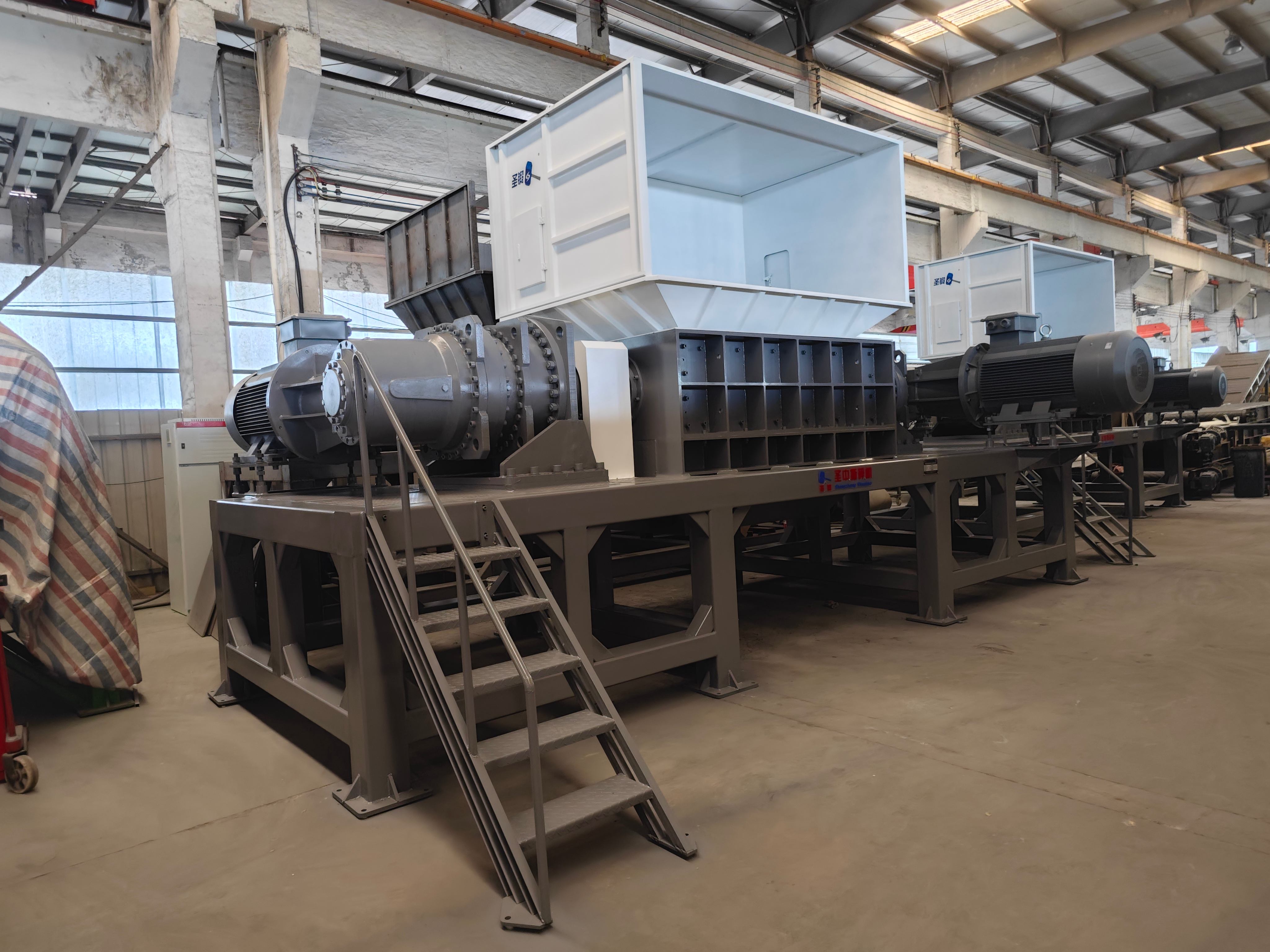
Single-shaft models usually give a more uniform particle size and work well after a pre-sort. Dual-shaft machines tolerate heavier contamination and odd shapes, which makes them a safer starting point for unsorted loads.
Pallets, rigid plastics, rubber, textiles, aluminum scrap, and even electronic subassemblies appear frequently. The key is matching alloyed cutters and screen sizes to the material so heat and wear stay controlled.
Power matters, but torque at low speed and the gearbox ratio often determine whether the rotor bites through dense material or bogs down. A well-matched drivetrain can outperform a higher horsepower unit with the wrong cutter geometry.
Rotate or replace cutters on a schedule tied to tonnage, check screen condition, and keep bearing temperatures logged. Small misalignments become expensive quickly when the machine runs across multiple shifts.
Auto-reversing to clear jams, guarded access points with interlocks, emergency stops within reach, and rotor isolation during maintenance. Good dust and spark control also reduces fire risk in high-volume settings.
Yes, some multi-purpose models use stepped cutter arrangements and adjustable screens to switch between plastic purgings and light ferrous or aluminum fractions. They sacrifice a little throughput on specialized material but gain flexibility across changing waste streams.
Screens control particle size by holding material in the cutting chamber until it is small enough to pass. Changing screen size can shift the balance between throughput and consistent sizing, so it is often the simplest adjustment for a different downstream process.
Conclusion
Choosing a shredder that can hold up under continuous, high-volume loads goes far beyond comparing horsepower or advertised throughput. Machines built for real production work are distinguished by duty cycle ratings that reflect sustained stress, not brief bursts, and by drive systems that deliver torque efficiently through shock loads and reversals. Cutter geometry plays an equally decisive role: rotors and beds designed around specific material profiles produce cleaner, more uniform particle output, while mismatched blade configurations quickly degrade into ragged cuts, jams, and rising power draw. Feedstock characteristics such as abrasive fillers, embedded metal, moisture content, and material memory can shorten blade life dramatically, so blade metallurgy, coating, and accessible regrinding tolerances need to be evaluated as part of the purchase, not treated as afterthoughts.
Operators often discover too late that noise, dust, and vibration are not just comfort issues; they are early warnings of imbalance, bearing stress, and feed problems that quietly reduce throughput and raise maintenance costs. A well-designed shredding system controls these factors through frame stiffness, rotor balancing, and dust collection compatibility rather than simply adding acoustic enclosures. Finally, the long-term economics deserve a closer look than the initial quote. Comparing replacement part pricing, cutter life, service intervals, and real downtime risk across the top ten models reveals that a cheaper machine can become far more expensive once blade sets, screens, seals, and drive components enter the calculation. The most reliable high-volume shredders earn their place by balancing robust engineering with honest operating costs across years of demanding use.
Contact Us
Contact Person: Leon
Email: [email protected]
Tel/WhatsApp: 8615385558866
Website: https://www.shred-waste.com