
Top 10 Modular Housing Construction Equipment Manufacturers Driving the Industry
2026-09-02
The construction world has a dirty secret: the most advanced building sites are no longer outdoors. Modular housing factories have turned homebuilding into a precision manufacturing process, and the equipment inside those factories is now the industry's real battleground. If you're still thinking of modular construction as a niche trend, the top equipment manufacturers featured here would like a word. Among them is Qianfeng Electromechanical Equipment, whose specialized machinery has become a quiet force in high-efficiency modular production. So, who else made the cut, and what makes their tech worth your attention? Let's dig in.
The Precision Push Transforming Modular Factory Floors
Modular factory floors have never been short on flexibility, but the real change is showing up in the tolerances. Instead of bolting a machine to a slab and hoping for the best, teams now map laser-tracked anchor points to a shared coordinate system, then align each module to the same reference edges. The result is a floor that can be rearranged over a weekend without chasing a few millimeters of drift for the next two weeks.
That shift ripples into tooling. Zero-point clamping plates, kinematic mounts, and precision dowel patterns are becoming standard because they remove the usual ritual of re-indicating every station after a move. When a robot cell or conveyor section drops into place, it lands where the digital layout says it should. The old habit of shimming, tapping, and re-leveling gives way to a faster check: scan, compare, lock.
What this buys is time that used to vanish into setup. Changeovers shrink from days to shifts, and the variation that once crept in during each rebuild stays flat. Operators can trust that a module moved from line A will run on line B without a long tuning loop. In an industry squeezed by small batches and short lead times, that kind of repeatability is quietly becoming the real competitive edge.
Why Material Handling Now Makes or Breaks Build Timelines
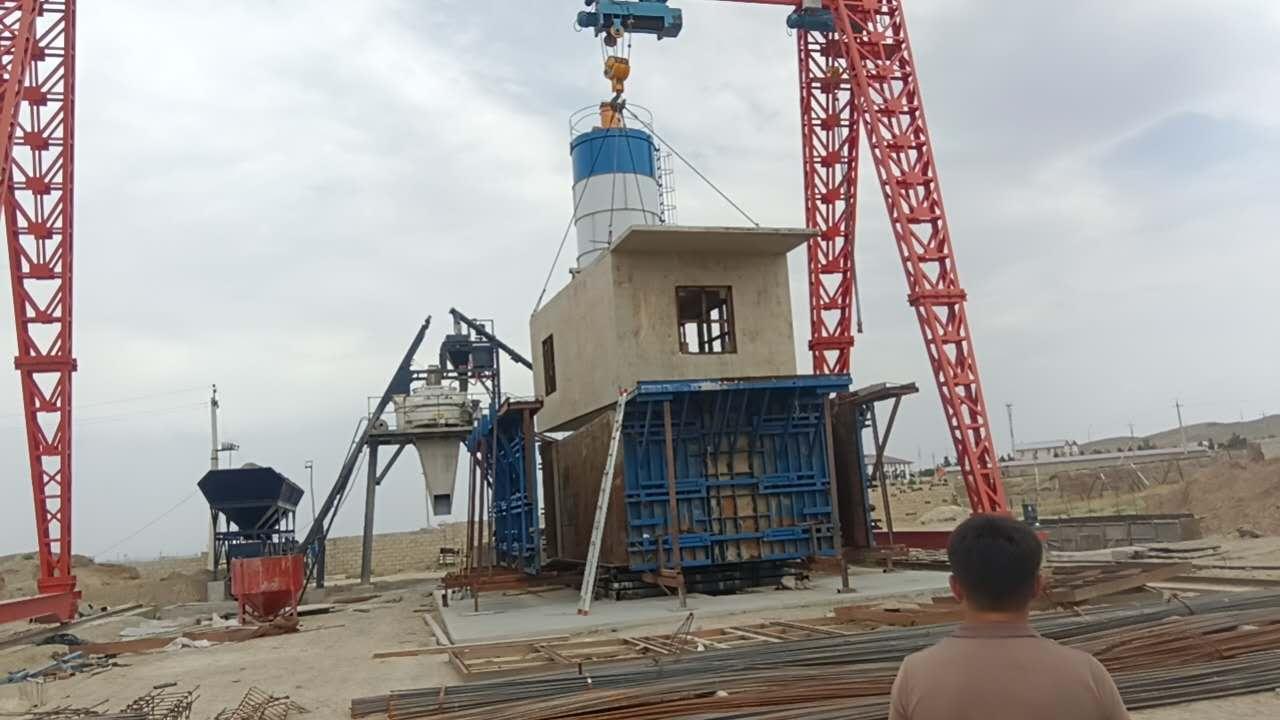
Material handling isn't just about moving things from point A to point B anymore—it's the most fragile link in any schedule. Most project delays don't start with slow work on site; they start with materials showing up in the wrong place at the wrong time. Take a large steel beam that arrives three days early: it blocks access lanes and forces crews to work around it. If it shows up two days late, the crane and installation team sit idle. Either way, the critical path stretches further than anyone planned.
Modern construction and manufacturing schedules have been squeezed down to almost zero buffer. Yards that used to have room for temporary staging are now tight, and lean practices demand just-in-time delivery. Any inefficiency in the handling system—whether it's a forklift, an overhead crane, an AGV, or even a poorly planned manual route—shows up immediately in daily completion rates. Consider a forklift battery swap that takes fifteen minutes. Sounds trivial, but in a busy warehouse running twenty cycles a day, that's five hours of lost handling time, which stops the next operation cold.
What makes it worse is that material handling has quietly shifted from muscle work to a data-driven function. If the handling team lacks real-time tracking tools, materials get mislabeled, staged in the wrong spot, or forgotten in a temporary laydown area. A whole project can pause for half a day because a few boxes of critical fasteners can't be located. Teams that still treat material handling as back-office logistics—rather than a core part of the critical path—lose control of their timelines without even noticing. The ones who stay on schedule now track handling nodes as formal milestones, not afterthoughts.
Inside the Shift to Smarter, Lighter Modular Equipment
Modular equipment has quietly evolved from a niche concept into a practical necessity for teams working in unpredictable environments. The shift isn’t driven by a single breakthrough, but by a growing frustration with tools that demand too much space, weight, and setup time. Engineers now design components that click together with minimal hardware, using reinforced polymers and aircraft-grade aluminum to cut mass without sacrificing load capacity. A camera cage that once weighed three pounds now sits at half that, yet holds the same lens securely. The real change is a mindset: every gram and every connection point is questioned, because field crews often carry their kit for miles before the first shot is even framed.
Lighter doesn’t mean flimsy. The new wave of modular gear leans on smart material choices and stress-tested joints that handle repeated assembly and disassembly. Rather than offering hundreds of confusing pieces, brands now focus on a core set of building blocks that adapt to different rigs—shoulder mounts, gimbals, or tripods—without a toolbox. Quick-release plates have become more tactile, with audible clicks that confirm a secure lock. Cables route through hollow rails, and battery plates slide into dovetail slots. This simplification reduces mental overhead on set, letting operators reconfigure a setup in under a minute instead of wrestling with hex keys. The result is gear that feels less like a puzzle and more like an extension of the workflow.
Perhaps the most telling sign of this shift is how older, heavier equipment is being retired not because it broke, but because it became impractical. A decade ago, a fully loaded camera rig could easily exceed fifteen pounds; today, a comparable setup with modular components often stays under eight. That difference ripples outward—smaller tripods, lighter sliders, and even smaller travel cases. For solo shooters and small crews, the benefit isn’t just comfort. It’s the ability to move quickly between locations, pack into tight vehicles, and avoid checked baggage fees on flights. Modularity and lightness together create a kind of quiet resilience, where the equipment adapts to the shoot rather than forcing the shoot to adapt to the equipment.
How Leading Manufacturers Tackle the Customization Conundrum
Mass customization sounds great in a boardroom, but on the plant floor it often collides with hard economics. Leading manufacturers sidestep this by treating product architecture as a strategic weapon. Instead of bolting on options after the fact, they design modular platforms where common cores stay identical until the final assembly stages. This delayed differentiation means a single production line can yield hundreds of variants without choking on changeover time. It’s less about flexible machines and more about smart sequencing—deciding exactly when a product becomes unique.
The real differentiator isn’t just the physical line; it’s the data thread that runs through it. Top performers wire customer configurators directly into shop-floor execution systems, so a custom order in Stuttgart triggers the right pick list in a Mexican plant within seconds. They also give operators augmented-reality overlays that show exactly which bracket or harness goes on this specific unit, cutting misbuilds and mental load. Pair that with a supplier portal that shares variant-level demand in near real time, and you stop treating custom parts as exceptions—they just become part of the normal replenishment pulse.
What separates the best from the rest is an almost obsessive pruning of complexity. These manufacturers review variant profitability every quarter, not every fiscal year. Low-margin, low-volume options get killed or consolidated, while high-value personalization gets pushed further downstream where it’s cheapest to execute. That rhythm—constantly asking “does this option earn its place?”—keeps the catalog fresh without letting customization spiral into chaos.
The Sustainability Angle Most Equipment Makers Overlook
The sustainability conversation in equipment manufacturing tends to stop at energy ratings and recycled content. Walk through any trade show and you will hear about lower fuel consumption or plastics recovered from the ocean. That is fine, but it misses a much larger lever: whether the machine can be kept running for ten or fifteen years without a complete teardown. Most makers still weld components that should be bolted, lock diagnostics behind dealer-only software, and discontinue spare parts shortly after a model leaves production. From a carbon accounting view, the embodied emissions in steel, circuit boards, and rare earth magnets often outweigh the operational savings from a marginal efficiency gain. Making a machine that can be repaired, upgraded, and remanufactured may not win a design award, but it avoids the most wasteful outcome—a five-year-old asset headed for scrap because a $40 sensor is no longer available.
A sharper angle is software-induced obsolescence. Even when hardware remains sound, OEMs can end security updates or require proprietary cloud services, pushing equipment into early retirement. Extending software support, publishing diagnostic codes, and allowing third-party repair are not just right-to-repair talking points; they are direct sustainability actions. One heavy equipment line that switched to modular drivetrains saw remanufacturing rates climb and downstream dealers build profitable refurbishment programs. The overlooked truth is that sustainability in equipment is less about what goes into the machine at the factory and more about how long the machine stays useful after it leaves.
What the Next Wave of Modular Machinery Will Unlock
The next generation of modular machinery isn't just about swapping out a motor or adding a conveyor section. It's about machines that self-describe their capabilities, negotiate control handoffs, and rearrange physical workflows on the fly. A packaging module from one vendor can slot into a filling line from another, and the combined system recalibrates without a custom integration project.
That kind of plug-and-produce flexibility changes how factories think about capacity. Instead of buying a dedicated line for a single product and running it for years, manufacturers can assemble short-lived cells for seasonal demand, clinical trial batches, or regional variants. When the run ends, the modules go back into a pool and get reconfigured for the next job.
The real unlock is operational liquidity. Capital tied up in bespoke automation becomes more like a shared resource, moving where it's needed. Smaller producers gain access to precision equipment that was previously only viable at high volumes, while larger plants can test new formats without betting an entire line. Modular machinery, in this sense, becomes a practical foundation for more resilient and responsive production networks.
FAQ
The top names tend to offer turnkey production systems that combine concrete casting, tilting tables, curing chambers, and automated transport into one coordinated line. Smaller suppliers often focus on single machines, while leading manufacturers provide software integration, remote diagnostics, and scalable layouts that grow with a factory's output.
Instead of relying on manual labor to rotate heavy wall panels, automated tilting tables let a small crew position and strip large concrete elements safely. This reduces cycle times, lowers injury risk, and allows manufacturers to keep tolerances tight on repetitive modular units.
Magnetic side rails, laser-guided positioning systems, and integrated lifting anchors are helping factories produce panels that fit together with less field adjustment. Some lines now embed electrical conduits and window frames during casting, so modules arrive on site closer to a finished state.
Beyond the purchase price, look at changeover speed between unit types, compatibility with BIM software, energy use during curing, and whether the supplier has regional service technicians. An ideal partner will run trial cycles with your own mix designs before installation.
Manual concrete pouring creates bottlenecks and inconsistent compaction in multi-story wall panels. Automated distribution systems, often paired with vibration tables and controlled curing, ensure uniform density and reduce waste, which matters when factories run multiple shifts.
Several leading manufacturers now offer compact, reconfigurable lines that fit into existing warehouses. They provide phased investment plans, operator training, and digital twin simulations, allowing a startup to begin with a few stations and add capacity as orders grow.
Modern lines recycle excess concrete, use low-temperature curing to cut energy consumption, and support the use of low-carbon cement blends. Some manufacturers also design molds for disassembly, so steel forms can be repurposed when a product line changes.
Conclusion
The modular housing sector has reached a point where factory floor precision determines whether a project ships on schedule or stalls for weeks. Among the top ten equipment manufacturers driving this shift, the common thread is an obsessive focus on material handling that can adapt to tighter build timelines without sacrificing accuracy. Laser-guided cutting stations, automated panel lifters, and adjustable jigs now let crews reposition wall sections in minutes instead of hours, which directly addresses the pressure small and mid-sized factories feel when orders spike. These companies aren't just selling machines; they're rethinking how modules move from raw stock to finished units. Lighter frames, battery-powered trolleys, and modular conveyor segments reduce floor congestion and make reconfiguring a production line feasible between product runs.
Customization has long been the industry's headache—every client wants a slightly different floor plan—but leading manufacturers now embed flexible tooling and software-driven stops into their equipment, so switching from one module type to another no longer requires a full teardown. On the sustainability side, the overlooked angle isn't just using recycled steel or low-VOC coatings; it's designing equipment that consumes less energy during idle periods and can be retrofitted rather than replaced when specs change. Looking ahead, the next wave of modular machinery will likely pair real-time sensor feedback with predictive maintenance, unlocking throughput gains that were impossible with older, heavier rigs. Taken together, these ten manufacturers are setting the pace by treating equipment as an integrated system rather than isolated tools.
Contact Us
Contact Person: Bill
Email: [email protected]
Tel/WhatsApp: 8615063653526
Website: https://www.qianfengjd.com