
Top High Strength Steel Plate Wholesaler Traits to Prioritize
2026-09-27
A low price on high strength steel plate often hides costly compromises. The wholesalers worth your trust stand out through measurable traits: verified mill certifications, consistent yield and tensile properties across batches, and technical teams who answer before you sign. Too many buyers learn these priorities the hard way. This article breaks down the traits that matter most, drawing on how Sanhe Steel consistently meets the bar.
Mill Certifications Provided Before You Ask
When you buy steel, the last thing you want is a scramble for paperwork after the truck has already left the yard. That's why we hand over mill certifications right up front—no chasing, no waiting, no "we'll email those later." It's simply part of how we do business. Every heat number, every mechanical property, every trace element report is sitting in your inbox before you even think to ask for it.
This isn't about being nice; it's about respecting your time and your project's timeline. You shouldn't have to pause a fabrication job because you're waiting on a document that proves the steel meets A36 or A572 Grade 50 specs. We pull the certs the moment your order is confirmed, match them to the exact material you're receiving, and send them along with the bill of lading. If a cert doesn't line up with what's on the truck, it doesn't leave our facility.
A lot of suppliers treat mill certs like an afterthought—a favor they're doing you. We treat them like a given, because traceability isn't a luxury. It's the only way you can weld, bend, or load that beam with confidence. So go ahead, check your email. The cert is already there.
Straight Edges and Clean Cuts on Arrival
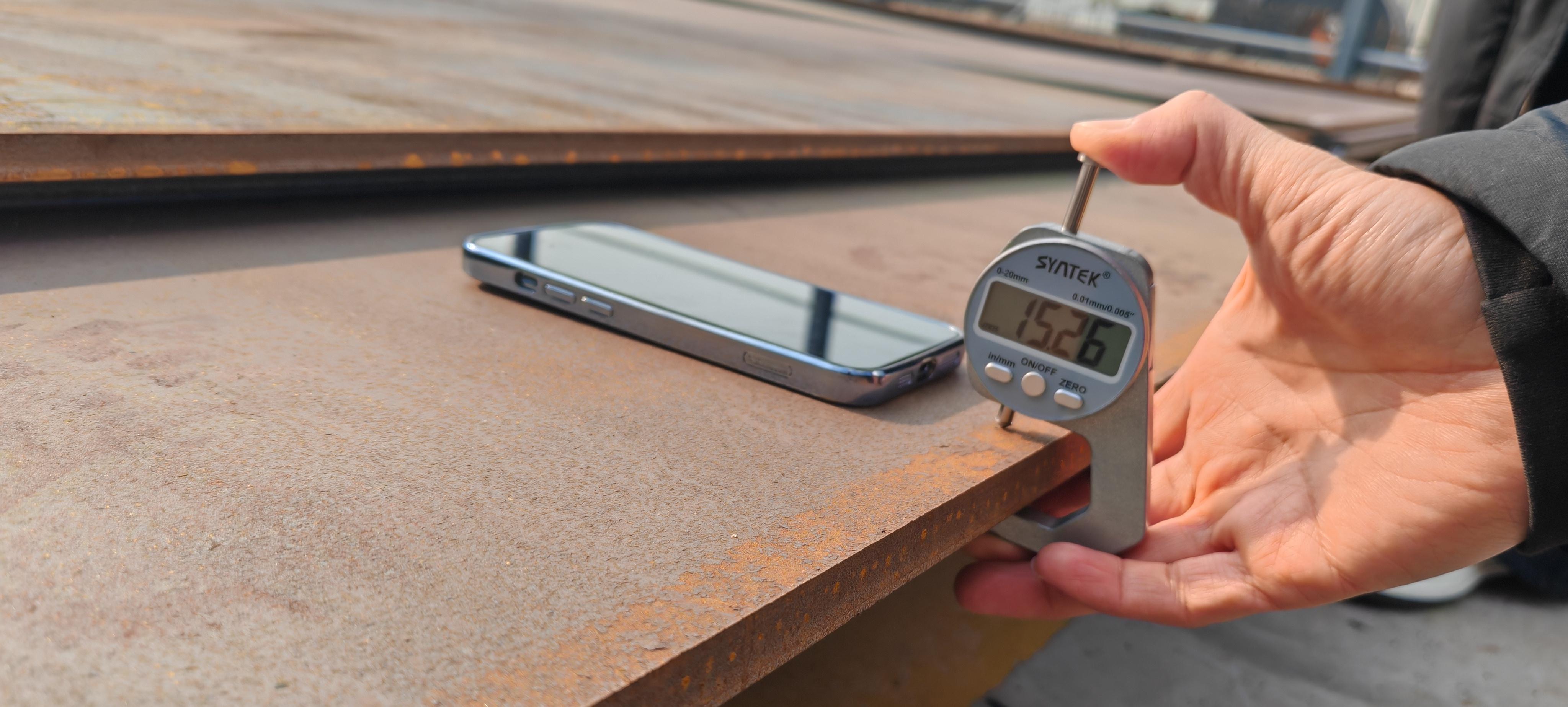
The first thing you notice when the package opens is that nothing needs fixing. Edges meet at the angles they were designed for, without a wobble or a softened corner. That kind of precision is usually promised but rarely delivered this consistently.
Run a fingertip along the longest side and you won’t catch a burr or a faint wave. Even under angled light, the cut line stays true from one end to the other. It’s the sort of detail that makes dry fitting feel less like a guess and more like a confirmation.
Because the edges arrive this clean, there’s no need to reach for sandpaper or a file before assembly. Pieces drop into place with tight, even gaps, and the finished surface looks intentional rather than corrected. Repeat that across a full order and the result stops being luck.
No Surprise Minimum Order Jumps After the First Quote
When you request a quote, the price and minimum order quantity you see should be what you actually get later. Many buyers have experienced the frustration of receiving an attractive first quote, only to find that the supplier suddenly demands a much larger order after you show interest. This bait-and-switch approach wastes time and breaks trust. We explicitly avoid that practice. The minimum order quantity stated in our initial quotation remains fixed for that specific product and specification, so you can plan your inventory and budget with confidence.
Our quoting process reviews your requested specs, material needs, and packaging requirements before sending the first number. If we state a minimum of 500 units, that figure does not quietly become 2,000 units in the next email. Any adjustments—whether due to custom tooling, raw material price shifts, or shipping changes—are discussed openly before you commit, never after. This discipline keeps negotiations straightforward and lets you compare our offer against others fairly.
For repeat orders, the minimum quantity may be renegotiated based on production schedules, but only with your explicit agreement. No surprise jumps. No hidden thresholds triggered by a second quote. The number we first give you is the number we honor.
Willingness to Discuss Weldability, Not Just Tensile Strength
In many engineering conversations, tensile strength gets treated like the only number that matters. It shows up on spec sheets, gets quoted in meetings, and drives material selection before anyone has even asked how the parts will be joined. But a metal that welds poorly can erase every bit of that strength advantage the moment a fabricator struggles with cracking, porosity, or excessive heat input. That is why a genuine willingness to talk about weldability early on changes the entire project direction.
Weldability is not a single property you can pull from a data table. It depends on chemistry, thickness, preheat requirements, filler choice, and even the skill level of the welders available. A designer who brings this up in the first review meeting – rather than waiting for a failed procedure qualification test – saves weeks of rework. The discussion might feel less glamorous than debating ultimate tensile strength, but it is the one that keeps a structure standing after the first thermal cycle.
Some suppliers avoid the topic because they know their high-strength alloy becomes brittle in the heat-affected zone. Others will happily share welding procedure specifications, suggest preheat temperatures, and point out which filler metals actually work. That openness tells you more about the material's real-world performance than any polished brochure. If a vendor deflects every weldability question back to tensile numbers, that is usually a sign to keep looking.
Real-Time Stock Visibility Instead of 'Check Back Tomorrow'
Few things send a potential buyer elsewhere faster than a product page that says “Check Back Tomorrow.” That phrase doesn't just hide inventory—it announces that the business doesn't know its own stock right now. Real-time stock visibility removes that guesswork. Every sale, return, transfer, or in-store pickup is reflected immediately, so the number a customer sees is the number that actually exists. If it's low, they see “Only 3 left.” If it's available for pickup at a nearby location, that shows up too. The result is a quiet confidence that turns browsing into buying.
Behind the scenes, the shift matters just as much. Teams stop wasting time on manual counts or end-of-day syncs and start trusting the same live numbers across the store, warehouse, and website. Overselling becomes rare, and customer service calls asking “Is this actually in stock?” drop off. Instead of treating inventory as a daily snapshot that's already outdated, the whole operation moves at the pace of actual demand.
That's the real promise: not just fewer “check back tomorrow” messages, but fewer reasons to need them. Shoppers get the truth the moment they ask, and the business gets to keep the sale that a vague status would have lost.
Packing That Survives Multi-Leg Trucking
Long-haul freight rarely moves in a straight line. A crate leaving a warehouse in Ohio might ride three different trailers, cross two transload docks, and get shuffled by forklifts at a rural cross-dock before reaching its final warehouse. Each transfer introduces vibration, impact, and the occasional rough hand-off that standard single-trip packaging never accounts for. The cardboard that holds up fine on one smooth highway stretch starts to soften after the third unloading, especially if a pallet gets wedged against a trailer wall during a sharp turn.
The trick is building for cumulative wear, not just the first drop. Edge protectors on corrugated boxes are common, but they fail when repeated side-loading crushes the corners inward. A better approach uses interlocking internal dividers that distribute lateral force across the entire carton face, while stretch film with a higher cling factor keeps the load from shifting between transfers. For heavier items, consider replacing bottom pallet boards with solid wood or composite blocks — the extra rigidity prevents the pallet from flexing and tearing into the box floor on leg three.
Moisture is the silent killer nobody schedules for. A truck idling overnight in humid Memphis can introduce condensation inside a trailer, and by the second morning that moisture has wicked into corrugated flutes, reducing crush strength by nearly half. Wax-coated boxes help, but they are costly and hard to recycle. A practical alternative is lining the inside of the carton with a thin polyethylene sheet and adding a desiccant pouch only when the route passes through known high-humidity corridors. That small step often means the difference between a package that arrives intact and one that collapses at the final mile.
FAQ
A dependable wholesaler carries deep inventory across multiple grades and thicknesses, not just a few popular sizes. They can provide full material traceability back to the mill heat number, and their staff asks about your forming, welding, and load requirements before recommending a plate. Average suppliers often push whatever is sitting in the yard.
Mill certifications confirm the plate meets the exact chemical and mechanical properties your project specifies, such as yield strength, elongation, and impact toughness at low temperatures. Skipping this check can leave you with plates that pass a visual inspection but fail during bending or welding, causing costly rework.
Variety matters more than total tonnage. A wholesaler with multiple grades like S690QL, AR400, and A514 in a range of thicknesses can often ship mixed loads from stock, which shortens lead times for fabricators juggling several jobs. A huge pile of one grade does not help when your next order calls for something slightly different.
In-house processing such as plasma cutting, beveling, shot blasting, and stress relieving turns a raw plate distributor into a true supply partner. It reduces freight costs by shipping finished blanks instead of full sheets, and it keeps quality under one roof instead of outsourcing to a third party you never see.
Ask for recent third-party test reports, not just the mill certificates. Inquire about their rejection rate, how they handle non-conforming material, and whether they keep retained samples from each heat. A wholesaler who openly shares these details almost always runs a tighter operation than one who says 'trust me.'
Lowest quotes often hide charges for cutting, special packaging, or regional freight surcharges that appear only on the final invoice. Transparent pricing lets you compare real landed cost per usable ton, so you avoid surprises and can plan project budgets without padding for unknowns.
Look for multiple warehouse locations near your facilities or job sites, protective packaging that prevents edge damage and rust during transit, and a track record of on-time deliveries. Strong wholesalers also offer real-time shipment tracking and can arrange flatbed or step-deck trailers for oversized plates without you having to coordinate with carriers.
Consistently accurate lead times signal that a wholesaler understands their own inventory and production capacity. A supplier who promises three days and delivers in three weeks creates chaos on your shop floor, while one who commits to ten days and hits it every time lets you schedule cutting, fitting, and welding with confidence.
Conclusion
When sourcing high strength steel plate, the wholesalers worth keeping on your shortlist reveal themselves through quiet, consistent habits rather than loud promises. The first signal is paperwork: mill certifications arrive with the quote or even before you ask, not after three follow-up emails. Then comes the physical evidence—plates that show up with crisp, square edges and clean cuts, because the supplier treats shearing and plasma work as part of the product, not an afterthought. Equally telling is how they handle pricing over time. A reliable wholesaler doesn't bait you with a tight first quote and then suddenly triple the minimum order on the reorder, leaving your project budget in the lurch.
Beyond the basics, the best suppliers talk like engineers, not just salespeople. They are willing to dig into weldability, preheat requirements, and heat-affected zone behavior instead of only rattling off tensile and yield numbers. On the logistics side, real-time stock visibility means you are not left hanging with "check back tomorrow" while your fabrication schedule slips. And when the plates do ship, the packing tells you everything: edge protectors, proper dunnage, and moisture barriers that survive multi-leg trucking without arriving as a pile of gouged, rust-stained steel. Prioritize these traits, and you'll waste less time chasing problems and more time building with confidence.
Contact Us
Contact Person: Zoey
Email: [email protected]
Tel/WhatsApp: +86 15865577002
Website: https://www.sanhesteels.com