

Top Recommended Polycarboxylate Superplasticizer List for High-Performance Concrete
2026-08-29
Picking the right polycarboxylate superplasticizer can make or break your high-performance concrete mix. After testing dozens of options, we’ve narrowed down the list to the ones that truly deliver on slump retention, early strength, and workability. Among them, HAISEN stands out for its consistent performance in demanding applications. Here’s what made the cut—and why it matters for your next pour.
The Science That Makes Polycarboxylate Superplasticizers Essential for High-Strength Concrete
Polycarboxylate superplasticizers achieve their remarkable water-reducing effect through a combination of electrostatic repulsion and steric hindrance. The polymer backbone carries carboxylate groups that adsorb onto cement particle surfaces, imparting a negative charge that forces particles apart. Meanwhile, the long polyethylene oxide side chains extend into the pore solution, creating a physical barrier that prevents cement grains from re-agglomerating. This dual mechanism allows a drastic reduction in mixing water—often by 30% or more—without sacrificing workability, which directly lowers the water-to-cement ratio and leads to a denser, higher-strength hardened matrix.
Beyond simple dispersion, these superplasticizers also influence cement hydration kinetics in ways that are critical for high-strength concrete. By keeping cement particles uniformly suspended, they ensure more complete hydration and a more homogeneous distribution of hydration products. The reduced water content minimizes capillary porosity, while the improved particle packing increases the volume of calcium silicate hydrate gel—the primary strength-giving phase. Additionally, polycarboxylate molecules can retard early hydration slightly, allowing better slump retention and more controlled heat release, which is especially beneficial in large pours or hot weather.
The scientific advantage of polycarboxylate superplasticizers becomes even clearer when considering their molecular tunability. Unlike older naphthalene or melamine-based products, polycarboxylate polymers can be engineered with varying side-chain lengths, backbone charge densities, and grafting ratios to match specific cement compositions, supplementary cementitious materials, or application requirements. This adaptability allows formulators to optimize dispersion, adsorption, and slump-life for high-strength mixes that often contain silica fume, fly ash, or slag. In practice, that means concrete producers can reliably achieve compressive strengths exceeding 80 or 100 MPa while maintaining the necessary rheology for placement and compaction—something that would be nearly impossible with conventional water reducers.
Traits That Separate Good Polycarboxylate Superplasticizers from Great Ones
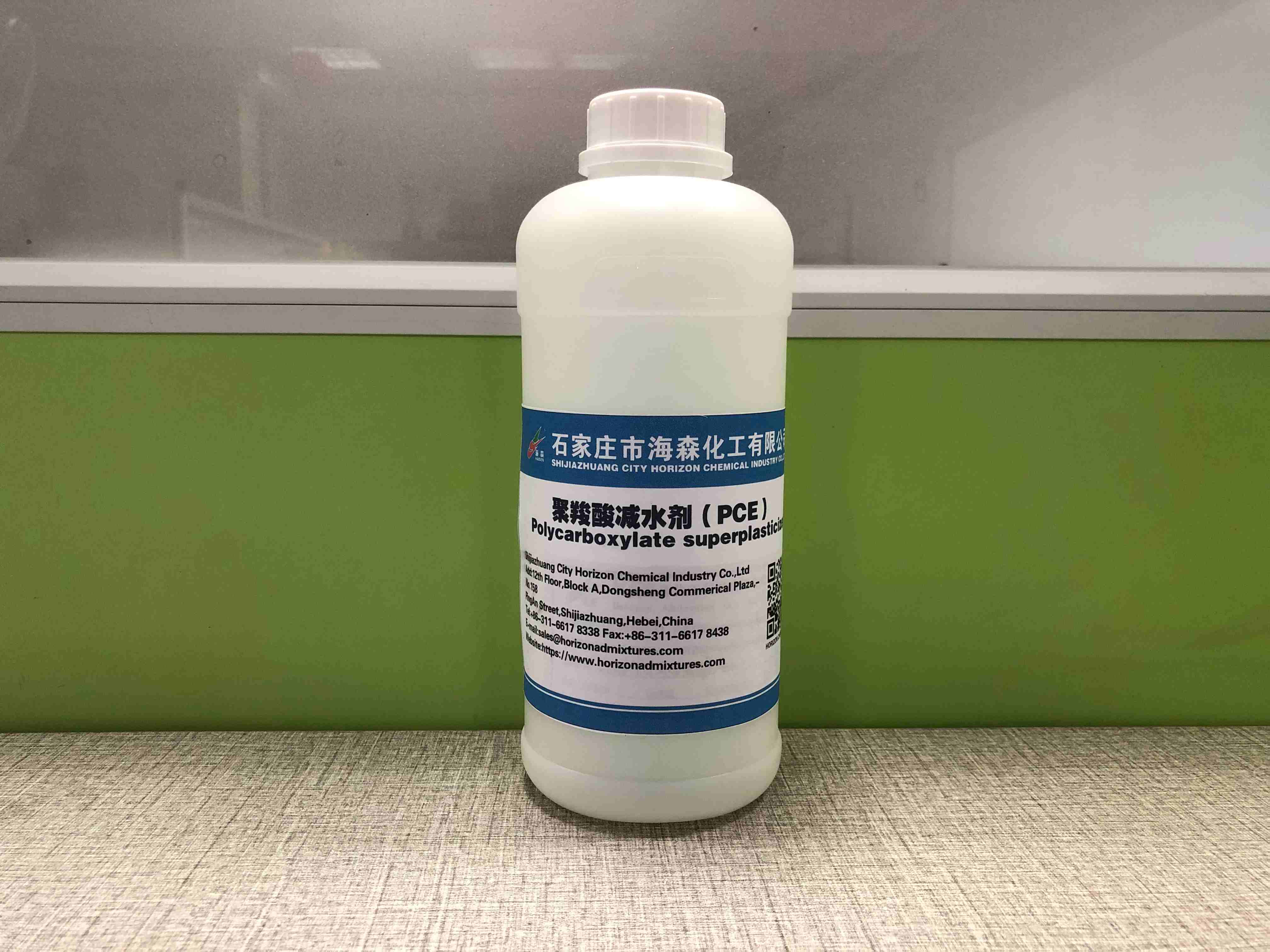
A good polycarboxylate superplasticizer gets the job done—it disperses cement particles, cuts water demand, and keeps slump workable long enough for placement. But the really great ones behave less like a chemical additive and more like a well-tuned instrument. They respond predictably to small dosage changes, hold their performance across a range of cements and aggregate fines, and don't fall apart when the mixer runs a few minutes longer than planned. The difference often comes down to polymer architecture: the ratio of backbone to side chains, the length and density of those grafted chains, and how cleanly the molecule releases its active groups over time. A great product doesn't just meet the spec on day one; it keeps behaving the same way on day forty, with a different batch of cement, under a hotter sun.
Another trait that separates the exceptional from the merely adequate is robustness under real job-site stress. Good superplasticizers can show excellent water reduction in a clean lab trial, but great ones shrug off variations that would make a lesser product stumble—higher clay content in the sand, slightly elevated temperatures, or a delay between batching and pouring. They maintain viscosity without turning the mix sticky, and they don't trigger sudden slump loss when the concrete sits in the truck. This stability comes from a carefully balanced molecular design, often with tailored acid-to-ester ratios and controlled molecular weight distribution. It’s the difference between a product that works when everything goes right and one that works when almost nothing does.
Finally, great polycarboxylate superplasticizers offer more than just flow—they open up formulation freedom. Instead of forcing the concrete producer to adjust water, sand, or cement just to accommodate the admixture, a truly great product adapts to the mix. It allows lower water-cement ratios without sacrificing pumpability, supports high early strength without excessive retardation, and plays well with other additives like air entrainers or set accelerators. This versatility doesn't come from dumping more active polymer into the mix; it comes from designing the molecule so that its dispersing power and its interaction with hydration products stay balanced. In the end, the best superplasticizer is one you forget is there—because the concrete just does what you need it to do, batch after batch.
Side-by-Side Review of Polycarboxylate Superplasticizers for High-Performance Applications
Comparing polycarboxylate superplasticizers side by side reveals how subtle differences in molecular architecture translate into significant performance gaps in high-strength concrete. Traditional naphthalene-based products rely on electrostatic repulsion, but modern PCEs use steric hindrance from grafted side chains to disperse cement particles more effectively. When two PCEs with similar charge densities but different side-chain lengths are tested under identical mix designs, the one with longer polyethylene oxide chains typically retains slump for an extra 30 to 45 minutes, even in hot weather. This matters because high-performance applications rarely allow for retempering, and a delayed slump loss can mean the difference between a successful deep foundation pour and a rejected batch.
Another key variable in a direct comparison is the acid-to-ester ratio and how the polymer backbone is sequenced. Random copolymers tend to offer better initial water reduction, while block or gradient structures provide more controlled adsorption onto early hydrating phases like ettringite and monosulfate. In ultra-high-performance concrete with silica fume and low water-to-binder ratios, a slightly lower acid content can prevent over-dispersion that leads to segregation, yet too little acid reduces early strength development. Side-by-side rheology tests using a concrete rheometer show that the best-performing PCE for self-consolidating mixes often sacrifices a few percentage points of water reduction to achieve a lower yield stress and more stable viscosity over the first hour.
Durability metrics also shift when comparing PCEs head-to-head. Because high-performance concrete is often exposed to chloride ingress or freeze-thaw cycles, the superplasticizer's effect on air void spacing and capillary porosity cannot be ignored. A PCE with a higher graft density may produce excellent flow but also trap more air at the aggregate-paste interface, leading to lower compressive strength after 28 days despite identical mix proportions. Conversely, a more linear PCE can reduce bleeding and improve the interfacial transition zone, but requires careful dosing to avoid rapid stiffening. Ultimately, a true side-by-side review must include not only fresh-state workability but also hardened properties like modulus of elasticity, shrinkage, and resistance to carbonation, as these reveal hidden trade-offs that single-product data sheets never expose.
What Leading Polycarboxylate Superplasticizers Deliver from Slump Retention to Early Strength
Modern polycarboxylate ether (PCE) superplasticizers have moved far beyond simple water reduction. The best-performing products now balance two competing demands that used to require separate admixtures: keeping concrete workable long enough for transport and placement, while still accelerating strength gain once the mix is in place. This shift comes from molecular design tweaks—adjusting side-chain density, backbone length, and acid-to-ester ratios—that allow the polymer to delay cement hydration just enough during the first hour or two, then release the cement grains for rapid early strength development. Contractors notice the difference immediately: less re-tempering on site, fewer cold joints, and formwork that can be stripped a full day earlier without sacrificing finish quality.
Slump retention in PCEs is no longer achieved by simply overdosing a standard dispersant. That old approach often led to excessive retardation, bleeding, or unpredictable setting times. Instead, leading formulations use a controlled-release mechanism where the carboxylic acid groups are temporarily shielded—by esterification or by incorporating hydrophobic segments—and only become fully active as the pore solution’s pH rises after mixing. This built-in delay gives the concrete a stable slump profile over 60 to 120 minutes, even in hot weather, while the same polymer chain later contributes to a denser C-S-H gel structure. Lab trials show that mixes with these advanced PCEs can reach 70% of their 28-day compressive strength within 48 hours, a figure that older naphthalene-based or first-generation PCEs struggle to match.
What truly separates leading products is their robustness across cement chemistries. With clinker variations, supplementary cementitious materials, and even recycled aggregates becoming common, a superplasticizer that works beautifully on one mix can fail on another. The new generation of PCEs uses a broader molecular weight distribution and slightly higher charge density to resist sulfate interference and competitive adsorption from clay or fly ash. The result is a predictable delivery from slump retention to early strength—not just in a controlled lab test, but in the messy reality of a ready-mix truck sitting in traffic on a summer afternoon. That reliability is why more producers are willing to pay a premium for these admixtures, and why they are quietly becoming the default choice for high-performance concrete projects.
Dosage Errors That Undermine Polycarboxylate Superplasticizer Performance
Getting the dosage slightly wrong with polycarboxylate superplasticizers often shows up as two opposite problems. Add too little and the mix stays stiff, forcing crews to add water on site—which quietly wrecks strength and durability. Add too much and the concrete can segregate, bleed, or set so slowly that finishing schedules fall apart. The window between “not enough” and “too much” is narrower than many plant operators expect, especially when sand moisture or aggregate fines shift from load to load.
Another common slip is treating the dosage as a fixed number instead of a moving target. A dose that worked for yesterday’s cement may not work for today’s, because variations in C3A content, sulfate balance, or even cement temperature change how much polymer actually gets adsorbed. When batching systems are calibrated by volume but the product is dosed by weight, or when the line is flushed with water and that rinse water ends up in the next load, the real concentration can drift far from the mix design.
The practical fix isn’t complicated: run frequent mini-slump or spread tests at the plant, log actual water and admixture doses per load, and adjust for aggregate moisture before batching. Small adjustments made early—rather than chasing slump at the jobsite—keep the polycarboxylate working in its effective range, where it delivers the workability and strength retention it’s actually capable of.
Field-Proven Mixing Strategies for Polycarboxylate Superplasticizers in High-Performance Concrete
On jobsites where high-performance concrete must flow reliably without sacrificing early strength, the timing of polycarboxylate superplasticizer addition often determines whether a mix remains workable or turns into a sticky, segregated mass. Crews who have poured thousands of cubic meters know that dumping the entire dose into the initial batching water can lead to rapid slump loss and unpredictable air content. Instead, they hold back roughly thirty percent of the superplasticizer and introduce it after the cement and aggregates have been wet-mixed for about two minutes. This split addition lets the polycarboxylate molecules adsorb onto hydrating grains more gradually, preserving their dispersing effect well into the placement window.
Another field-tested tactic involves sequencing the superplasticizer with a portion of the mixing water rather than injecting it as a concentrated stream. When the admixture is pre-diluted in a small side tank and added during the final third of the mixing cycle, the high shear forces distribute the polymer chains evenly across all cement particles. This approach reduces the risk of localized gel formation, which can otherwise create lumps that no amount of extra mixing will fully break down. On slipform paving and pumped column placements, contractors often pair this staged water-admixture blend with a slightly higher aggregate moisture correction, giving the mix a small reserve of free water that the polycarboxylate can activate under sustained agitation.
Temperature also drives many decisions that look counterintuitive on paper. In hot weather, experienced batch plant operators shorten the initial dry mixing period and move the superplasticizer injection point closer to discharge, preventing the polymer from being consumed by early ettringite formation. Conversely, in cold conditions they extend the wet mixing time by up to a minute before adding the full dose, allowing the cement to reach a uniform temperature. These adjustments, refined through direct observation of truck drum torque and spread tests at the point of discharge, consistently outperform textbook mixing sequences that ignore the changing reactivity of cement and the shear history inside the mixer.
FAQ
They rely on a comb-shaped molecular structure with carboxylate groups and long side chains. That lets them disperse cement particles through electrostatic repulsion and steric hindrance, so you get much higher water reduction at lower dosages. Naphthalene-based products mostly work by electrostatic repulsion alone and tend to lose slump faster. With polycarboxylates, you can hit water-cement ratios below 0.30 without turning the mix into paste, and the open time stays workable longer.
Look at water reduction rate under realistic dosage, not just the maximum advertised. Check slump retention over 60 to 120 minutes at your specific ambient temperature, because some products fall off a cliff after 45 minutes. Also test the compatibility with your cement and supplementary cementitious materials, especially if you're using high volumes of fly ash or silica fume. Don't ignore viscosity: a product that drops water demand but makes the mix sticky creates pumping and finishing headaches. Finally, check the air content stability; some PCEs entrain too much air or lose it unpredictably.
Lab conditions rarely include the same shear history, temperature swings, or delays between batching and placement. A PCE might show excellent initial slump in a controlled mixer, but on site the truck agitation, long haul times, and hot weather can break down the dispersion. Also, aggregate moisture changes the effective free water, and some PCEs are more sensitive to that than others. Robotic total stations and rheometers are useful, but the cheapest insurance is a full-scale trial with your actual materials, batching sequence, and delivery time.
Don't assume a one-to-one substitution. PCEs are typically dosed at 0.1% to 0.3% by weight of cement, while naphthalene-based products often need 0.5% to 1.0%. Start at the low end and increase in small steps, because overdosing PCE can cause segregation, bleeding, or excessive retardation. Also check the water content in the mix design: you may be able to cut 20% to 30% of the mixing water, which changes the aggregate proportions. Run a few trial batches with the same cement lot you'll use on the project.
Yes. If you see rapid slump loss within 20 minutes despite increasing dosage, it often means the PCE is being consumed by soluble sulfates in the cement or by early C3A hydration. Another warning is strong bleeding after the mix sits for 10 minutes, indicating poor adsorption balance. Sometimes the mix looks fine initially but then stiffens suddenly during pumping, especially with high-alkali cements. A quick test: mix two small batches with different PCE types and compare slump at 0, 30, and 60 minutes under the same temperature.
Ether-based PCEs generally offer better slump retention because the side chains resist hydrolysis in alkaline pore solution. Ester-based types can release active groups more slowly, which sometimes helps with extended workability but makes them more sensitive to temperature. For high-performance concrete placed in hot weather, ether-based products are often safer. For precast where you need fast early strength and low water demand, an ester-based PCE with a shorter side chain might give better results. The key is matching the molecular architecture to the placement window.
Set up a small matrix test. Use the actual cement, fly ash, silica fume, and aggregates from the project. Keep the water-cementitious ratio fixed, and adjust only the PCE dosage to reach a target slump of 200 mm. Then measure slump at 0, 30, 60, and 90 minutes, plus visual bleeding and segregation after 15 minutes of rest. Also check rheology with a simple V-funnel or L-box if you have one. After that, cast a few cylinders for 1-day and 28-day strength. The product that gives the flattest slump curve with the least bleeding and no strength penalty is usually the right one, even if it costs a bit more per liter.
Conclusion
Polycarboxylate superplasticizers have become the backbone of modern high-performance concrete because their molecular architecture can be tuned far beyond what traditional naphthalene or melamine admixtures allow. The science hinges on a negatively charged backbone that anchors to cement grains while polyethylene oxide side chains extend into the pore solution, creating steric repulsion. That repulsion disperses fines so effectively that water demand drops by 25 to 40 percent without sacrificing workability. But not every PCE behaves the same. The best products on any recommended list share a few non-negotiable traits: consistent adsorption across different cement sources, rapid initial dispersion without excessive air entrainment, and a molecular design that holds slump for 90 to 120 minutes without delaying early strength. Products that rely solely on high charge density often look impressive in the lab but fail in field batching when aggregate fines or sulfate levels shift. That is why a top list always prioritizes robustness over raw water-reduction numbers.
Side-by-side comparisons of leading PCEs for high-performance applications tend to cluster around three functional needs: ultra-high-range water reduction for low water-cement ratios, controlled slump retention for long hauls or hot weather, and low sensitivity for variable raw materials. What separates the best from the rest is how they deliver both slump retention and early strength, since overdosing to chase slump usually causes segregation, delayed setting, and surface stickiness. The top recommended products typically include one high-range PCE for precast or self-consolidating mixes, one retentive PCE for ready-mix delivery windows, and one low-dosage option where cement chemistry varies daily. Field-proven strategies matter just as much as the admixture itself: adding the PCE after initial wet mixing, adjusting dosage by trial batch rather than by data sheet, and sequencing with viscosity-modifying agents only after the PCE has dispersed the paste. In that context, the recommended list is less about a single best product and more about matching molecular behavior to the specific high-performance concrete challenge.
Contact Us
Contact Person: Sam Lee
Email: [email protected]
Tel/WhatsApp: 86-311-6617 8338
Website: https://www.horizonadmixtures.com/