

Trunk Mat Exporter: How to Choose the Right Cargo Mat Supplier for Your Market
2026-08-24
Your cargo mat line is only as good as the supplier behind it. Yet too many importers skip the basics and end up with poor fits, flimsy materials, or dead stock. Choosing a trunk mat exporter isn’t about the lowest quote—it’s about matching production know-how to your market’s real needs. In this post, we’ll walk through the key questions to ask, with insights from FANDEWEI on what separates a reliable partner from a costly gamble.
Trunk Mat Materials That Hold Up in Real-World Use
A trunk mat that looks tough on day one but falls apart after a few grocery runs isn't worth the packaging it came in. The real test is how the material handles constant sliding, heavy loads, and the occasional spilled jug of washer fluid. Rubber mats with a high natural rubber content tend to grip cargo well and resist tearing, but they can get heavy and sometimes hold odors if not aired out. Thermoplastic elastomer, or TPE, is a solid middle ground—flexible in cold weather, easy to rinse off, and it won't crack like cheap PVC after a winter of abuse.
Carpeted trunk mats made from dense nylon or polyester blends offer a different kind of durability. They trap dirt and moisture instead of letting it slosh around, but the fibers need to be tightly woven and treated for stain resistance. Loose loops or thin backing will start to fray within months, especially if you regularly haul tools or sports gear. Look for mats with a reinforced heel pad where the cargo area meets the bumper, because that's the first spot to wear through when you're sliding heavy boxes in and out.
If you want something that genuinely holds up, pay attention to the underside too. A smooth, flimsy backing lets the mat slide forward every time you brake, which wears down both the mat and the carpet underneath. Quality mats use either a molded nibbed surface or a heavier textured backing that bites into the trunk floor. Some premium options even have a raised lip around the edge to contain spills. In real-world use, that lip is the difference between a quick wipe-down and a full trunk detail after a tipped-over gallon of paint.
Custom Cargo Mat Designs That Set Your Catalog Apart
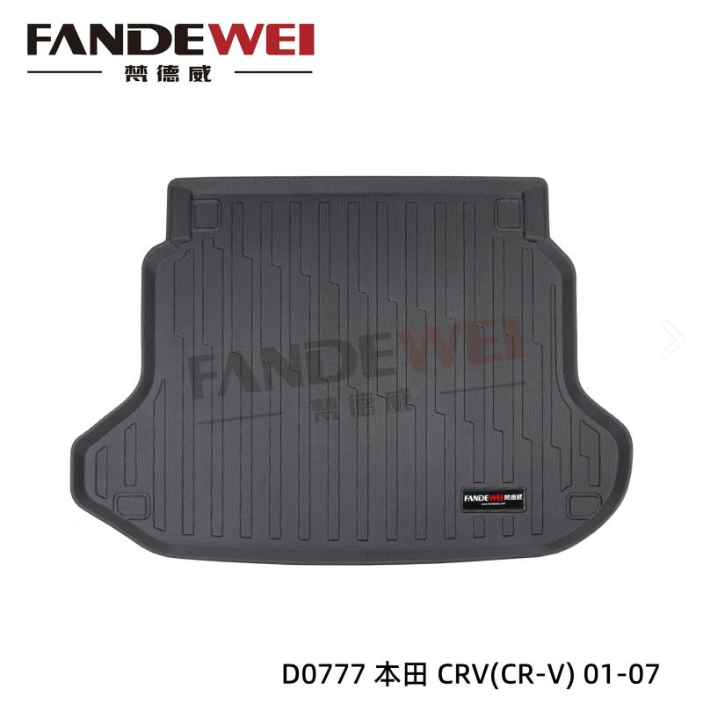
Most cargo mats look identical from five feet away—flat black rubber, generic ridges, maybe a lip around the edge. That sameness is exactly why a custom design stops a buyer mid-scroll. Think about a mat with a contoured center channel that mirrors the actual cargo floor, or a hex-pattern surface that hides scuffs better than standard diamond tread. When the shape and texture feel intentional rather than stamped out, your catalog immediately reads as curated, not copied.
Small details do the heavy lifting. A stitched perimeter in a contrast color, a recessed badge area sized for your customer’s own logo, or a two-tone inlay that maps to the wheel wells—these aren’t expensive add-ons, but they change the perceived value. Buyers who see a mat designed around a specific vehicle’s quirks won’t compare it to a $40 universal liner. They’ll compare it to the premium option they almost didn’t open.
The smartest move is to rotate a limited set of “signature” patterns every season instead of listing endless variations. One quarter, lead with deep-channel drainage for muddy climates. The next, feature a soft-touch top layer for pet owners. This keeps your catalog feeling alive and makes repeat visits feel like a new discovery, not a rehash.
Export Documentation and Compliance Without the Guesswork
Managing export paperwork often feels like navigating a maze of shifting regulations, but it doesn't have to. A clear, centralized system for generating and storing documents reduces errors before they reach customs. From commercial invoices to certificates of origin, every file should be traceable, versioned, and tied directly to the shipment details. This removes the need to guess which form is current or which clause applies to a specific destination.
Compliance works best when it is built into the workflow rather than treated as a final checklist. Automated validation against destination-specific rules catches discrepancies early, such as missing export licenses or incorrect harmonized codes. Teams can then focus on resolving exceptions instead of hunting through spreadsheets. The result is faster clearance times and fewer costly holds at the border.
Beyond day-to-day shipments, a well-structured documentation trail simplifies audits and partner reviews. When every approval, amendment, and submission is logged automatically, you can demonstrate due diligence without reconstructing the past by hand. That confidence turns export compliance from a recurring headache into a predictable, repeatable process.
Reading Supplier Behavior Before You Sign Anything
Watch how a supplier handles requests for clarity before any contract lands on the table. If simple questions about lead times, material sourcing, or payment terms get vague replies or sudden topic shifts, treat that as information. A reliable partner usually offers concrete answers, even when the news isn't flattering. Pressure to skip written confirmations or ignore standard safety data should make you pause, not move faster.
Notice whether the supplier's behavior stays consistent from first call to final draft. One week they may promise dedicated support; the next, that same promise shrinks into an extra cost or a delay. Small mismatches often show up before bigger ones. If they won't introduce you to a current client or let you inspect a recent shipment without layers of conditions, you're looking at a pattern, not an exception.
Pay attention to how they respond when you ask to adjust a clause or verify a certification. A supplier who gets defensive over reasonable requests may behave the same way after problems arise. The right time to weigh these signals is before you sign, because later the leverage moves to the other side of the table.
Field Testing Cargo Mats for Your Target Climate
Real-world testing beats lab specs every time. Take the mat out in the worst conditions your region throws at it—mud season, salt-covered roads, desert dust, or weeks of relentless rain. Watch how the material behaves when it is cold enough to crack plastic or hot enough to soften cheap rubber. The goal is not just survival, but whether the mat stays put underfoot, drains properly, and cleans up without leaving grit ground into the fibers.
Pay attention to how the mat reacts to your specific footwear and daily habits. If you live where snow and ice dominate, load the mat with wet boots and see if slush pools in the channels or spills over the raised edges. In dry, sandy climates, check whether fine particles shake out easily or cling to the texture and end up in your carpets. A mat that passes a showroom demo often fails on day five of real use simply because the climate demands a different combination of flexibility, tread depth, and lip height.
After a few weeks, flip the mat over and look for deformation, curling, or color fade from UV exposure. If the edges lift and catch your feet, or if the backing leaves marks on the original carpet, that is your sign to switch materials. The right cargo mat for your target climate should feel boring—no surprises, no constant adjustments, just a reliable layer that handles the mess without becoming part of it.
Long-Term Supplier Relationships That Protect Your Margins
When you lock in a long-term supplier agreement, you are not just securing a source of goods—you are building a buffer against the unpredictable swings of raw material costs and shipping rates. Many buyers treat suppliers as interchangeable, but that short-term mindset quietly erodes profitability every time a new vendor jacks up the price or misses a delivery window. A supplier who knows your order patterns and production cycles is far more likely to offer steady pricing, hold inventory for you during demand spikes, and flag cost-saving substitutions before they become urgent problems.
The real margin protection comes from the informal favors that never show up on a contract: a supplier who prioritizes your order when their capacity gets tight, negotiates freight rates on your behalf, or quietly absorbs a minor cost increase because you have given them consistent volume for years. These relationships also reduce the hidden administrative drag of constantly onboarding new vendors, renegotiating terms, and fixing quality issues. Over time, that operational stability is worth more than chasing the lowest quote on every single purchase order.
To make this work, treat your top suppliers like partners rather than adversaries. Share your demand forecasts early, pay on time without exceptions, and occasionally visit their facilities to understand their constraints. In return, ask for locked price ceilings on critical inputs, quarterly cost-review meetings, and a first-right-of-refusal on new materials. That combination of loyalty and structured accountability keeps your cost base predictable while competitors scramble to renegotiate every quarter.
FAQ
Focus on suppliers that offer heavy-duty rubber or TPE blends with proven resistance to cracking in cold and warping in heat. Ask for material data sheets that list temperature ranges, not just a generic 'all-weather' label.
Request a sample set for the top five vehicle models in your market and compare edge contours, anchor points, and lip heights. A supplier who proactively asks for your regional sales data or OEM part references is usually more reliable than one who claims every mat fits everything.
Yes. Ask about tooling amortization, packaging changes for retail shelves, pallet configuration, and whether the quoted price includes third-party testing or just raw production. Some exporters quote low unit prices but charge separately for mold modifications or compliance paperwork.
Look for suppliers that use spectrophotometers and keep physical color masters for each SKU. They should be able to provide delta E values and a documented process for rechecking after material supplier changes, not just a visual inspection at the end of the line.
OEM-focused suppliers often have stricter tolerances and cleaner documentation, but may be slower to adapt to new designs or small orders. Aftermarket-focused suppliers tend to offer faster prototyping and more flexible minimum order quantities, though you may need to push harder on consistency. Match the supplier's core workflow to your channel.
Flat-pack versus rolled-pack affects freight volume and end-user perception. Ask for reinforced hanging holes if you sell in retail peg displays, and check whether the supplier uses polybags with suffocation warnings already printed for your target region. These small details reduce repacking labor after arrival.
Send a technical question about a specific vehicle's trunk dimensions or a request for a modified lip height on an existing design. A supplier who answers with drawings, photos, or a counter-question within 48 hours and without chasing is likely to handle production issues well. If they respond with a generic catalog link, keep looking.
Depending on your region, ask for REACH, RoHS, or California Proposition 65 test reports, not just a statement of compliance. Also request documentation showing the exact material grade and any recycled content, because some regulations treat recycled rubber differently than virgin TPE.
Conclusion
Choosing a trunk mat supplier goes beyond comparing spec sheets. Materials that survive daily loading, temperature swings, and chemical exposure matter more than initial cost, so ask for abrasion and cold-crack test results instead of marketing claims. Custom designs, from raised edges to brand-specific tread patterns, can differentiate your catalog, but only if the factory can replicate complex molds consistently across batches. Before signing, watch how the supplier handles questions about tolerances, lead times, and raw material sourcing—hesitation or vague answers often signal potential problems later.
Export paperwork can stall shipments if the supplier lacks experience with certificates of origin, packing lists, and destination-country compliance. A supplier who proactively provides test reports and HS code guidance saves you from customs delays. Field testing remains essential: order pilot samples and run them through your target climate—hot sun, road salt, or heavy rain—to see how edges curl or colors fade. Finally, protect your margins by building relationships with suppliers who communicate openly about material price shifts and offer volume flexibility, rather than locking you into rigid contracts. The right partner behaves like an extension of your own quality control, not just a vendor.
Contact Us
Contact Person: Jet
Email: [email protected]
Tel/WhatsApp: 8619903745266
Website: https://www.fandewei.com/