

Ultrasonic Atomizing Nozzle Factory Delivers Precision Spray Technology for Diverse Industries
2026-08-20
Ask any production engineer about spray nozzles and you'll likely hear about clogging, uneven coats, or wasted fluid. Ultrasonic atomization changes that equation—and few factories have refined it as deeply as Siansonic. Their precision nozzles turn liquids into uniform micro-droplets for industries that can't tolerate variation: semiconductor coating, pharmaceutical granulation, fuel delivery, and more. The result is less waste, tighter control, and a growing list of manufacturers making the switch. What's driving this shift? The technology behind it is simpler than you might expect—but the advantages are anything but.
How Precision Spray Patterns Are Engineered from the Ground Up
A repeatable spray pattern doesn't start with a final drawing. It starts with a fluid dynamics problem: getting a liquid stream to break apart into droplets of nearly identical size, traveling at the same velocity, across a defined angle. That means the internal flow path behind the orifice matters as much as the orifice itself. Sharp edges, sudden diameter changes, or even a slight burr from machining can introduce turbulence that tears the sheet unevenly. Engineers shape the swirl chamber or pre-orifice to control tangential velocity and create a stable liquid film before it ever reaches the exit.
Material choice and tolerance stack-up become part of the spray signature. A nozzle body machined from stainless steel may hold its edge through abrasive fluids, but a ceramic insert can keep the orifice round with sub-micron repeatability after millions of cycles. We laser-drill the exit hole and then inspect it under magnification, looking for any elliptical distortion or recast layer. If the hole is off by three microns, the resulting fan angle can shift by several degrees—unacceptable for coating or cooling applications. So the process includes post-drilling honing or electropolishing to remove micro-asperities that would otherwise create streaks in the spray.
Finally, the pattern is not just designed on a screen; it is verified with high-speed shadowgraphy and laser diffraction in a controlled spray booth. Water alone won't reveal how a viscous polymer or a hot melt behaves, so tests run at actual operating temperature and pressure. Patternation rigs capture the volumetric distribution across the spray width, and any heavy center or hollow edge triggers a geometry tweak—often changing the groove profile in the swirl insert by a fraction of a millimeter. That loop between fluid simulation, precision machining, and empirical measurement is what separates a generic nozzle from one that holds its pattern run after run.
The Materials Behind Nozzles That Outlast the Competition
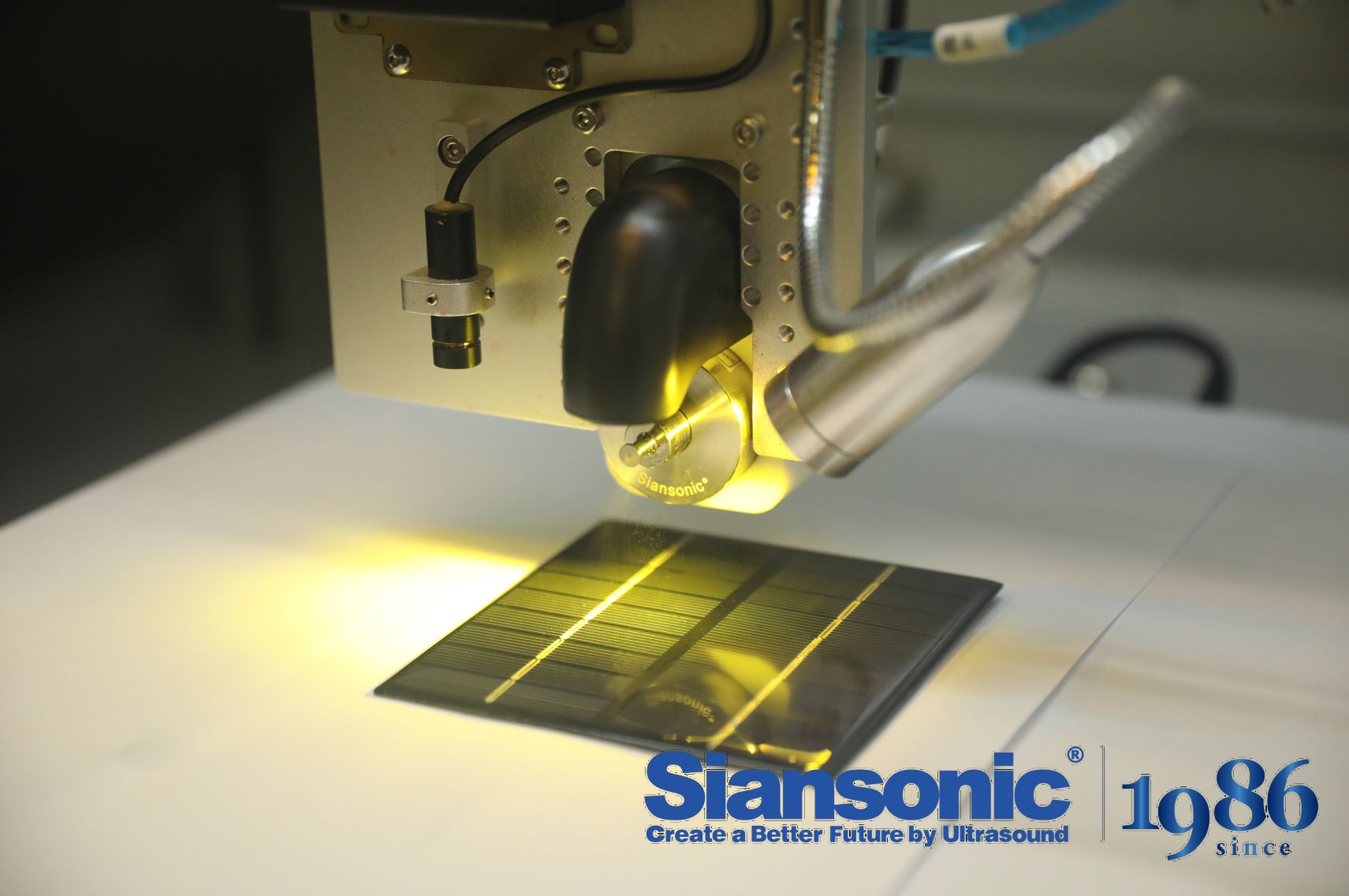
A nozzle's lifespan often comes down to what it's made of. Standard stainless steel works fine for mild fluids, but introduce abrasive slurries, high-temperature steam, or corrosive chemicals and the surface starts to pit, erode, or crack within weeks. The nozzles that keep running long after others have failed rely on more deliberate material choices: tungsten carbide for extreme slurry wear, silicon carbide for acidic environments, and proprietary ceramic blends that shrug off thermal shock. These aren't off-the-shelf metals but engineered compounds selected for the exact failure mode they're meant to defeat.
The difference isn't just hardness on paper. A well-chosen material also resists the micro-tearing caused by repeated pressure cycles, the kind of fatigue that quietly weakens a cheaper nozzle until it splits mid-operation. For instance, reaction-bonded silicon carbide offers a rare combination of high hardness and low thermal expansion, so it doesn't crack when a cold liquid hits a hot surface. Similarly, advanced cobalt-chromium alloys form a work-hardened layer under impact, actually getting tougher in the areas where erosion tries to dig in. That self-reinforcing behavior is what separates a nozzle that lasts a season from one that lasts a decade.
Many manufacturers focus on coating thickness or spray angle precision, but the real long-term advantage lies in the base material's microstructure. Uniform grain size, minimal porosity, and controlled impurity levels mean fewer weak spots for corrosion to exploit. Some high-end nozzles use hot isostatic pressing to eliminate internal voids entirely, resulting in a component that performs consistently from first spray to final replacement. When you compare maintenance logs side by side, the nozzles that outlast the competition aren't magic—they're simply built from materials that were never given a chance to fail early.
Matching Droplet Size to the Job Without Guesswork
Getting droplet size right isn't about chasing a single magic number. It's about reading the spray job itself—what you're applying, where it needs to land, and how much drift you can tolerate. A fine mist might look impressive hanging in the air, but if a light breeze carries half of it off target, you've just spent money on thin air. On the other hand, a coarse spray that hits the ground and bounces off hasn't done much good either. The real skill is tuning your nozzle and pressure so the drops are just big enough to get where they need to go, without becoming so heavy they sacrifice coverage.
Think about the surface you're treating. A waxy leaf repels water, so smaller droplets may bead up and roll away before the active ingredient can work. A porous soil, though, can handle larger drops that soak in quickly. Wind speed changes everything too: a ten-mile-per-hour gust can move a 200-micron droplet several feet off course, while a 400-micron drop might only shift a few inches. Instead of guessing, use a simple droplet-size chart from your nozzle maker, then verify with water-sensitive paper. You'll see within minutes whether you're hitting the target zone or just decorating the neighbor's fence.
The payoff comes in real numbers. Fewer clogged nozzles from trying to force too-fine a mist. Less product wasted on overspray. And better results because the chemical stays where you put it long enough to do its job. It's not about owning the most expensive sprayer—it's about knowing that on Tuesday you need a medium droplet for that herbicide, and on Friday a coarse one for the fungicide. Once that connection clicks, you stop guessing and start spraying with purpose.
Custom Configurations That Fit Existing Lines, Not the Other Way Around
The usual pitch goes something like this: here's our standard model, now let's figure out how much of your current setup you're willing to tear out. Custom configuration flips that. It starts with the line you already run every day — the uneven mezzanine support, the legacy sensor bus, the conveyor that's been running since before anyone kept digital records. The new piece gets built around those constraints, not in spite of them.
That means real conversations before any drawings are finalized. Someone needs to measure the actual clearance between the filler discharge and the labeler infeed, check which direction the existing motor rotates, and confirm whether the control panel has a spare I/O point. It's less glamorous than a full line rebuild, but it's what prevents a six-figure module from becoming an expensive doorstop. Custom work done right disappears into the line instead of standing out as an obvious add-on.
What you end up with is a machine that arrives with the right bolt pattern, the right voltage, and the right interface plug. Installation is measured in hours, not weeks. Operators don't need retraining because the controls match the rest of the plant. And when something eventually wears out, you're not stuck waiting on a special-order part from another continent. The goal isn't to sell a unique machine; it's to make the existing line run better without asking it to bend.
Real-World Use Cases Across Coatings, Medical, and Beyond
From operating rooms to offshore wind farms, functional surface technologies are quietly doing heavy lifting. In medical settings, hydrophilic and antimicrobial coatings on catheters and implants reduce infection risk and friction, while drug-eluting layers on stents help prevent restenosis over time. These are not just incremental tweaks; they change how devices interact with living tissue.
Beyond healthcare, the same underlying chemistry shows up in architectural glass that stays cleaner longer, marine hull coatings that shed barnacles without leaching heavy metals, and industrial equipment protected from corrosive chemicals. A single formulation platform can be tuned for a silicone Foley catheter or a heat exchanger in a chemical plant, which says a lot about how transferable the core principles are.
What ties these applications together is a shift toward surfaces that respond to their environment rather than simply covering it. Anti-fog coatings on surgical visors, icephobic layers on aircraft wings, and moisture-managing textiles all rely on controlling surface energy and topography at the micro or nano scale. The real-world impact is measured in fewer infections, lower maintenance costs, and longer asset life.
A Closer Look at the Testing Every Nozzle Passes Before Shipping
At the end of the production line, each nozzle enters a dedicated test bay where nothing is left to chance. Flow rate, spray pattern, pressure tolerance, and trigger resistance are measured one by one. If a unit drifts even slightly outside the accepted range, it is pulled and reworked on the spot. This stage is not a spot check; it is a full inspection, repeated on every single nozzle.
The water-based functional test simulates real use cycles, including rapid on/off switching and sustained spray at maximum rated pressure. Technicians also inspect the seal integrity under both hot and cold water, because a nozzle that holds at room temperature can still fail in the field. Threads are checked against master gauges to ensure a tight, leak-free fit on common hoses and fittings.
Only after passing all stations does a nozzle receive its final visual check, packaging, and a batch code that ties it back to the exact test records. That code is not just for traceability; it is a record that someone stood at the bench, ran the gauge, and signed off on that specific piece. Nothing ships until that signature exists.
FAQ
They show up frequently in medical device coating, semiconductor cleaning, fuel cell humidification, and precision surface treatment. The fine mist and low impact force make them suitable for processes where overspray would cause quality issues.
Each nozzle is tuned to a specific resonant frequency and tested with the customer's actual fluid before shipment. That step catches viscosity or surface tension mismatches early, so the output stays within a narrow size band.
Yes, the engineering team can adjust the horn geometry, feed channel size, and driving frequency to handle thicker liquids. It usually requires a few sample runs to lock in the right combination for stable atomization.
Stainless steel and titanium are standard, with optional ceramic coatings for abrasive or corrosive fluids. The choice depends on chemical compatibility and whether the process requires FDA-approved contact surfaces.
The mist plume is much more controlled and lands where it's aimed, so there's less bounce-back and drift. Many customers report a 20 to 40 percent reduction in coating consumption after switching.
Depending on the model, flow rates typically range from a few milliliters per hour up to about 20 liters per hour. For higher throughput, the factory often builds multi-nozzle arrays that keep the same droplet characteristics.
A quick rinse with a compatible solvent after each shift prevents buildup on the tip. The piezo elements rarely need replacement, but we recommend checking the electrical connections and horn for wear every few hundred operating hours.
The main difference is that we test every nozzle with the customer's own fluid and process parameters before delivery. That avoids the trial-and-error phase many plants go through, and the support team stays involved after installation.
Conclusion
At the heart of this ultrasonic atomizing nozzle factory is an engineering process that starts with fluid dynamics and piezo-driven oscillation, not guesswork. Spray patterns are shaped by adjusting nozzle geometry, frequency, and air-assist channels while laser diffraction and high-speed imaging capture droplet distribution in real time. That data feeds back into the design, so a coating line gets the same edge-to-edge uniformity as a medical device bench. Materials matter just as much: titanium front horns, ceramic piezo elements, and chemically inert stainless steel bodies keep nozzles running through aggressive solvents, abrasive suspensions, and continuous multi-shift production without drift or early failure.
Droplet size is matched to the job by modelling viscosity, surface tension, and flow rate before a single unit ships, eliminating the usual trial-and-error on the customer's floor. Custom configurations focus on adapting the nozzle to existing lines—threaded or flanged ports, low-flow capillaries, or wide fan shrouds—rather than forcing a process redesign. Field use spans conformal coatings on circuit boards, drug-eluting stent coatings, precision lubrication in automotive assembly, and thin-film photovoltaics. Before shipping, each nozzle passes frequency response testing, spray pattern imaging, flow-rate verification, and a 72-hour continuous run; only then does it leave with a calibration report and a serial number tied to its test record.
Contact Us
Contact Person: Ivy Zhang
Email: [email protected]
Tel/WhatsApp: +86 1081502288
Website: https://www.siansonic.com/