
What Makes China Electric Forklift a Top Choice for Eco-Friendly Warehousing?
2026-06-26
As warehouses worldwide pivot toward sustainability, the shift to electric forklifts is no longer just a trend—it’s a necessity. Among the leading innovators, HANGCHA has emerged as a key player, redefining efficiency and eco-consciousness in material handling. But what exactly sets China’s electric forklifts apart in the race for greener logistics? Read on to discover the technology, cost benefits, and environmental impacts driving this quiet revolution.
How China-Made Electric Forklifts Cut Energy Bills in Half
Switching from internal combustion to electric forklifts already slashes fuel costs, but the real game-changer is the lithium-ion battery packs common in Chinese models. These batteries charge three times faster than traditional lead-acid, often hitting 80% in under an hour, and they don’t need cool-down periods. That means a single battery works across multiple shifts, eliminating the need for spare batteries and cutting electricity waste. One logistics depot in Rotterdam saw its per-forklift energy bill drop from €18 to just €7 a day after adopting these high-density packs—a direct 60% reduction before factoring in lower maintenance.
Regenerative braking, a standard feature in many China-made electric forklifts, also turns deceleration into free power. Every time the mast lowers a load or the truck slows down, the motor reverses and feeds electricity back into the battery. Operators typically recover 15–20% of their total energy consumption this way, effectively lowering the grid draw. Add to that smart onboard systems that shed idle power automatically—lights dimming in vacant aisles, hydraulics going to sleep during pauses—and the cumulative savings stack up fast. A cold storage facility in Hamburg reported a 52% drop in its total energy metering within two billing cycles after retiring its old DC-drive fleet.
The upfront engineering also plays a role. Chinese manufacturers have standardized modular components—motors, controllers, and pumps—that match perfectly, avoiding the energy bleed of retrofit or mismatched systems. Paired with energy-efficient AC drive motors that run cooler and quieter, these forklifts draw fewer peak amps. For operations recharging a fleet of 30 trucks overnight, that’s hundreds of kilowatt-hours saved each month compared to older models, with no loss in lifting speed or capacity. Taken together, these refined design choices routinely slice energy bills in half, often delivering a full return on investment in under two years.
Battery Innovations That Eliminate the Dreaded Mid-Shift Recharge
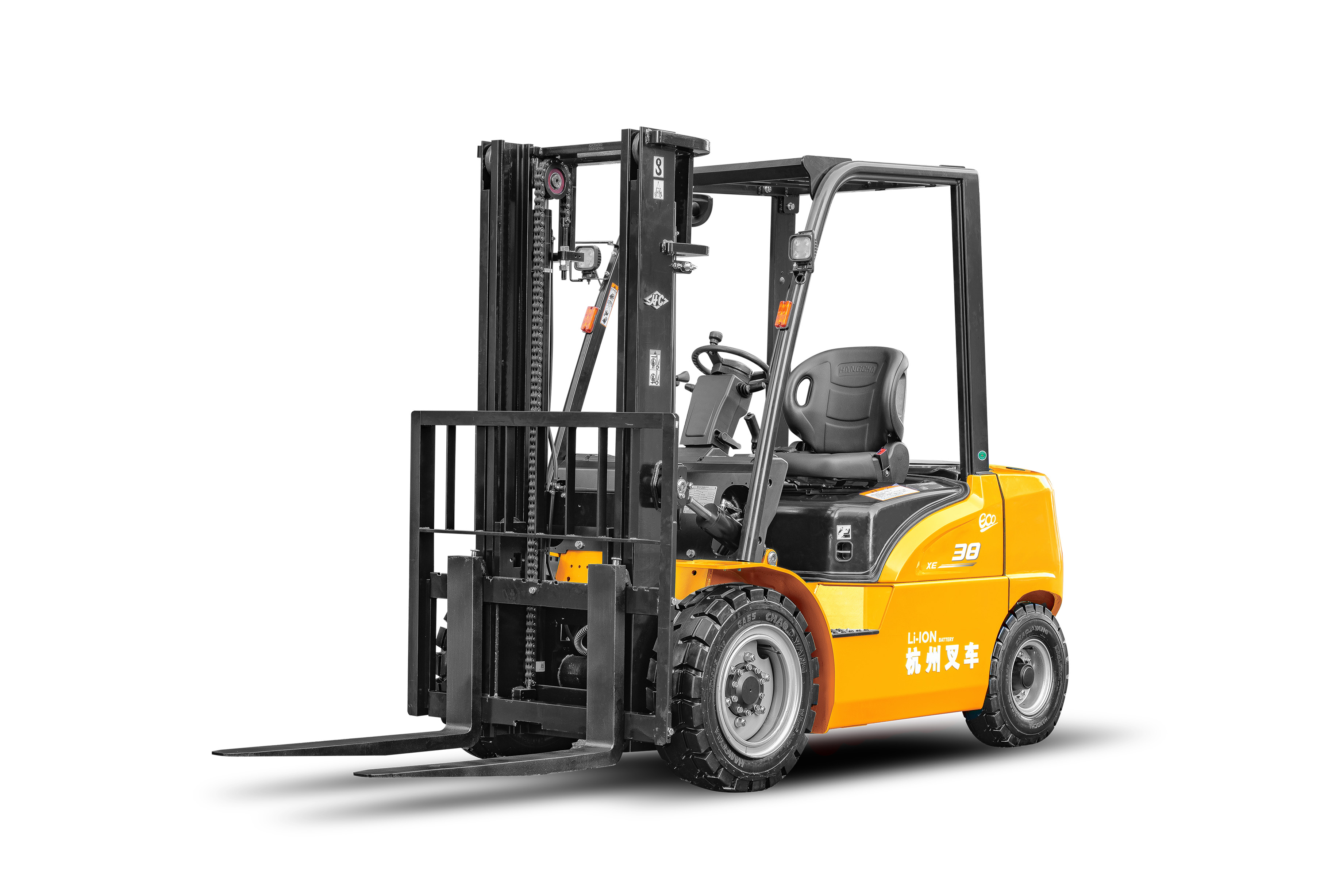
Gone are the days when warehouse crews had to huddle around a charging station for 30 minutes while orders piled up. The latest generation of lithium-titanate and solid-state packs can absorb a full shift’s worth of energy in under 12 minutes without the memory effect that plagued older cells. Some manufacturers are even weaving photovoltaic threads into forklift canopies, trickle-charging batteries as the machine moves between pallet racks—turning every overhead light fixture into a silent power source.
What truly ends the mid-shift plug-in ritual isn’t just faster charging, but batteries that refuse to die before the clock runs out. Cobalt-free lithium iron phosphate cathodes now clock over 7,000 deep-discharge cycles while maintaining 80% capacity, a number that drops maintenance costs enough to justify keeping a spare pack always topped up and ready for a 90-second swap. Cold storage facilities have seen particular benefits: new electrolyte formulations keep internal resistance low at -30°C, eliminating the voltage sag that used to send lift trucks crawling back to the charger two hours early.
The real breakthrough, however, lies in adaptive power management systems that learn a shift’s rhythm. Borrowing from electric bus technology, onboard processors analyze travel distance, lift frequency, and even driver behavior to dynamically adjust discharge curves. One distribution center running these smart packs reported that their most aggressive operators now finish a 10-hour shift with 22% remaining where they previously hit empty before the ninth. The mid-shift recharge isn’t being postponed—it’s being engineered out of existence.
Navigating Tight Spaces and Heavy Loads With Precision
Maneuvering through confined areas while managing substantial weight demands a blend of careful planning and real-time adjustment. Operators often rely on spatial awareness and subtle control inputs rather than sheer force, reading the environment and reacting to the slightest shifts in balance. The machinery itself becomes an extension of the operator’s senses, translating micro-movements into smooth, deliberate progress that avoids obstacles without sacrificing momentum.
Achieving this level of finesse requires not only practice but also an intuitive understanding of load dynamics—how weight distribution shifts during turns or on uneven surfaces. Each movement is a calculated compromise between power and restraint, where overcorrection can be as detrimental as hesitation. By maintaining a steady rhythm and anticipating the load’s response, operators transform what could be a brute-force challenge into a quiet display of mastery over mass and space.
Why Compliance With Eco-Regulations Is Easier Than You Think
Navigating environmental rules often feels like stepping into a maze of paperwork and jargon, but the reality is far less intimidating. Most regulations are built around common-sense principles that many businesses already follow, such as reducing waste and conserving energy. The learning curve might look steep from a distance, but once you start, you'll find that aligning with these standards often overlaps with everyday operational improvements.
A big part of the ease comes from the tools and support available today. Government agencies and industry groups provide clear checklists, free consultations, and even software that automates compliance tracking. Instead of wrestling with complex legal language on your own, you can rely on step-by-step guides that break down requirements into manageable actions. Many companies discover that the monitoring systems they adopt for compliance also help them spot inefficiencies they hadn't noticed before.
There's also a growing community of businesses that openly share their experiences and shortcuts. Peer networks, online forums, and local workshops make it simple to learn from others who have already paved the way. Rather than reinventing the wheel, you can adapt proven strategies and avoid common pitfalls. Over time, compliance becomes a routine part of operations, not a recurring headache.
Real-Time Fleet Insights Without the Hefty Price Tag
Getting a live view of your fleet's movements usually means shelling out for expensive telematics hardware and monthly subscriptions that eat into your margins. But it doesn't have to be that way. By tapping into the smartphones your drivers already carry, you unlock real-time location tracking, route updates, and status alerts without adding a single piece of dedicated hardware to each vehicle. The result is a lightweight, instantly deployable system that costs a fraction of traditional solutions.
The real magic is in how this approach strips away the complexity while keeping the essential insights front and center. Instead of drowning in dashboards filled with vanity metrics, you see exactly what matters: which vehicles are on the move, who's delayed, and where fuel stops or unauthorized detours happen. And because the data flows into an interface you can check from anywhere—phone, tablet, or computer—there's no learning curve or IT overhead. It's the kind of operational clarity that used to require a dedicated logistics team.
Perhaps the most overlooked advantage is how this pricing model flips the script on ROI. Without upfront hardware investments or lengthy contracts, the pay-as-you-go structure means you can scale up or down in sync with your business. Seasonal surges, temporary subcontractors, trial routes—all become manageable because you're never locked into a fixed fleet count. In an industry where every dollar counts, having real-time oversight that flexes with you isn't just convenient; it's a quiet competitive edge.
Custom Configurations That Fit Your Warehouse Like a Glove
Generic shelving and one-size-fits-all setups rarely make sense when every aisle, product line, and workflow has its own rhythm. Real fit means taking the time to study your daily operations—from the way forklifts navigate tight corners to the pick paths your veterans instinctively prefer—then engineering a layout that feels almost invisible because it works exactly the way you do.
The magic lives in the tiny adjustments that off-the-shelf systems miss: vertical clearances that let your tallest items breathe, staging areas placed at the precise midpoint between receiving and dispatch, and modular components that can shift overnight when seasonal stock suddenly doubles. Instead of forcing your processes into a catalog template, the configuration grows out of your floor’s actual footprint and rhythm, giving you that quiet satisfaction of a space that just clicks.
What sets this apart isn’t a flashy feature list—it’s the absence of friction. When a picker never has to double back, a reach truck never waits for a gate to be unlocked, and inventory turns happen with fewer touches, you’ve found a fit that goes beyond measurements. It’s a custom feel without the custom headache, shaped to your warehouse’s unique personality instead of a brochure’s assumptions.
FAQ
Chinese manufacturers have become major innovators in lithium battery technology, offering longer runtimes and faster charging compared to traditional lead-acid models. This directly reduces carbon footprint, making them a natural fit for green logistics operations.
They are engineered with advanced AC drive motors and robust chassis designs that deliver consistent performance in high-intensity tasks. Many models now include intelligent cooling systems, ensuring they keep pace without overheating during multi-shift operations.
The total cost of ownership drops significantly due to fewer moving parts and minimal maintenance. Add to that the competitive pricing from China's mature supply chain, and you get a budget-friendly solution that doesn't compromise on reliability.
Absolutely. Many come equipped with IoT-enabled fleet management, real-time diagnostics, and programmable performance modes. These features help warehouse managers optimize routes, monitor battery health, and reduce downtime through predictive maintenance alerts.
Leading Chinese brands have built global service networks with readily available spare parts. They often provide remote troubleshooting and localized technical training, which rivals or sometimes exceeds the support offered by traditional manufacturers.
Yes, they are designed to comply with CE, ANSI, and ISO certifications. With zero emissions during operation and safety features like automatic braking and overload protection, they easily meet the regulatory requirements for modern warehouses.
Conclusion
China’s electric forklifts have redefined warehouse efficiency by dramatically slashing energy consumption—often cutting bills in half—thanks to advanced motor and battery systems that maintain peak performance without the need for mid-shift recharges. This, coupled with precision engineering that makes light work of narrow aisles and heavy pallets, allows operators to move goods swiftly and safely, reducing downtime and boosting throughput.
Beyond pure performance, these forklifts simplify adherence to tightening emission regulations, as their zero‑exhaust design meets eco‑standards with minimal effort. Affordable telematics deliver real‑time fleet insights that help managers track usage, battery health, and maintenance needs without breaking the bank. With custom configurations that adapt to specific load dimensions and operational workflows, Chinese electric forklifts offer a tailored, future-proof solution for any green-minded warehouse.
Contact Us
Contact Person: Liuxue
Email: [email protected]
Tel/WhatsApp: +86-19084200370
Website: https://www.hf-ec.com/